


Paying more upfront for Urine Off can feel hard to justify—until you factor in how many times you end up treating the same patch of carpet, couch, or bedding. This guide compares Urine Off to common “cheaper” approaches using a simple price-per-success mindset, so the value claim is based on what happens in real homes (including humid Australian summers where odours can reappear).
Disclosure: We stock Urine Off; this guide focuses on value considerations rather than brand hype.
If you want the best value, focus on cost per successful clean-up, not just the price on the bottle.
What you’re really paying for with Urine Off
Most people buy a pet urine cleaner for one reason: to stop lingering odour that draws pets back to the same spot. The value in Urine Off is typically in how well it breaks down urine residues rather than masking smell with heavy fragrance.
In practice, value usually shows up in fewer repeat treatments—especially on absorbent surfaces like carpet and upholstery, or around skirting boards where liquid can wick and spread beyond the visible stain.
When you’re comparing specific Urine Off products for different pets or surfaces, it’s worth browsing the range on Urine Off to match the right formula to the mess you’re dealing with.
- Better value when: the same area gets re-soiled, odour resurfaces after drying, or you’re cleaning porous materials (carpet, rugs, couches, pet bedding).
- Lower value when: you only need a quick wipe-down of a very fresh accident on non-porous flooring (and there’s no risk of repeat marking).
Quick comparison: Urine Off vs common alternatives
Different approaches can look similar on the shelf, but the results (and repeat-clean likelihood) often differ once urine has soaked into fibres or underlay. Use this as a fast guide to “price per successful clean-up”, not just bottle price.
| Option | Best for | Not ideal for | Likely repeats? |
|---|---|---|---|
| Specialist urine residue remover (e.g., Urine Off) | Older stains, repeat marking, absorbent surfaces (carpet/underlay, upholstery, bedding), cat urine odour | Ultra-light, fresh spills on tiles where a simple wipe fully removes the mess | Lower (when used with enough coverage and contact time) |
| General-purpose household cleaner | Hard floors, fresh messes, basic surface cleaning | Deep odour in carpet/soft furnishings; repeat marking scenarios | Medium–high (odour can linger below the surface) |
| Fragrance deodoriser / “air freshener” style spray | Short-term room freshness after the area is already properly cleaned | Removing urine residue; anything soaked into fibres | High (smell may return once fragrance fades) |
| DIY mixes | Some hard-floor situations when you can rinse/wipe thoroughly | Delicate fabrics, wool blends, unknown dyes; situations where inconsistent results lead to repeat attempts | Medium–high (results vary; risk of setting odour/stain or damaging surfaces) |
Alternatives that look cheaper (and when they aren’t)
Plenty of household and supermarket options can appear cheaper per bottle, but they don’t always deliver the lowest cost per successful clean. If the odour isn’t properly removed, you may end up using more product, spending more time, or replacing items like rugs and bedding.
These alternatives can be fine for light, fresh messes. Value drops fast, though, when you’re dealing with repeat marking, older stains, or absorbent materials—especially carpets and lounges where urine can soak deeper than the visible patch.
- General cleaners: Often remove visible staining but can leave odour-causing residues behind, particularly in carpet pile and padding.
- Fragrance-based sprays: Can seem “fixed” until the scent fades—then the original smell returns, sometimes stronger in warm or humid weather.
- DIY mixes: May help in some situations on sealed surfaces, but inconsistency can mean repeated attempts (and potential surface damage or colour change).
In other words, a cheaper bottle isn’t better value if you have to clean the same patch three times—or if your pet keeps returning to it.
Best value by scenario: puppy, cat, senior pet, rentals
The best-value choice depends on the type of accident and how often it happens. Use the scenarios below to decide whether paying more for a specialist cleaner makes sense for your home.
- Puppies in toilet training: Value comes from speed and repeatability. A reliable urine-residue remover can reduce re-marking and help training stick, especially on rugs and carpet runners where scent lingers.
- Cats and litter tray misses: Cat urine odour is notoriously persistent, so value is often highest with a purpose-built cat urine odour remover approach that targets the source rather than covering it up.
- Senior pets: With more frequent accidents, the “cost per week” matters. A product that works in fewer rounds can be cheaper than cycling through multiple cleaners.
- Rentals and inspections: Value isn’t just product cost—it’s avoiding lingering odour in underlay, corners, or grout that can be hard to explain later.
If you’re here because you’re tired of repeat cleaning, that’s usually the tipping point where a specialist formula becomes better value.
Quick tip: If you can still smell urine after the area dries, treat it again—odour returning later usually means residue remained below the surface, not that the product “did nothing”.
Example: price per successful clean (with assumptions)
Here’s a simple way to compare value without getting lost in bottle sizes and marketing. This is not a promise of results—usage varies by pet, surface, how old the stain is, and how thoroughly you cover the affected area.
- Assumption: You’re treating one common “accident zone” on carpet (including the slightly larger area around the visible spot).
- Assumption: A “successful clean” means: once dry, there’s no urine odour detected and your pet is less likely to re-mark that exact area.
Example calculation (illustrative):
- Option A (specialist urine residue remover): $25 bottle, you use about $2.50 worth per treatment, and it usually succeeds in 1 treatment.
Estimated cost per successful clean: $2.50. - Option B (cheaper general cleaner/deodoriser approach): $12 bottle, you use about $1.00 worth per treatment, but it often needs 3 treatments before the area dries odour-free (or you end up switching products).
Estimated cost per successful clean: $3.00 (plus extra time and hassle).
Even with a higher shelf price, a product that works in fewer rounds can be better value. If Option B also leads to re-marking (and you have to repeat the whole process next week), the gap widens.
How to get the most value from any cleaner (and stay safe)
No matter what you buy, technique can make or break your results. Better value is often about using the right amount, giving it enough contact time, and avoiding steps that lock odour in—while keeping pets and people safe.
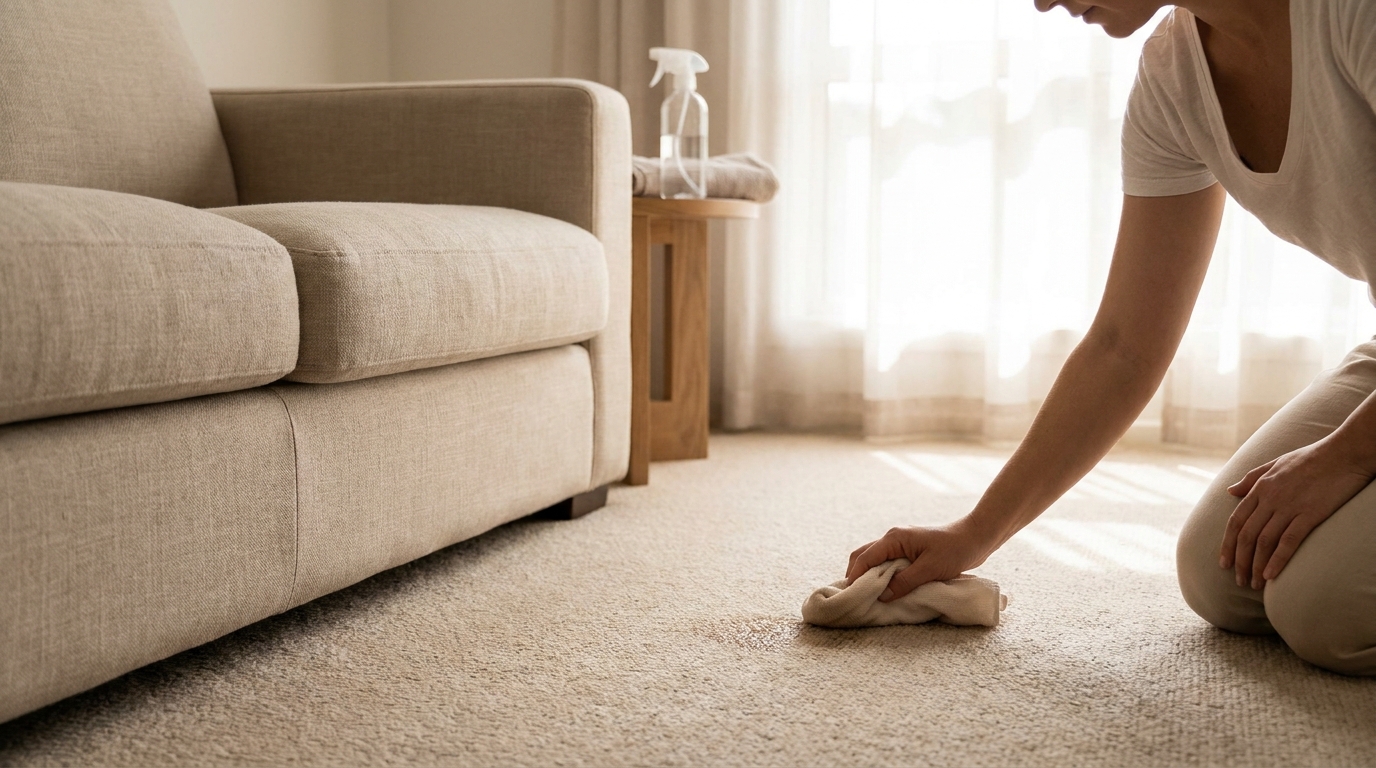
- Blot first, don’t scrub: Scrubbing can push liquid deeper into carpet and upholstery, increasing how much product you’ll need later.
- Find the full area: Use your nose in good light, and check nearby edges—pets don’t always hit the centre of a rug. In warm, humid weather (think Brisbane or Cairns wet-season conditions), odour can spread and “bloom” across a larger area than you expect.
- Patch-test delicate fabrics: Test a small hidden spot first, especially on wool blends, natural fibres, and darker fabrics. Check once dry to confirm colourfastness and texture are unchanged.
- Follow label directions and contact time: Many products need time on the affected area to work. Rushing the process can lead to repeat treatments, which is where the real cost creeps in.
- Keep pets (and kids) off until fully dry: This helps prevent tracking, re-soiling, and accidental ingestion or skin irritation from a damp treated area.
- Ventilate the space: Open windows or run fans where practical, particularly in small rooms, to help drying and reduce lingering fumes from any cleaning product.
- Avoid mixing cleaners: Don’t combine products. If the area was previously treated with bleach or ammonia, rinse thoroughly with water first and allow it to dry before using a different cleaner. Mixing residues can create irritating or dangerous fumes and may make odours harder to remove.
- Let it fully dry, then reassess: Some odours only reveal themselves once dry, particularly in humid coastal conditions. If it returns, treat the area again more thoroughly.
Also consider buying for the surface you actually need to treat. Many Urine Off products are designed for specific pet types or materials, and choosing the closest match can reduce wasted product and repeat applications. If you want to compare options, start with the full Urine Off product range and pick based on the problem area (carpet, hard floors, bedding, crates).
Frequently Asked Questions
Is Urine Off better value than a cheaper cleaner?
It can be, if it reduces repeat treatments and helps prevent re-marking. A practical way to compare is to estimate price per successful clean-up:
- How much you use per treatment: Porous surfaces often need more product than a quick wipe on tiles.
- How often you need to re-treat: If one option regularly needs a second or third round, its real cost climbs quickly.
- What happens if odour returns: Re-cleaning plus extra laundry, time, and stress can outweigh a lower shelf price.
If a cheaper option needs multiple passes or the smell returns later, the “cheap” bottle often costs more in the long run.
What makes pet urine odour come back days later?
Urine can soak into underlay, floorboard gaps, or fabric padding, and the smell reappears as humidity rises or the area warms up. This is common when a patch seems fine at first, then smells again after a rainy week or a hot day. A thorough clean that reaches the full affected area is usually needed for lasting results.
Which Urine Off products should I choose for my home?
Choose based on the pet type (dog or cat), the surface (carpet, upholstery, hard floors), and whether you’re treating fresh accidents or older stains. If you’re unsure, compare the options within the Urine Off range and select the closest match to your main problem area.
If you’re aiming for fewer repeat clean-ups and better long-term value, explore the Urine Off range and pick a formula that matches your pet and surfaces. If accidents are sudden or unusually frequent, chat to your vet at your next visit to rule out underlying issues.