


Whether you're upgrading to a higher-quality formula or responding to a dietary need, transitioning your pet to a new food requires a bit of patience. Rush the process and you'll likely end up with a grumpy tummy — or worse, a mess on the carpet. This guide walks you through the safest way to make the switch for both dogs and cats, with a focus on protecting digestive health every step of the way.
Why a Gradual Transition Matters
Your pet's digestive system is home to a delicate balance of bacteria that have adapted to their current diet. Introducing a completely new protein or formula overnight can overwhelm that balance, leading to diarrhoea, vomiting, or refusal to eat.
A slow changeover — typically over seven to ten days — gives gut bacteria time to adjust. This is true whether you're switching between dry kibble varieties, moving from wet to dry food, or changing brands entirely.
Cats can be especially sensitive. Their digestive tracts are shorter than a dog's, and they tend to be more suspicious of unfamiliar textures and aromas. If you're browsing our range of cat food and treats, keep this adjustment period in mind before committing to a bulk purchase.
Talk to Your Vet Before You Start
If your pet has a known health condition — such as kidney disease, food allergies, pancreatitis, or diabetes — it's worth booking a quick vet consultation before changing their diet. Your veterinarian can advise on which ingredients to prioritise or avoid, and whether a standard seven-day schedule is appropriate or needs to be extended.
This is especially important for older pets and animals on prescription diets. A proactive check takes minutes but can prevent days of discomfort and costly follow-up visits down the track. Even for healthy pets, mentioning a planned diet change at your next routine appointment gives your vet useful context.
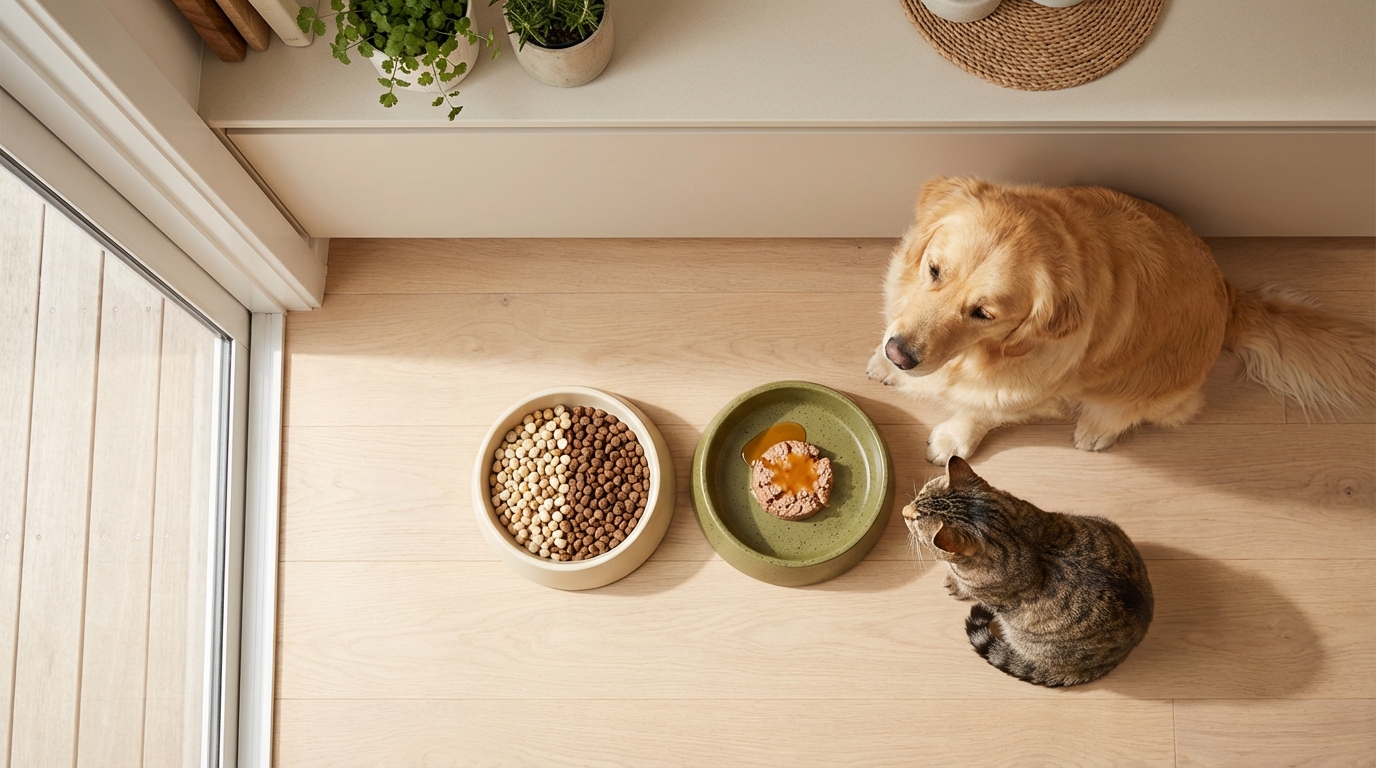
A Step-by-Step Schedule for Switching Pet Food Safely
The most reliable method is a simple ratio approach. Over the course of a week or more, you gradually increase the proportion of new food while decreasing the old. Here's a practical schedule that works for most dogs and cats:
- Days 1–2: 75% current food, 25% new food
- Days 3–4: 50% current food, 50% new food
- Days 5–6: 25% current food, 75% new food
- Day 7 onward: 100% new food
For pets with sensitive stomachs — breeds commonly reported to have sensitive digestion include Bulldogs, Siamese cats, and Australian Shepherds, though individual tolerance varies widely — stretch this timeline to 10–14 days. Slower is almost always safer when it comes to supporting digestive health during a food change.
During summer in Australia, appetite can dip naturally due to heat, so a food transition is often easier during the cooler months of autumn or winter when pets tend to eat more consistently.
If you're looking for a gentle formula to transition to, our Ivory Coat range is formulated with Australian-sourced proteins and is a popular choice for dogs with sensitivities. For cats, the Feline Natural recipes offer high-protein, grain-free options that many fussy felines take to well.
Quick tip: Mix the old and new food thoroughly rather than placing them side by side in the bowl. Pets are clever — they'll pick around the unfamiliar bits if given the chance.
Signs Your Pet Isn't Adjusting Well
Some mild digestive changes are normal during a food transition. You might notice slightly softer stools or a temporary decrease in enthusiasm at mealtimes. These usually resolve within a day or two.
However, keep an eye out for more concerning symptoms:
- Persistent diarrhoea lasting more than 48 hours. Loose stools that don't firm up suggest the gut bacteria haven't had enough time to adapt to the new formula's protein or fibre profile. It can also signal a genuine intolerance to an ingredient in the new food.
- Vomiting after multiple meals. Occasional regurgitation during a switch isn't unusual, but repeated vomiting may indicate the new food's fat content or texture is too different for your pet's stomach to process at the current ratio.
- Complete refusal to eat for more than a day. While fussy behaviour is common — particularly in cats — a full 24-hour hunger strike can point to nausea, discomfort, or a strong aversion to the new food's smell or flavour. In cats, prolonged fasting also carries the risk of hepatic lipidosis, a serious liver condition, so don't let it go unchecked.
- Excessive gas, bloating, or lethargy. Increased flatulence often results from a sudden shift in fermentable fibre or carbohydrate sources. Bloating paired with lethargy, however, warrants more urgent attention as it can occasionally signal a more serious gastrointestinal issue, especially in deep-chested dog breeds.
If any of these occur, slow the transition down. Drop back to the previous ratio for a couple of days before trying to increase the new food again. Sometimes a pet's system simply needs more time. Should symptoms persist after slowing the schedule, contact your vet for guidance — particularly if your pet seems uncomfortable or is losing weight.
Tips for Fussy Eaters During a Food Change
Fussy pets — and let's be honest, many Australian cats fall squarely into this category — can make a food transition feel impossible. A few strategies can help smooth the process.
Warm it slightly. Gently warming wet food releases more aroma, which can entice a reluctant eater. Avoid microwaving, as it can create hot spots; instead, add a splash of warm water and stir.
Use a meal topper. A small amount of bone broth (no onion or garlic) drizzled over the new food can make it more appealing without adding significant calories.
Stick to a routine. Offer meals at the same times each day and remove uneaten food after 20 minutes. Free-feeding makes it harder to track how much new food your pet is actually accepting.
If you're exploring high-quality options to transition to, browse our full selection of dog food and treats for formulas suited to different life stages and sensitivities.
Frequently Asked Questions
Can I switch my pet's food cold turkey?
It's not recommended. An abrupt change can cause digestive upset including diarrhoea, vomiting, and appetite loss. A gradual transition over 7–14 days is far kinder on your pet's stomach and gives their gut bacteria time to adapt.
How long does it take for a pet to fully adjust to new food?
Most pets settle into a new diet within one to two weeks. Pets with sensitive stomachs or older animals may need up to three weeks. Consistent, firm stools and a healthy appetite are good indicators the transition is complete.
Should I transition differently for puppies or kittens?
Young animals generally adapt more quickly, but their digestive systems are still developing, so a gradual switch is still important. Follow the same ratio-based schedule and ensure the new food is formulated for their life stage to support proper growth.
Do I need to see a vet before changing my pet's food?
For healthy pets, a gradual transition is usually straightforward. However, if your pet has any existing health conditions, allergies, or is on a prescription diet, a quick vet consultation beforehand is strongly recommended to ensure the new food is a safe and suitable choice.