


Separation anxiety can look like “bad behaviour”, but it’s more often panic and stress that hits when you step out the door. If your dog becomes anxious when left alone, the right plan can reduce distress and protect your home. Below are practical, evidence-based steps you can start now—without overpromising quick fixes.
Signs your dog is struggling when left alone
Not every vocal dog has separation-related distress, and not every anxious dog barks. The key is what happens specifically when they’re separated from you (or their main person), and how quickly it starts after you leave.
- Distress vocalising: barking, howling, whining soon after departure.
- Destructive behaviour near exits: scratching doors, chewing frames, digging at gates or windows.
- Toileting indoors: even if they’re toilet trained, especially shortly after you go.
- Escape attempts: busted flyscreens, bent crate bars, damaged fences.
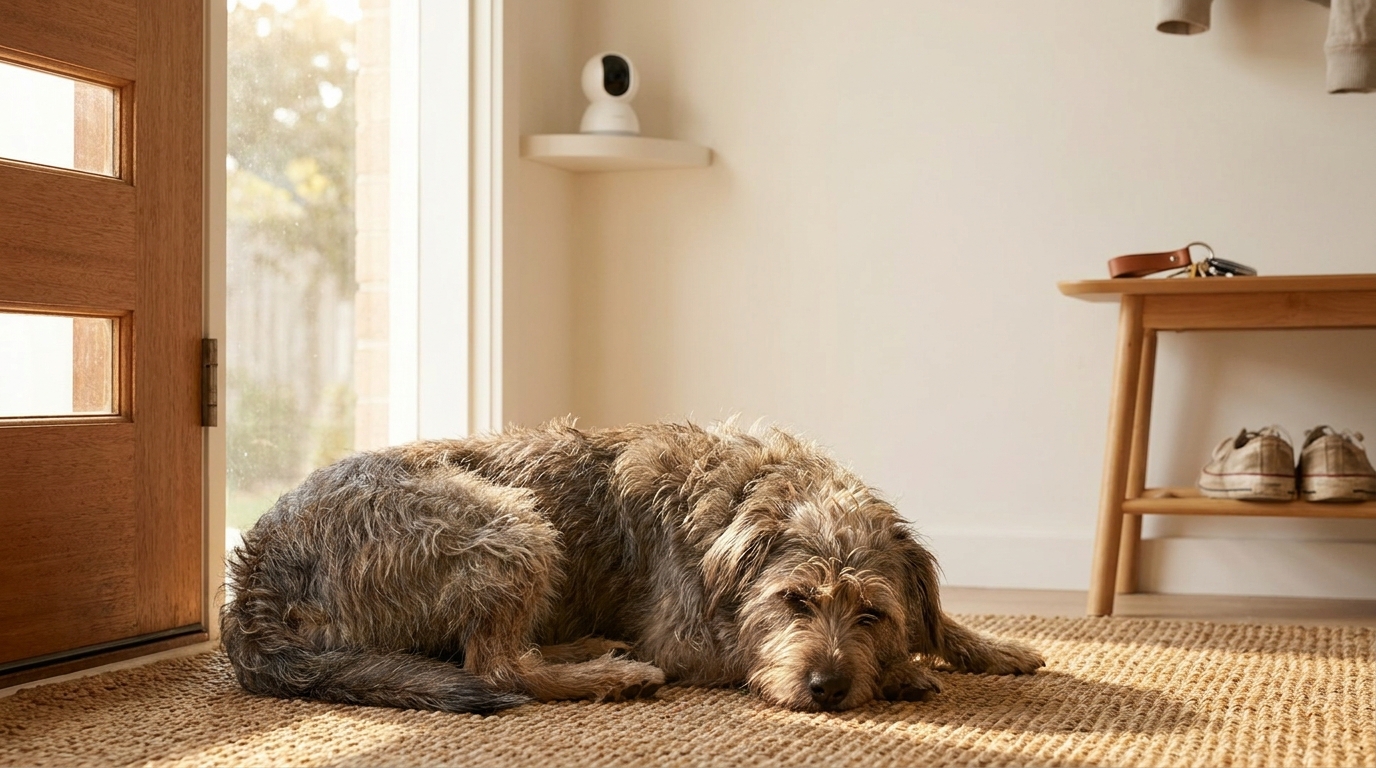
- Drooling, panting, pacing: “restless loops” around the house, often captured on a pet camera.
- Clinginess at home: shadowing you room-to-room, unable to settle unless you’re in sight.
If these behaviours mostly happen when you’re home (for example, chewing toys any time of day), it may be boredom, lack of enrichment, or another stressor. Separation-related distress is typically tied to your absence or pre-departure cues like picking up keys.
Common causes (and why it can start suddenly)
Separation anxiety isn’t about “dominance” or your dog being “naughty”. It’s usually a learned fear response paired with the real discomfort of being alone.
- Big routine changes: returning to the office after school holidays, moving house, new housemates, or shift work changes.
- Life events: adoption, rehoming, boarding, or the loss of a person or another pet.
- Not learning alone time early: some dogs simply haven’t practised being alone in a way that felt safe.
- Noise and neighbourhood triggers: storms, fireworks (New Year’s, footy finals celebrations), construction noise, or sudden street activity.
- Medical discomfort: pain, itch, or gastrointestinal upset can make settling harder and raise baseline stress.
In Australian summers, heat can amplify restlessness and panting, which can be mistaken for anxiety. If your dog is left in a warm room or yard, comfort and cooling matter as part of the overall plan.
What actually helps: a step-by-step plan
The most reliable approach combines management (to prevent panic) with gradual training (to build tolerance). Aim for steady progress, not “testing” your dog with long absences.
- 1) Confirm the pattern with a camera: note how long until distress starts, what it looks like, and whether it escalates.
- 2) Reduce “panic practice” where possible: if your dog falls apart at 5 minutes, avoid 30-minute absences while you retrain. Use family, friends, dog sitters, or doggy day care as a temporary bridge.
- 3) Build independence while you’re home: practise short separations with you still inside (baby gate, different room). Reward calm settling, not frantic following.
- 4) Desensitise departure cues: pick up keys, put on shoes, grab a bag—then sit down. Repeat until those cues stop predicting you’ll disappear.
- 5) Gradual alone-time training: start below your dog’s threshold (often seconds). Step out, return before panic, and slowly increase duration. Keep sessions short and frequent.
- 6) Nail the return routine: keep arrivals low-key. Wait for calm before big greetings so you don’t accidentally reinforce frantic behaviour.
Quick tip: If your dog becomes distressed the moment you head for the door, your first “training rep” might be simply touching the handle, then sitting back down—10 times a day—until their body language softens.
Food toys can help some dogs, but they’re not a fix if your dog is already in full panic. Use them as a bonus once your dog can stay under threshold long enough to eat, lick, and settle.
A simple 7-day starter plan (example)
This is a sample structure, not a promised timeline. Some dogs move faster, and others need weeks of tiny increments. The rule is: increase difficulty only when your dog stays calm and can recover quickly.
- Day 1: Set up your camera and identify your dog’s “panic point” (for example, distress at 30 seconds). Practise 10–20 cue sessions: pick up keys/shoes/bag, then sit down. No real departures needed.
- Day 2: Add inside-the-home separations: step behind a baby gate or into another room for 3–10 seconds, return before your dog escalates, reward calm. Repeat 5–10 times.
- Day 3: Start micro-departures: open the front door, step out, step back in immediately. Aim for calm, not duration. Keep it light and frequent.
- Day 4: Increase to short, calm absences below threshold (for example 5–20 seconds). Mix in easy reps so it doesn’t feel like it only gets harder.
- Day 5: Build variety: practise at different times of day and with different departure cues. Keep returns boring and predictable.
- Day 6: Add small real-life tasks (letterbox, bins, quick car check) only if your dog stays relaxed on camera. If you see pacing, whining, or frantic scanning, shorten the time again.
- Day 7: Review your footage and write down what duration is consistently comfortable. Plan next week around that level, aiming for many calm reps rather than a few long ones.
Helpful session structure: 1–2 minutes of calm setup, 5–10 short departures (with breaks), then finish with an easy “win”. If your dog struggles, you didn’t fail—you found the current limit.
Calming supports that can make training easier
Training is the foundation, but the right supports can lower overall arousal so learning is easier. Look for options that encourage relaxation without simply masking distress.
- Pheromone support: Dog-appeasing pheromone products can help some dogs feel safer at home, especially when paired with behaviour work. Explore Adaptil calming pheromone options if you want a vet-recommended approach.
- Comfortable safe space: A well-ventilated crate or pen can be helpful if your dog is crate-trained and chooses it willingly. If they panic in confinement, focus on a larger puppy-proofed area instead.
- Sound and environment: Close curtains to reduce visual triggers, use a fan or white noise to buffer street sounds, and keep the house cool during hot months.
- Enrichment that matches the dog: Sniffing and licking are naturally calming. Use scatter feeds, snuffle mats, and long-lasting chews (appropriate for your dog) as part of your pre-departure routine.
If your dog’s distress is intense (self-injury, repeated escape attempts, or nonstop vocalising), management is essential while you work on the plan. The goal is to reduce fear, not push them to “get used to it”.
When to see a vet or behaviour professional
If you’re unsure whether you’re dealing with separation-related distress, pain, or another health issue, start with your vet. A qualified trainer or veterinary behaviourist can then help you build a plan that fits your dog and your household.
- Seek help promptly if you see: self-injury (bloody paws, broken teeth from chewing bars/doors), severe escape attempts, hours of vocalising, refusal to eat even with favourite food, or rapid worsening after a change.
- Rule out medical contributors: pain, itching, gut discomfort, and age-related cognitive changes can all affect settling.
- Medication may be appropriate in severe cases: your vet may recommend medication alongside behaviour modification to reduce panic enough for training to work. This is not a shortcut—it’s support for learning and welfare.
Frequently Asked Questions
How do I tell separation anxiety from boredom?
Boredom often looks like opportunistic mischief that can happen anytime, and your dog may still eat and settle after you leave. True separation-related distress usually starts soon after departure and includes panic signs like pacing, drooling, escape attempts, or refusing food.
Will getting a second dog fix it?
Sometimes companionship helps, but it’s not a guaranteed solution and can create new challenges. Many dogs with separation distress are attached to a person rather than another dog, so training and management are still important.
Should I ignore my dog before I leave?
A calm, predictable routine is more helpful than dramatic ignoring. Brief, low-key departures paired with gradual training tend to work best; focus on rewarding calm behaviour and preventing panic, rather than making leaving feel emotionally loaded.
What if my dog panics even at seconds?
That’s a sign to make it easier. Go back to door-handle practice, very short inside-the-home separations, and strong management so your dog isn’t repeatedly pushed into panic. If there’s self-injury, constant distress, or you can’t avoid absences, book a vet appointment and consider working with a qualified behaviour professional.
If you’d like extra support to pair with training, browse Adaptil and build a calm-at-home routine. If your dog is injuring themselves or the anxiety is severe, chat to your vet as soon as possible for tailored guidance.