


The Russian Blue cat is loved for its plush silver-blue coat, quiet confidence, and loyal nature. If you’re considering bringing one home, it helps to understand their personality, daily care needs, and what an indoor routine typically looks like in Australian conditions.
This practical guide covers what to expect, how to support wellbeing, and how to set up an indoor lifestyle that keeps this breed content—whether you’re in a humid coastal area or a cooler southern climate.
Breed snapshot: appearance, personality, and lifespan
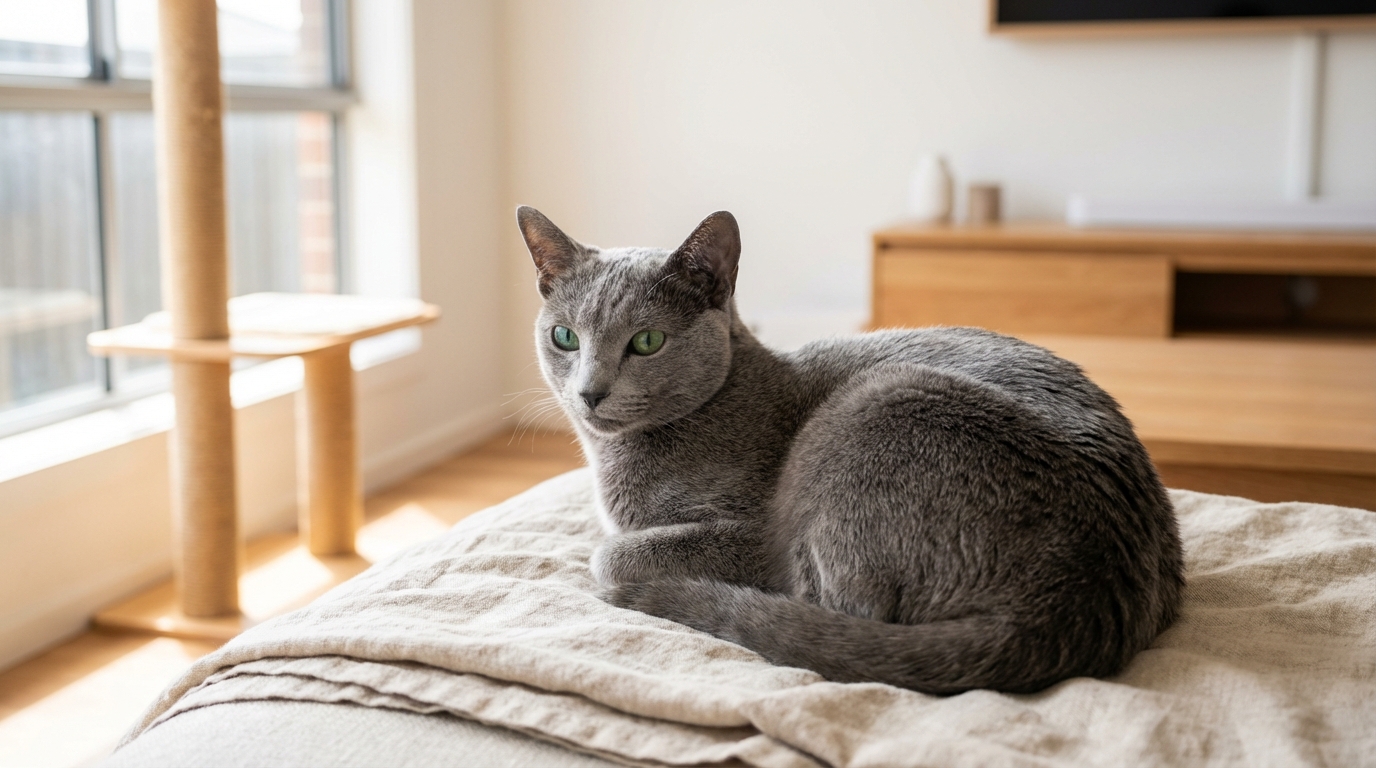
The Russian Blue is a medium-sized, fine-boned cat with a distinctive double coat that feels dense and plush. The coat is typically an even blue-grey with silver tipping, which creates that soft “shimmer” in sunlight. Many have vivid green eyes that stand out against the darker coat.
Personality-wise, expect gentle and observant rather than loud and demanding. They often enjoy calm, tidy routines, but they’re still playful and can be surprisingly athletic when motivated by a wand toy or a favourite reward.
- Size: Medium
- Coat: Short, dense double coat; low-to-moderate shedding
- Energy: Moderate, with bursts of play
- Lifespan: Many cats live into their teens with good care; individual longevity varies
- Best for: Indoor homes, quiet-to-average households, people who like a predictable routine
Temperament: what living with one is like
Many are loyal, sensitive, and a little reserved at first. It’s common for them to bond closely with one or two people—following them from room to room and settling nearby rather than constantly demanding lap time. With visitors, they may watch from a safe perch until they feel confident.
They often do best with predictable rhythms: regular mealtimes, a consistent play window, and quiet rest periods. If your home gets busy (kids, trades, frequent guests), provide retreat options like a high cat tree, a covered bed, or a quiet spare room where they can decompress.
They’re clever and usually respond well to gentle training. Clicker games, puzzle feeders, and short daily play sessions can help prevent boredom-related behaviours such as night zoomies, stress hiding, or scratching the sofa.
- With families: Often good with calm, respectful children
- With other pets: Usually fine with gradual introductions
- Noise sensitivity: May be wary of sudden sounds; provide safe hideaways
Home setup and daily care essentials
A solid care routine starts with an indoor-first mindset. Indoor living reduces risks from cars and fights, and it can also simplify parasite management. If you have a balcony or courtyard, consider a secure cat enclosure for safe sun time—especially useful during mild Aussie mornings and evenings, and safer during summer heat.
Grooming: Despite the thick coat, grooming is usually straightforward. A once-weekly brush helps remove loose hair and supports skin comfort. During seasonal coat changes (often spring and autumn), you may brush a little more frequently.
Feeding: These cats can be enthusiastic eaters, so measured meals often suit them better than free-feeding. Aim for a complete, high-quality diet and use treats strategically for training and enrichment rather than as “extras”. You’ll find options for different life stages in our cat food and treats range.
Enrichment: Provide vertical spaces, scratching posts (at least one tall vertical and one horizontal), and a mix of solo and interactive toys. Rotating toys weekly keeps novelty high without cluttering the house. Even 10–15 minutes of interactive play most days can make a big difference to confidence and calm behaviour.
Quick tip: If your cat hides when guests arrive, don’t force social time. Set up a “quiet zone” with water, a litter tray, and a bed—then let them choose when to rejoin the action.
Litter and hygiene: Many cats are picky about cleanliness. Scoop daily, refresh litter regularly, and place trays in low-traffic areas. A common guideline is one tray per cat plus one extra, particularly in multi-storey homes. If you change litter type, do it gradually to help prevent litter box refusal.
Dental and nails: Aim for tooth brushing a few times a week if your cat will tolerate it, and trim nails every 2–4 weeks. Scratching posts help naturally maintain nails and protect furniture.
Health and longevity: keeping them thriving
Overall, many are fairly robust, particularly when they come from ethical breeders and live an indoor lifestyle. Like any cat, they can still develop common concerns related to weight, dental disease, stress, and parasites—so prevention, observation, and routine vet care matter.
Common issues to watch for
- Weight gain: Any cat may gain weight if overfed or under-stimulated, and a dense coat can make changes harder to spot. Check body condition by touch (ribs should be easy to feel with a light touch) and look for a visible waist from above.
- Dental disease: Very common across many breeds. Watch for bad breath, red gums, drooling, pawing at the mouth, or dropping food.
- Skin irritation and over-grooming: Itching, dandruff, hair loss, or excessive grooming can relate to parasites, allergies, stress, or other medical issues. Persistent symptoms should be assessed by a vet.
- Stress-related behaviour changes: Some cats react strongly to change. Ongoing hiding, toileting changes, appetite shifts, or frequent vomiting warrant a vet check to rule out medical causes.
Practical prevention habits: Keep meals measured, build daily play into your routine, and use puzzle feeding to add movement and mental work. If you use treats for training, keep them within your cat’s overall food intake rather than “on top”; our cat food and treats collection can help you choose options that suit your routine.
Parasite prevention: Even indoor cats can pick up fleas and intestinal parasites via visitors, other pets, or shared spaces. Your vet can advise on parasite prevention schedules that suit your region (for example, warmer, more humid areas can have higher flea pressure).
Medical note: This guide is general information and isn’t a substitute for veterinary advice. See your vet promptly for persistent itching, repeated vomiting/diarrhoea, sudden weight change, breathing changes, or any signs of pain.
Shopping checklist: essentials for a calm indoor routine
Use this checklist to set up a breed-friendly home and support healthy habits from day one. Choose sizes to suit your cat’s age, weight, and living space.
- Measured feeding plan and training treats: Pick a complete diet and keep treats for enrichment and rewards—see cat food and treats.
- Brush/comb: A gentle weekly groom helps reduce loose hair and supports skin comfort.
- Scratchers and a stable cat tree: Include at least one tall vertical scratcher and one horizontal option to protect furniture and support natural behaviours.
- Puzzle feeder/enrichment set-up: Use food-based enrichment to slow eating and add daily mental stimulation.
- Dental care basics: Cat toothbrush/finger brush and pet-safe toothpaste (your vet can recommend what suits your cat).
- Litter tray set-up: The right number of trays, placed in quiet locations, plus a scoop for daily cleaning.
Frequently Asked Questions
Are Russian Blues good indoor cats?
Yes—many thrive indoors because they enjoy routine and often prefer a secure, quiet environment. Provide climbing spaces, scratchers, and daily play to keep them mentally and physically engaged.
Do they shed a lot?
They’re not heavy shedders compared with many breeds, but they do shed seasonally. A weekly brush (more during spring and autumn) helps manage loose hair and supports a healthy coat.
Is this breed suitable for first-time cat owners?
Often, yes—especially if you want a calm companion and can stick to regular feeding and play routines. They can be reserved with strangers, so patient socialisation and giving them choice in interactions is important.
How do I know if my cat is gaining weight?
Because the coat is dense, it helps to check body condition by touch as well as looks. If you can’t easily feel ribs with light pressure, the waistline is disappearing, or your cat is less active, book a vet check and review meal portions. Sudden or unexplained weight change should always be discussed with your vet.
Want to set your cat up with a simple routine that supports long-term wellbeing? Explore our cat food and treats to build a balanced daily plan, and chat to your vet if you have concerns about your cat’s individual needs.