


Getting your puppy’s vaccinations organised early is one of the simplest ways to protect them during their most vulnerable weeks. This guide covers a typical Australian puppy vaccination schedule, what your vet checks at each visit, and how to plan socialisation and parasite prevention without missing key windows.
Because puppies respond differently (and maternal antibodies can interfere with early protection), your vet may tailor timing based on your puppy’s health, background, and local disease risk. Schedules can also vary slightly between clinics, regions, and states.
Core vs optional vaccines (C3 vs C5) at a glance
In Australia, puppy vaccines are often discussed by shorthand names you’ll hear at clinics:
| Type | Common name you may see | What it typically covers | When it’s often recommended |
|---|---|---|---|
| Core | C3 | Parvovirus, distemper, infectious hepatitis (canine adenovirus) | Generally recommended for all puppies (unless your vet advises otherwise) |
| Lifestyle / optional add-on | C5 (varies by clinic) | Core coverage plus common kennel cough components (often linked to Bordetella and parainfluenza) | Often discussed for puppy preschool, daycare, grooming, boarding, or frequent dog-to-dog contact |
Local risk also matters. For example, some coastal and bushland regions can have heavier parasite pressure in warmer months, and some areas (including tick paralysis regions along parts of Australia’s east coast) may require a stricter prevention conversation alongside vaccination planning. Your vet is the best source of local, up-to-date guidance.
Typical puppy vaccination timeline in Australia
Many Australian vets begin the puppy series at around 6–8 weeks, then give boosters until roughly 14–16 weeks. Some clinics use a 6–8, 10–12, 14–16 week schedule, while others run 8, 12, 16 weeks. The overall goal is the same: build reliable protection once maternal antibodies fade (these antibodies help early on, but can also reduce how well early vaccines “take” in some pups).
Important: In higher-risk situations (for example, heavy local disease pressure or uncertain background), some vets may recommend a final booster at 16 weeks (or later) to help cover the window where maternal antibodies may still interfere. Follow a vet-tailored schedule for your puppy.
Below is a clearer “by visit” guide using the terms many clinics use (C3/C5). Your vet will confirm the exact product, timing, and what’s included.
| Visit timing (common ranges) | Vaccine often discussed | What your vet usually checks | Planning notes |
|---|---|---|---|
| Visit 1: 6–8 weeks (or 8 weeks) | Often starts with C3 (core) | Full exam, weight, general health and suitability to vaccinate | Bring breeder/rescue paperwork; ask about low-risk socialisation and parasite prevention timing |
| Visit 2: 10–12 weeks (or 12 weeks) | Booster: C3 and/or discuss moving to C5 if lifestyle risk | Growth check, heart/lungs, ears/skin, bite/teething, stool quality and diet | If you’re considering puppy preschool/daycare, ask what proof they require and whether kennel cough coverage is advised |
| Visit 3: 14–16 weeks (or 16 weeks) | Final puppy booster in the series (often C3 or C5) | Final puppy-series health check; discuss next booster interval | Confirm when your puppy can safely expand outings and what “fully vaccinated” means for your clinic |
| After the puppy series | Booster plan set by your vet | Ongoing health checks and prevention planning as your puppy grows | Ask how reminders work and how to keep records ready for daycare/boarding |
If you adopt a puppy from a rescue or rehome a puppy with an unclear history, bring any records you have. If you’re not sure what they’ve already had, your vet will recommend the safest way to complete the course (sometimes this means restarting to ensure reliable coverage).
What happens at each vaccine visit
Each appointment is more than a needle. Your vet typically checks that your puppy is well enough to vaccinate and performs a full physical exam—heart and lungs, eyes and ears, mouth and teeth, skin and coat, abdomen, joints, weight, and overall condition. This is also a great time to raise any questions while your puppy is still small and easy to handle.
Expect to talk through practical “new puppy” topics too, including diet, toileting, chewing, sleep, and early training. Many owners use these visits to create a simple home setup for the weeks ahead—lead and collar fit, a safe crate or bed space, and basic training rewards. If you’re organising essentials between appointments, our puppy supplies range can help you get the basics sorted in one place.
What to bring (or do) for a smoother appointment:
- Vaccination record (or breeder/rescue paperwork)
- Notes on symptoms (coughing, sneezing, diarrhoea, vomiting, itch, low appetite)
- Your routine details (parks, puppy school, daycare, multi-dog households, travel plans)
- Plan for calm transport (a towel/blanket for the car, and a short toilet break beforehand)
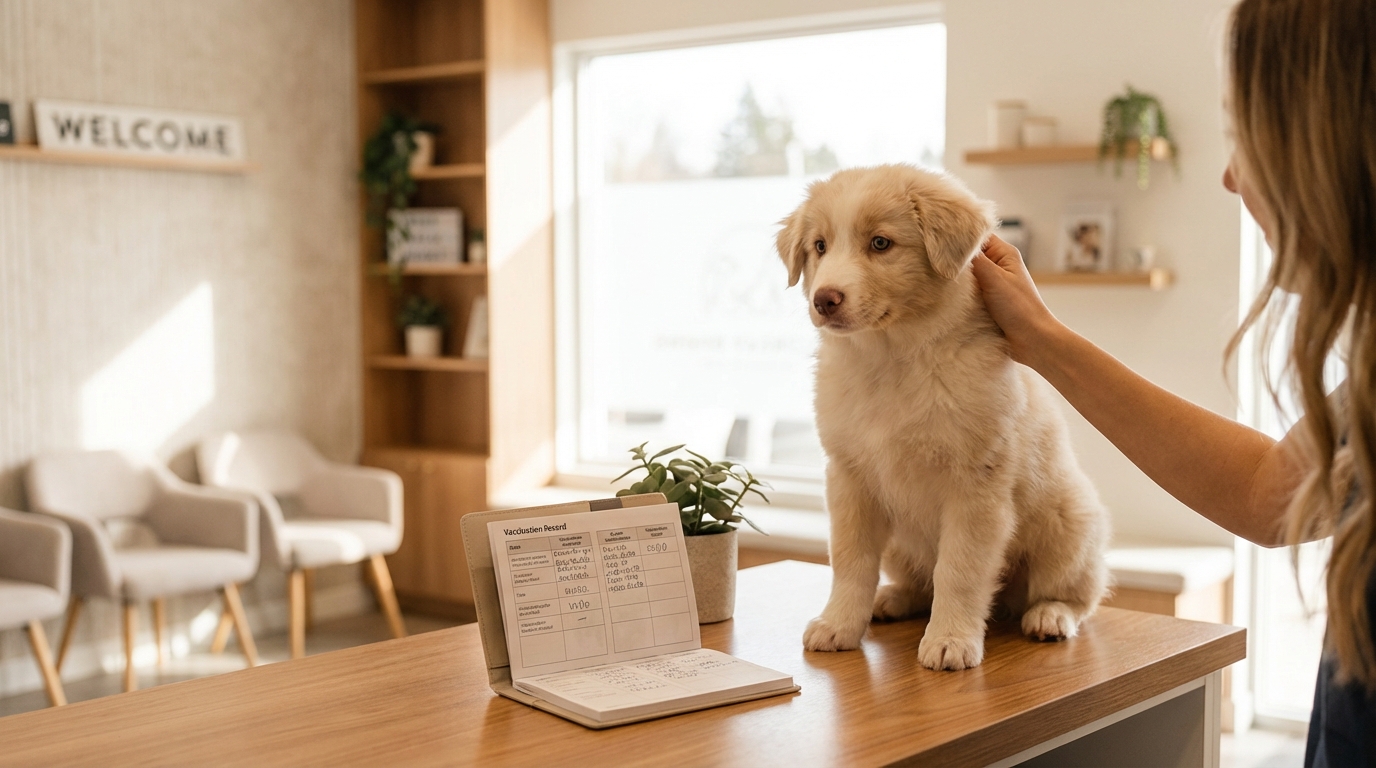
How to read the vaccination certificate: Clinics usually record the vaccine label (often noted as C3/C5), the date given, your puppy’s details, and the next due date. If you’re enrolling in puppy preschool, daycare, grooming, or boarding, keep a photo of the certificate on your phone and store the booklet somewhere easy to find.
Before and after care: side effects, exercise and monitoring
Most puppies handle vaccines well. Mild, short-lived effects can include sleepiness, a slightly reduced appetite, or a bit of tenderness at the injection site. Many pups simply have a quiet afternoon and bounce back the next day.
Keep the day low-key: avoid strenuous exercise, rough play, or long outings straight after the appointment. Offer fresh water, stick with their usual food, and supervise them that evening.
Quick tip: Book vaccine appointments for a time when you can be home afterwards. It’s easier to spot changes, and your puppy can rest without extra stimulation.
When to seek urgent vet care: Serious reactions are uncommon, but contact your vet or an emergency clinic straight away if you notice facial swelling, hives, repeated vomiting, severe diarrhoea, breathing difficulty, extreme lethargy, wobbliness, or collapse. If something feels “off” or rapidly worsening, it’s always safer to get immediate advice.
Planning: socialisation, daycare and travel
Many owners want to know when their puppy can start puppy preschool, daycare, grooming, or playdates. Policies vary: some organised puppy classes accept pups after the first or second vaccination, while others require the series to be further along. Always confirm requirements and choose providers that clean properly and manage interactions carefully.
Socialisation also doesn’t have to mean high-risk places. You can build confidence safely with:
- Meeting calm, healthy, vaccinated dogs you know (in a controlled yard or home)
- Listening to everyday sounds (traffic, vacuum, storms) at a gentle volume
- Walking on different surfaces (grass, sand, concrete) in lower-dog-traffic areas
- Positive handling (paws, ears, mouth) paired with rewards
If you’re planning travel (especially interstate) or you live in a high-dog-traffic area, ask your vet early about timing. Australian seasons can affect risk too: warmer, wetter periods may increase mosquito activity (relevant to heartworm prevention planning), and holiday boarding peaks can coincide with higher kennel cough exposure when dogs congregate.
What to bring to puppy preschool:
- Your puppy’s vaccination record (or a clear photo)
- A lead and collar/harness that fits well
- Small, easy-to-chew training rewards
- Water and a bowl (if requested by the provider)
- A towel/blanket for settling between activities
Common add-ons: parasites, microchipping and reminders
Vaccines are only one part of a solid protection plan. Many puppy visits include a discussion about parasite prevention—particularly fleas, ticks, intestinal worms, and heartworm—because puppies are more likely to pick things up while they’re exploring with their noses (and mouths).
In many parts of Australia, flea and tick risk can be year-round, and mosquito activity (and heartworm risk) may surge in warmer, wetter periods. Your clinic can recommend a routine that suits your puppy’s age, weight, and lifestyle, and help you keep timing consistent as they grow.
Other common add-ons include:
- Microchipping: often done early; check your state or territory requirements and keep details updated if you move
- Desexing discussion: timing varies by breed, size, and individual development
- Dental and grooming habits: starting toothbrushing and nail handling early makes future care much easier
- Booster reminders: future boosters help maintain protection; your vet will advise the interval that fits your dog’s needs
Need to prepare for your puppy’s first vet visits and the weeks that follow? Stock up on everyday essentials and comfort basics in our puppy supplies range, then confirm the best timing and vaccine choices with your vet for your puppy’s individual needs.
Frequently Asked Questions
What do puppy vaccines protect against?
Core puppy vaccines (often referred to as C3) generally protect against parvovirus, distemper, and infectious hepatitis. Some puppies may also be recommended additional coverage often bundled as C5, which commonly includes kennel cough components (often linked to Bordetella and parainfluenza), depending on exposure such as daycare, boarding, classes, or frequent dog-to-dog contact. Your vet will explain what’s included in the vaccine your puppy is receiving.
What if my puppy misses a booster date?
Book the next available appointment and bring your vaccination record. Depending on how late it is, your vet may adjust the plan so your puppy still ends up with reliable coverage.
Can my puppy go to the dog park after the first vaccination?
Many vets recommend avoiding high-traffic public areas like dog parks until the initial series is complete, because disease risk is harder to control (and not every dog you meet will be vaccinated). In the meantime, choose lower-risk social experiences like meeting known, healthy, vaccinated dogs and attending well-run puppy classes if your vet agrees.
Do indoor puppies still need parasite prevention?
Often, yes. Parasites can hitch a ride inside on shoes, other pets, or mosquitoes, and many homes still have flea exposure. Choose prevention based on where you live and your puppy’s routine, and keep it consistent as they grow.