


Following a puppy vaccination schedule is one of the simplest ways to protect your new dog during their most vulnerable months. When you’re planning a puppy vaccination schedule in Australia, it helps to know that timing isn’t one-size-fits-all: early immunity can be patchy until the full course is complete, and your puppy’s previous vaccines (often given by the breeder) will shape what happens next. Below is a practical overview of what to expect, how vets commonly structure appointments, and how to stay organised without trying to self-manage medical decisions.
Why puppy vaccines matter (and what they protect against)
Puppies are born with some protection from their mum, but it fades at different rates for different pups. That timing matters because there can be a “gap” where maternal antibodies aren’t strong enough to protect, yet are still strong enough to interfere with a vaccine response. A structured vaccination course helps bridge that gap so your puppy can build reliable immunity as they grow.
It’s especially relevant in Australia where dogs often socialise year-round at parks, beaches, cafes, training classes, grooming salons, boarding facilities, and pet-friendly venues. Even if you’re careful about who your puppy meets, viruses and bacteria can be carried on shoes, hands, bowls, and shared surfaces.
While you’re planning their first months, it helps to line up essentials like a crate, lead, training treats, and grooming basics. If you’re stocking up, you’ll find handy basics in our puppy supplies range.
Core vs lifestyle vaccines in Australia (C3/C5 explained)
In Australia, vets often talk about vaccines using “C” shorthand. The exact products and recommendations vary by state/territory, local disease patterns, and your individual puppy’s health and lifestyle, so your vet is the best person to advise what’s right for your situation.
- Core vaccines (commonly referred to as C3): Typically covers parvovirus, distemper, and hepatitis/adenovirus. These are generally recommended for most puppies.
- Core + lifestyle (often called C5): Usually includes C3 plus protection for kennel cough components (commonly parainfluenza and Bordetella). This may be recommended for puppies likely to attend day care, boarding, grooming, dog sports, or training classes where close contact and shared airspace increase risk.
- Other lifestyle vaccines (region- and risk-dependent): Your vet may discuss additional options depending on where you live, your travel plans, and likely exposure. For example, leptospirosis may be considered in some areas and situations (often linked with wetter environments and wildlife or livestock exposure), while canine coronavirus is generally not routine for most pet puppies. These decisions are assessed by your vet based on local risk and your puppy’s health.
Important: The “right” combination isn’t about choosing the biggest number—it’s about matching protection to risk. Your vet may also adjust timing if your puppy is unwell, stressed, underweight, or has an unknown vaccine history.
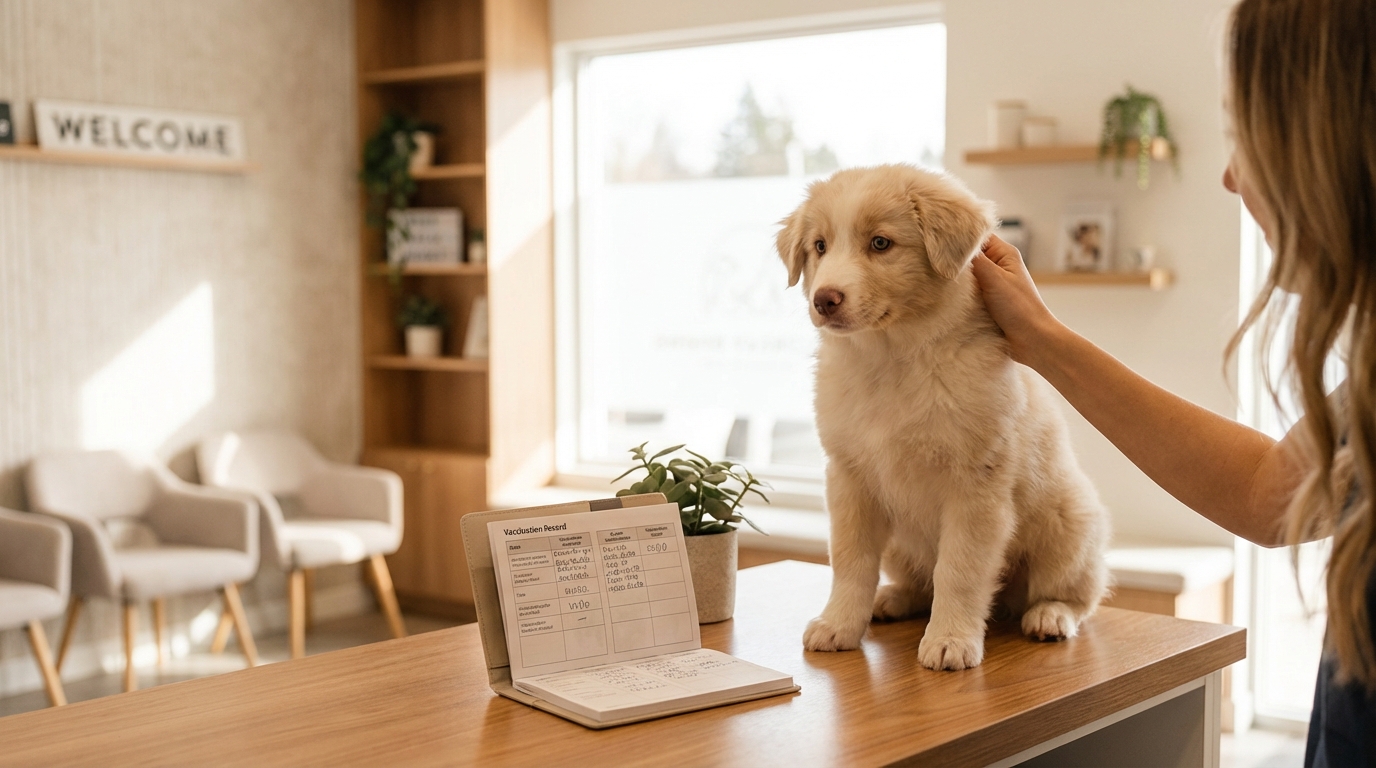
Typical timing for puppy shots in Australia (table)
Most vets in Australia use a series of vaccinations rather than a single visit, because immunity develops over time. The exact plan can vary by region, local disease risk, and your puppy’s background, but the flow is usually similar.
| Age range | What usually happens | Notes |
|---|---|---|
| 6–8 weeks | First puppy vaccination often given by breeder or rescue | Not every puppy starts here with their new owner. Your vet uses records (or lack of them) to plan the next step. |
| 10–12 weeks | Second vaccination in the series | Commonly the first clinic visit after your puppy comes home at 8–10 weeks. Good time for a full health check and questions. |
| 14–16 weeks | Final puppy vaccination in the initial series for many dogs | Designed to help lock in protection when maternal antibodies are least likely to interfere. |
| 6–12 months | Booster appointment | Supports ongoing protection into adolescence and helps set your adult booster plan. |
| Adulthood | Ongoing boosters as advised | Intervals vary by vaccine type and lifestyle (for example, higher exposure dogs may need some components more often). |
If you’re trying to work out when to vaccinate a puppy, book an appointment soon after your pup arrives home. Your clinic can confirm what’s already been done, check your puppy’s overall health, and map out the remaining dates. This is also a good time to ask about puppy preschool timing, safer socialisation options, and local parasite risks (which can differ between, say, coastal NSW and inland VIC, or tropical QLD wet season conditions).
Quick tip: Take a photo of your puppy’s vaccination certificate after every visit and email it to yourself. It’s handy for boarding, training classes, and emergency backups if paperwork goes missing.
Vaccine-visit checklist (before, during, after)
If you want an easy way to stay organised, use this checklist for each vaccination visit.
- Before you go:
- Bring any breeder/rescue vaccination records (even if incomplete).
- Bring microchip paperwork and your contact details.
- Write down questions about feeding, toilet training, socialisation, and parasite prevention.
- Bring small treats to help your puppy form a positive association with handling.
- At the clinic:
- Ask which vaccines your puppy is receiving today (for example, C3 vs C5) and why.
- Confirm the date range for the next dose and how strict the timing needs to be.
- Ask when your puppy can safely attend puppy class, grooming, or day care based on their progress and risk.
- After the appointment:
- Plan a quiet day: gentle play, normal meals, plenty of rest.
- Monitor for mild side effects (see below) and contact your clinic if anything seems off.
- Record the vaccine name(s), batch number (if listed), and next due date in your calendar.
Socialisation safely: Until your puppy has completed the initial vaccination course, avoid high-traffic dog areas like off-leash parks and unknown dog gatherings. You can still build confidence with low-risk experiences: invite healthy, vaccinated friends’ dogs over, carry your puppy through busier areas (where allowed), and practise car trips, grooming, sounds, and gentle handling at home.
Costs, records, side effects, and how boosters work
Costs vary between clinics and can depend on which vaccines are recommended for your puppy’s lifestyle. Many clinics bundle puppy visits into a program that may include health checks, vaccine visits, and guidance on feeding and training. Ask what’s included so you can compare like-for-like.
Paperwork to expect: After each visit, you’ll usually receive an entry in a vaccination certificate or booklet (paper or digital). It commonly includes the date given, the vaccine name/type, the clinic’s details, and the next due date. Some certificates also record a batch/serial number. Keep this record accessible—you may need it for day care, boarding, grooming, training classes, travel, and some rental or strata requirements.
Common mild side effects: Many puppies are a bit sleepy, quieter than usual, or slightly tender at the injection site for a day or so. A small lump at the injection site can occur and may take time to settle. Mild, short-lived changes are often managed with rest and normal routine.
Red flags to treat as urgent: Contact your vet promptly (or an emergency clinic if severe) if you notice facial swelling, hives, repeated vomiting or diarrhoea, collapse, difficulty breathing, extreme lethargy, or anything that rapidly worsens. It’s always better to check.
How boosters typically work after 12 months: After the 6–12 month booster, ongoing boosters are scheduled based on your dog’s risk and the vaccine used. Some components may be recommended more often for dogs with higher exposure (for example, frequent boarding/day care), while others may be given less frequently. Your vet can outline a plan that fits your dog’s routine and your local area.
Don’t forget parasite prevention while vaccinating
Vaccines are only one part of keeping a puppy healthy. Fleas, ticks, intestinal worms, and heartworm are common concerns in Australia, and risk can shift with climate and season—think tick pressure along many coastal areas, or fleas persisting through warmer months and heated indoor homes.
It’s practical to line up parasite prevention around your vaccination timeline so nothing gets missed during the busy “new puppy” phase. Many owners find it easiest to:
- Set calendar reminders for parasite treatments and vet visits.
- Keep products in one dedicated spot so you don’t double-dose or forget a month.
- Record dates alongside vaccine appointments in the same notes app or diary.
If you’re setting up your puppy’s home-health kit, browse our puppy supplies to find everyday essentials and useful basics in one place.
Frequently Asked Questions
Can my puppy go to the dog park after the first vaccine?
It’s usually best to avoid busy public dog areas until the initial course is finished, because protection builds over several visits and risk can be higher where lots of unknown dogs share the same space. Choose controlled socialisation instead, like meeting known healthy dogs or attending a well-run puppy class that checks vaccination status.
What if my puppy’s vaccination is late by a week or two?
Don’t panic—contact your clinic and rebook as soon as you can. The next steps depend on your puppy’s age, which vaccine was due, and how delayed the course is. Your vet may simply adjust the next date, or in some situations recommend restarting parts of the course.
Do indoor puppies still need vaccines?
Yes—many infections spread through contact with other dogs, contaminated surfaces, or can be carried in on shoes and clothing. Even if your puppy mostly stays at home, vet visits, visitors, grooming, and future outings can all create exposure risk.
What if my puppy came with no vaccination paperwork?
Let your vet know what you do (and don’t) know about your puppy’s history. If records can’t be confirmed, your vet will recommend a safe plan based on age and risk to help ensure your puppy ends up with reliable protection.
Ready to plan your puppy’s first few months? Stock up on essentials in our puppy supplies, and for personalised timing and local risk advice, chat to your vet.