


Senior dog dementia can show up as small changes at first: getting “stuck” behind furniture, seeming lost on familiar walks, or waking at odd hours. Canine Cognitive Dysfunction (CCD) is common as dogs age, and it can be upsetting to watch. The good news is that simple routines, a safer home setup, and the right veterinary support can reduce stress and improve day-to-day comfort—especially when night waking becomes a pattern.
Signs your older dog may be struggling
Cognitive changes can look like “personality” changes, but they’re often patterns you can track. Many owners first notice their dog seems unsettled at dusk (a classic “sundowning” vibe), or they start staring at walls or into space.
- Disorientation: pacing, getting stuck in corners, hesitating at doorways
- Changed social behaviour: clingier than usual, or less interested in pats and family time
- Sleep disruption: restlessness overnight, daytime napping that throws off routines
- House-training slips: accidents indoors despite previously being reliable
- New anxiety or vocalising: whining, barking at nothing obvious, startling easily
Because these signs can overlap with pain, hearing loss, or vision decline, it helps to keep notes for a couple of weeks. Write down what happened, the time of day, and what was going on around them (visitors, storms, a changed schedule). If you can safely capture a short video of the behaviour (for example, evening pacing or aimless wandering), it can be very helpful for your vet.
Rule out medical causes first (and when it’s urgent)
Before you assume CCD, check for common health issues that can mimic cognitive changes. Arthritis pain, dental disease, urinary issues, and hormone changes can all make a dog seem confused or irritable.
It helps to think in “differentials” (other conditions that can look similar). Your vet may recommend an exam and targeted tests based on what you’re seeing at home, including:
- Vision or hearing loss: bumping into furniture, startling when approached, not responding to familiar cues—often worse in low light
- Pain (arthritis, back or neck pain): reluctance to jump, stiffness after rest, changes in tolerance for handling or grooming
- Urinary problems: urinary tract infections, bladder inflammation, or incontinence that can cause accidents and night waking
- Hormonal and metabolic conditions: thyroid issues or Cushing’s disease can contribute to restlessness, appetite changes, increased drinking/urination, and behaviour shifts
- Neurological issues: seizures, vestibular episodes, or other brain conditions can cause sudden disorientation
Consider what else is changing: drinking more, appetite shifts, bad breath, limping, coughing, panting at rest, or reluctance to go for walks. Even mild sensory changes can create senior dog confusion—especially in busy households or at night.
When to seek urgent veterinary care: sudden or severe disorientation; collapse or extreme weakness; repeated vomiting or diarrhoea; seizures; trouble breathing; a painful, swollen abdomen; inability to pass urine; or a rapid change in behaviour paired with marked lethargy. If you’re unsure, call your vet or an emergency clinic for advice.
A practical approach is to bring your notes (and any video) to your appointment. The aim is clarity: what’s normal ageing, what’s treatable discomfort, and what needs an ongoing plan.
Make the home easier to navigate
When a dog is disoriented, reducing “decision points” at home can lower stress quickly. Think of it like setting up gentle, obvious pathways: fewer obstacles, clearer cues, and consistent locations for essentials.
- Keep furniture layout stable: avoid frequent room changes that can trigger disorientation
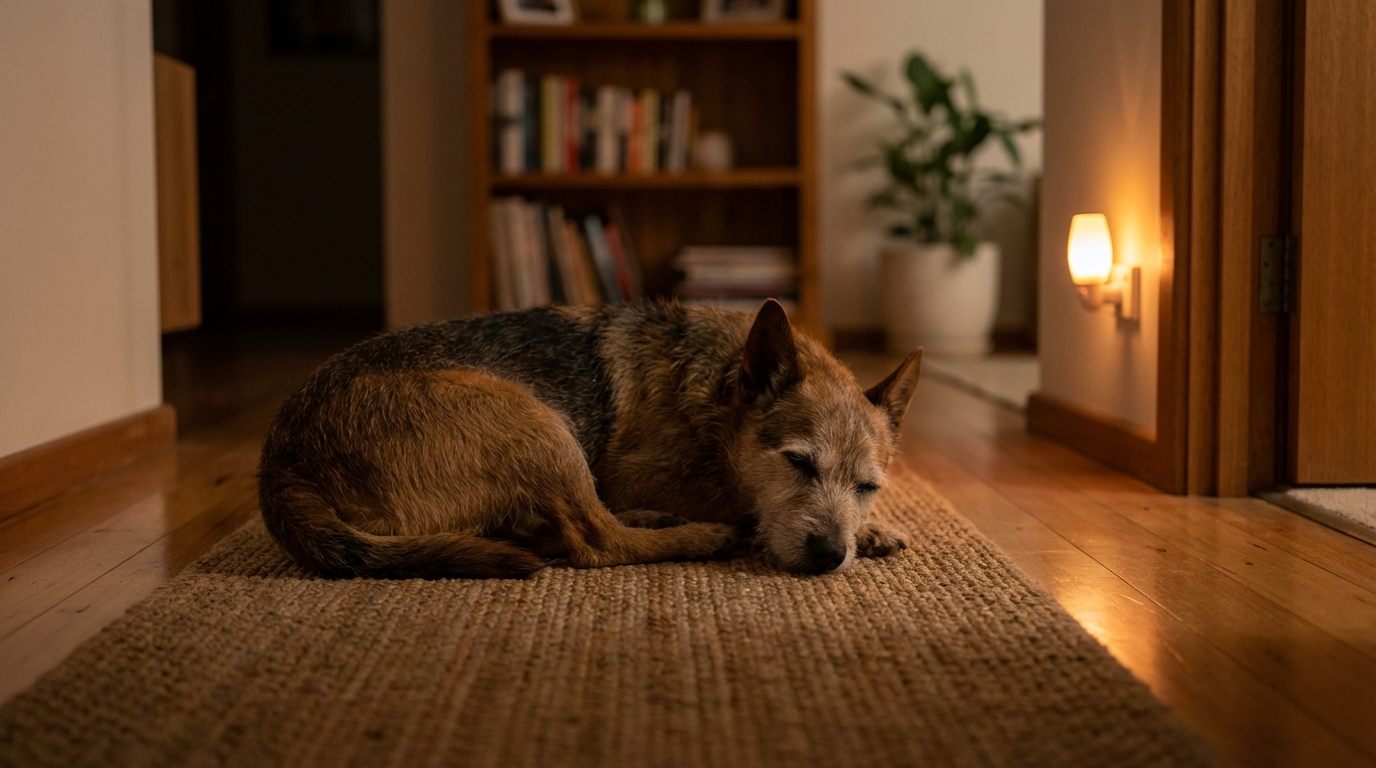
- Improve grip: add runners or non-slip mats on tiles and floorboards
- Night lighting: use a soft hallway light to help with evening pacing
- Use baby gates strategically: block off stairs or confusing areas when unsupervised
- Create “home bases”: one bed in the living area and one in a quiet sleeping spot
If you have a backyard, make toileting easy: keep a clear path, avoid slippery steps, and use the same door each time. In an Australian summer, aim for shade and cool resting zones so heat doesn’t add extra stress or restlessness. In cooler southern winters, consider how draughts and cold floors can worsen stiffness and overnight unsettled behaviour.
Quick tip: If your dog gets stuck behind furniture, leave wider gaps and place a soft bed in a “turnaround spot” so they can reset without panicking.
Daily routine, enrichment, and sleep support
With CCD, consistency is calming. Try to keep wake-up, meals, walks, and bedtime in the same order each day. Predictability reduces anxiety and can minimise evening unsettled behaviour.
Enrichment should be easy wins, not challenges that frustrate them. Rotate simple sniff games (treat scatter in grass), gentle food puzzles, and short training refreshers using familiar cues. Keep sessions brief and upbeat, and finish before they tire.
- Exercise: choose shorter, more frequent walks rather than one long outing
- Mental stimulation: sniffing and foraging games often beat high-pressure “problem solving”
- Social time: calm companionship can matter more than busy dog-park energy
- Sleep hygiene: reduce late-night excitement; offer a quiet, dark sleeping space
If night waking is a problem, consider an early-evening toilet break and a low-key wind-down routine. Soft background noise can help some dogs settle if they’re startled by street sounds, possums on the roof, or sudden weather changes.
Evidence-based supports to discuss with your vet
There isn’t a single fix for senior dog dementia, but there are supports with evidence behind them that your vet may recommend as part of a broader plan. Depending on your dog’s health and symptoms, ask about:
- Prescription options: medications that may support brain function or reduce anxiety-related behaviours
- Diets formulated for cognitive support: veterinary or commercial diets designed for senior brain ageing
- Omega-3 fatty acids and other supplements: options that may support brain and joint health, chosen with your vet to suit your dog’s medical history
If your dog takes multiple medications or has kidney, liver, or pancreatitis history, it’s especially important to check with your vet before adding anything new.
Don’t overlook parasite protection in senior years
It’s easy to focus on brain ageing and forget the basics, but comfort is cumulative. Fleas can trigger itchiness and broken sleep, ticks can cause sudden weakness, and mosquitoes increase heartworm risk—each of which can worsen restlessness or make an older dog seem “not themselves”.
Senior dogs still need reliable parasite prevention year-round in many parts of Australia, especially in warm, humid regions where fleas persist and mosquito activity can stay high. A steady prevention routine also helps owners keep a consistent monthly or quarterly schedule—useful when you’re already managing changes linked with CCD.
When you’re reviewing your dog’s routine, it can help to restock seasonal essentials together—think grooming tools, calming aids, and vet-grade prevention—so there’s less chance of missing a dose during busy weeks.
Frequently Asked Questions
How do I tell normal ageing from cognitive problems?
Normal ageing is usually gradual and predictable (slower walks, more naps). When you see repeated disorientation, new anxiety, house-training changes, or disrupted sleep that persists for weeks, it’s worth tracking closely and seeking assessment.
What can I do today to reduce senior dog confusion?
Start with the environment: keep furniture in place, add non-slip mats, and use gentle night lighting. Then lock in a simple daily routine with short walks, sniff-based enrichment, and consistent meal times.
Can canine cognitive dysfunction (CCD) get worse quickly?
Some dogs change slowly, while others seem to worsen after a stressful event like moving house, extreme heat, or disrupted sleep. Supporting routine, comfort, and health checks can help stabilise day-to-day wellbeing.
Is night waking always dementia?
No. Night waking can also be linked with pain, needing to urinate, gastrointestinal upset, sensory changes, or anxiety. Because it’s common for issues to overlap in older dogs, a vet check is the safest way to work out what’s driving the change.
Supportive next step: Set a few simple reminders (even on your phone) for regular check-ups, parasite prevention, and any daily routines that help your dog settle. If you’re seeing persistent changes, bring your notes to your vet so you can build a plan that fits your dog’s needs and your household rhythm.