


Dog dementia can look like little “off” moments at first—getting stuck behind furniture, staring into space, or forgetting familiar routines. For many families, canine cognitive dysfunction (CCD) shows up as anxiety, sleep changes, and confusion episodes that come and go. The good news: small, consistent changes at home can make daily life calmer and safer while you work with your vet on the bigger picture.
Signs it’s more than “just ageing”
Many older dogs slow down, sleep more, and take longer to learn new things. Age-related cognitive changes become more likely when behaviour shifts start affecting everyday function—especially when they’re new, getting worse, or happening in clusters.
Common signs associated with dog dementia include:
- Disorientation: pacing, staring at walls, getting stuck in corners, seeming “lost” in familiar rooms
- Routine changes: forgetting house-training, asking to go out at unusual times, confusion around mealtimes
- Sleep-wake shifts: restless nights, daytime drowsiness, waking and vocalising after dark
- Social changes: clinginess, irritability, reduced interest in family interactions
- Anxiety behaviours: more startling, separation distress, repetitive licking or pacing
If you’re noticing the “lost” moments mostly in the evening, it may be “sundowning”—a pattern where symptoms worsen at dusk and night. Keep a simple notes log (what you saw, time of day, any triggers) so you can spot patterns and track progression.
Rule out other causes first
Before you assume cognitive decline, it’s worth considering other common problems that can mimic it. Pain, reduced vision or hearing, urinary tract issues, arthritis, and dental disease can all change behaviour and sleep.
For example, a dog that’s waking at night might be uncomfortable from stiff joints, needing to urinate more urgently, or feeling anxious because they can’t see well in low light. A dog that seems “stubborn” may actually be struggling to hear cues or navigate slippery floors.
Medical note: If behaviour changes are sudden or severe, or your dog shows red flags such as sudden disorientation, collapse, seizures, persistent vomiting/diarrhoea, or extreme pain, seek urgent veterinary care. Don’t wait to “see if it passes”.
Your vet may recommend an exam and basic diagnostics (for example, blood and urine tests, blood pressure, and checks for pain, vision and hearing) to rule out treatable causes. If CCD is suspected, some clinics use structured questionnaires or scoring tools to assess cognitive function and track changes over time. There are also evidence-based veterinary options that may be discussed depending on your dog’s history, including prescription diets formulated for brain health, specific supplements, and (in some cases) prescription medicines such as selegiline. Your vet can advise what’s appropriate and safe for your dog—avoid trialling human products or unproven remedies.
While you’re assessing changes, keep everyday health basics steady. Year-round parasite prevention matters for seniors too—itching, skin irritation, and tick-borne illness can worsen restlessness and disrupt sleep. Browse our flea and tick prevention options and maintain a consistent schedule, especially through warm, humid months in coastal Australia when parasites are active.
Set up a brain-friendly home routine
When canine cognitive dysfunction is on the table, predictability is one of your best tools. A stable routine reduces stress and helps your dog “fill in the gaps” when memory and processing speed aren’t what they used to be.
- Keep landmarks consistent: avoid rearranging furniture, keep bowls in one spot, and use the same door for toileting if possible.
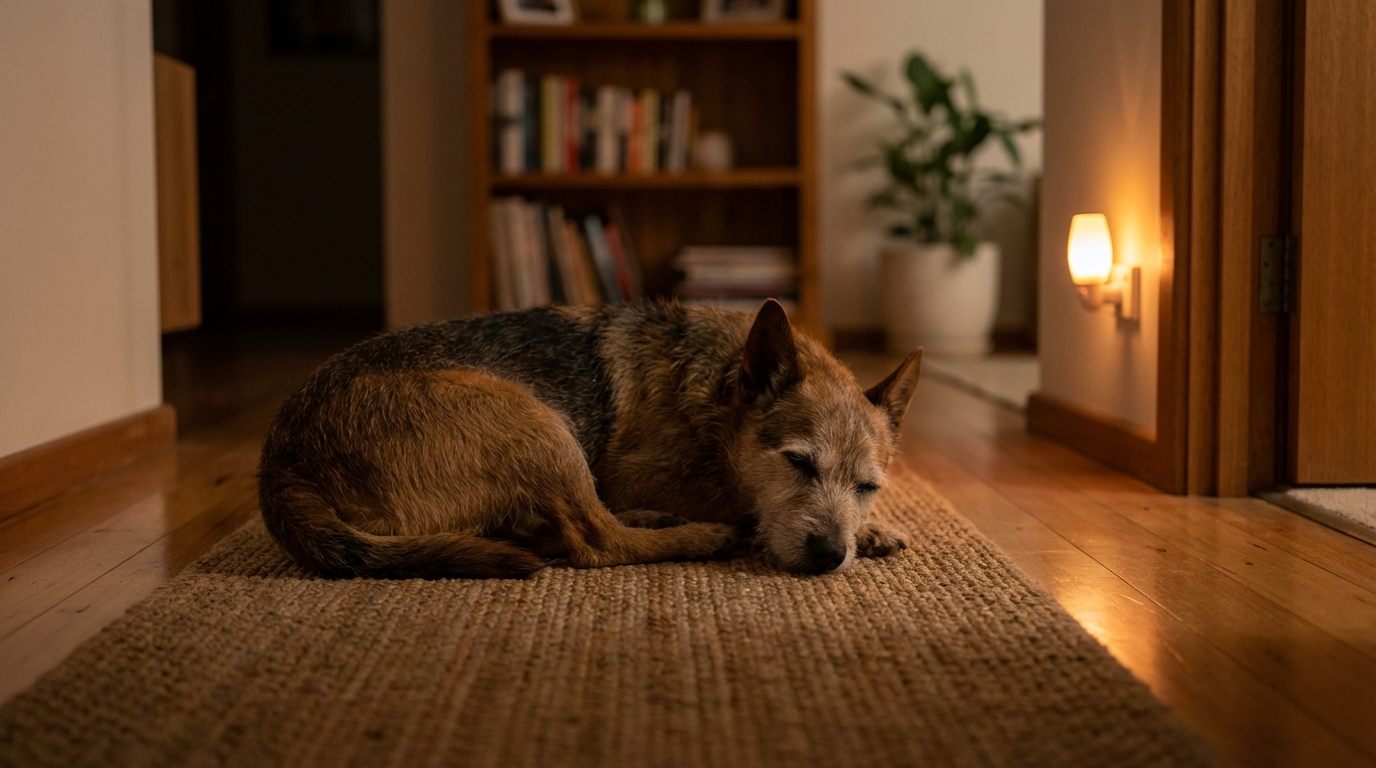
- Improve lighting at night: plug-in night lights in hallways and near the water bowl can reduce evening disorientation.
- Use non-slip surfaces: runners or mats help dogs feel secure and reduce hesitation that can look like confusion.
- Create “easy wins”: shorter walks, extra sniff time, and fewer rushed transitions between activities.
For dogs that wander or pace, set up a safe “loop” path—clear obstacles, block off stairs, and provide a comfy bed in a low-traffic area. If your dog gets distressed when separated, keep them close during the day using baby gates (instead of closed doors) so they can see you.
Quick tip: Add a night light, a second water station, and a soft, washable bed in the room where your dog sleeps—three small changes that often reduce night-time pacing.
Also consider whether your dog’s parasite protection is still easy to administer. Many seniors do better with simple, consistent routines. If your household already manages heartworm, set reminders and keep prevention year-round; explore our heartworm prevention range to find an option that suits your dog’s stage of life.
Enrichment that supports older brains
The goal isn’t to “train like a puppy” but to keep your dog engaged without frustration. Short, positive sessions can support confidence and reduce anxiety that often accompanies age-related mental changes.
Low-stress enrichment ideas:
- Sniff-based games: scatter a portion of dinner in the grass, or hide treats in a towel “snuffle roll”.
- Simple puzzles: start with easy-to-solve treat toys and increase difficulty only if your dog enjoys it.
- Micro-training: one or two cues your dog already knows (like “touch” or “sit”), rewarded generously.
- Novelty in tiny doses: a new route around the block, a different textured mat, or a new safe chew.
Watch your dog’s body language. If they seem overwhelmed—panting, walking away, freezing, or getting snappy—scale it back. With dementia-like changes, success is measured by calm engagement, not complexity.
Comfort, safety, and travel tips
As confusion episodes become more frequent, safety planning becomes part of daily care. Think about what could happen on a “bad day” and make it easier for your dog to recover quickly.
- Update ID: ensure microchip details and collar tags are current in case your dog slips out.
- Secure hazards: block access to pools, stairs, and slippery decks—especially during wet winter months.
- Reduce startling: approach gently, avoid waking abruptly, and keep handling predictable.
- Make toileting easier: more frequent breaks, a consistent spot, and a rain cover at the door for stormy days.
For car trips, keep the environment familiar: the same restraint, a favourite blanket, and a calm pre-trip routine. If your dog becomes unsettled at dusk, plan appointments earlier in the day and keep evenings quiet and well-lit.
Finally, be kind to yourself. Supporting a dog through cognitive change can be emotionally taxing—progress is rarely linear. Celebrate the stable days, and use your notes log to identify what helps most.
Frequently Asked Questions
How can I tell if my dog has dementia or is just getting old?
Normal ageing is usually gradual and doesn’t disrupt everyday function much. CCD is more likely when you see disorientation, house-training accidents, sleep reversal, and increasing anxiety—especially if symptoms cluster or worsen over weeks. Your vet can help rule out medical causes and may use a questionnaire or assessment to track changes.
Why is my older dog more confused at night?
Many dogs show more confusion in the evening due to lower light, fatigue, and reduced ability to process changes—often called “sundowning”. Night lights, a predictable bedtime routine, and a comfortable sleeping area can reduce pacing and distress.
What home changes help the most?
The biggest wins are consistency and safety: keep furniture and bowl locations the same, improve traction with mats, and maintain a steady daily routine. Add gentle enrichment (sniff games, easy puzzles) to keep your dog engaged without stress.
If you’re supporting an ageing dog, stock up on year-round essentials like parasite protection via our flea, tick and heartworm prevention category, and for personalised guidance on behaviour changes, chat to your vet.