


Want to brush your dog’s teeth without turning it into a wrestling match? With the right tools, timing, and a steady routine, most dogs can learn to tolerate (and sometimes enjoy) tooth brushing. This step-by-step guide focuses on practical dog dental hygiene you can start today.
Why brushing matters for dog dental hygiene
Plaque starts forming on teeth within hours of eating. If it’s not removed, it can harden into tartar, which is much harder to shift at home and may contribute to bad breath and gum irritation.
Brushing is the most direct way to remove plaque at the gumline where it matters most. Done regularly, it’s one of the simplest at-home habits for better dog dental hygiene—especially for small breeds and flat-faced breeds that can be prone to faster tartar build-up.
What you need: toothpaste, brushes, and setup
Before you start, set yourself up for success. Keep sessions short, pick a low-distraction time (after a walk is ideal), and have a reward ready.
- Dog-safe toothpaste: Choose a pet toothpaste (never human toothpaste). A flavour your dog likes makes everything easier.
- Brush option 1 — dog toothbrush: A small-headed brush with soft bristles reaches the back molars best. If you’re comparing styles, think of this as your practical dog toothbrush guide: smaller head = easier angle; soft bristles = gentler on gums.
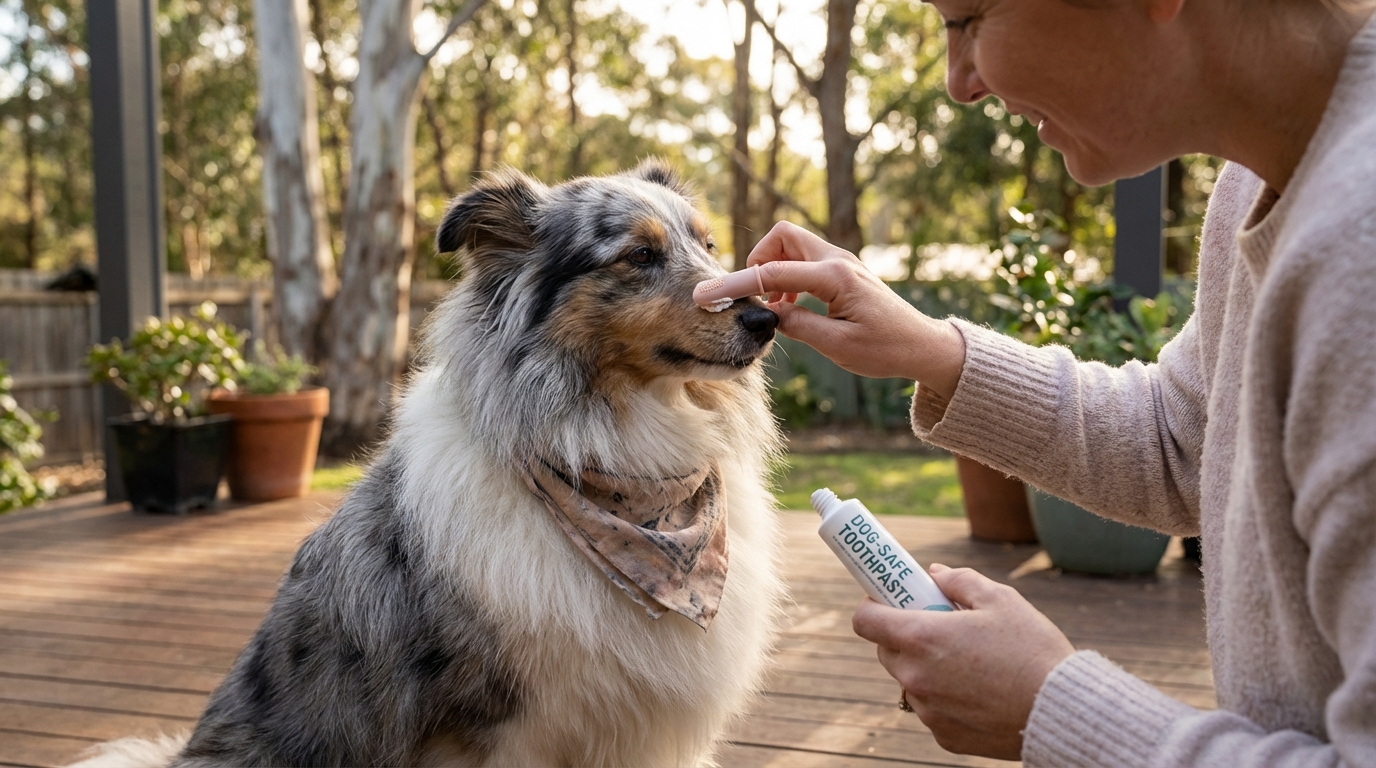
- Brush option 2 — finger brush: Useful for beginners or small mouths, though it can be less effective for back teeth.
- Clean cloth/gauze: Great for the first few sessions if your dog is very unsure.
If you’re already shopping for pet health essentials, you can keep dental items alongside your other prevention staples in the Dental Care section. Many households also stock parasite preventatives at the same time—see Flea, Tick & Heartworm Prevention when you’re restocking.
How to brush: a calm, step-by-step routine
Think of this as training, not a one-off event. Aim for calm repetition, and stop while it’s still going well.
- Step 1: Introduce the taste (day 1–2)
- What to do: Put a pea-sized smear of dog toothpaste on your finger and let your dog lick it.
- Goal: Toothpaste = positive.
- Step 2: Touch the mouth (day 2–4)
- What to do: Gently lift the lip for one second, reward, and finish. Build up to a few seconds.
- Goal: Handling the muzzle and lips feels normal.
- Step 3: Start with front teeth (first brushing session)
- What to do: Use a finger brush, soft toothbrush, or cloth. Brush the outer surfaces of the front teeth in small circles for 5–10 seconds.
- Goal: A “micro session” your dog can tolerate.
- Step 4: Move to the back teeth (over 1–2 weeks)
- What to do: Gradually include the premolars and molars. Focus on the outside surfaces—dogs get more tartar there.
- Goal: Cover the key areas without forcing the mouth open.
- Step 5: Use the right angle and pressure
- What to do: Angle bristles toward the gumline (about 45 degrees) and use gentle circular motions. Light pressure is enough to remove plaque.
- Goal: Clean effectively without irritating gums.
- Step 6: End on a win
- What to do: Stop before your dog pulls away, then reward. Short, successful sessions beat long, stressful ones.
- Goal: Your dog stays relaxed and willing next time.
Quick tip: If your dog won’t accept a brush yet, start by wiping the outer teeth with damp gauze for 10 seconds, then gradually swap to a soft toothbrush.
How often to brush + troubleshooting common issues
How often should you brush? Daily is ideal, but 3–4 times a week can still make a noticeable difference. In hot Australian summers, dogs may drink more and pant more, which can dry the mouth—sticking to a routine helps keep plaque from building up.
If your dog chews the brush: Let them lick toothpaste off first, then brush for only 3–5 seconds and reward. Gradually increase time as they settle.
If your dog hates lip lifting: Approach from the side of the mouth rather than straight on, and lift the lip only a little. Pair each touch with a reward so the handling predicts something good.
If gums bleed a little at first: Mild bleeding can happen when gums are inflamed from plaque. Use softer pressure and shorter sessions; if bleeding is heavy or ongoing, pause and reassess.
If you can’t reach the back teeth: Use a smaller brush head and focus on the upper back teeth first—they often collect tartar fastest. A consistent “outside surfaces only” routine is still worthwhile if that’s all your dog will allow.
Extra support: chews, water additives, and dental checks
Brushing is the cornerstone, but it doesn’t have to work alone. Supportive options can help between brushing sessions, especially for dogs that are still learning.
- Dental chews and toys: Look for options designed to reduce plaque through chewing action. Always supervise and choose a size that suits your dog.
- Water additives and rinses: Some dogs tolerate these well as an “easy win”, especially if they’re not brush-ready yet.
- Dental diets: Certain kibble shapes/textures can support oral care—best discussed during your dog’s regular health checks.
Even if you brush regularly, keep an eye out for signs that need attention: persistent bad breath, red gums, visible brown tartar, drooling, pawing at the mouth, or dropping food.
Frequently Asked Questions
Do I really need to brush if my dog eats dry food?
Dry food can help a little, but it doesn’t reliably clean at the gumline where plaque builds up. Brushing removes plaque directly and is still the most effective home routine for dental care.
What’s the best time of day to brush?
Choose a time your dog is calm—often after exercise or dinner. The best time is the one you can stick to consistently, even if it’s just a 20–30 second session.
Can I use human toothpaste or baking soda?
No—human toothpaste may contain ingredients that aren’t suitable for dogs, and many dogs dislike the taste. Use a dog-safe toothpaste designed to be swallowed in small amounts.
Ready to start a simple routine today? Stock up on dog-safe toothpaste and brushing essentials in our Dental Care range, and if you’re worried about your dog’s mouth or breath, chat to your vet.