


Grain-free dog food has become a popular choice for many Australian dog owners—often seen as a “cleaner” or more natural option. In practice, grain-free simply describes what’s not in the recipe, not whether it’s automatically healthier. This guide breaks down the pros, cons, and which dogs may genuinely do better on a grain-free diet, so you can choose based on your dog’s results rather than a label.
What “grain-free” really means
“Grain-free” means the recipe doesn’t include common cereal grains such as wheat, corn, rice, oats, barley, or rye. It doesn’t automatically mean higher meat content, lower carbohydrates, or better quality.
To help kibble hold together and provide energy, many grain-free formulas use other starches instead—often potato, sweet potato, lentils, peas, or tapioca. For some dogs, that swap makes no noticeable difference. For others, it can help (or occasionally make things worse) depending on their individual digestion and sensitivities.
When comparing foods, look past the headline claim and check the ingredient list and nutritional adequacy statement. A well-made diet can include grains and still be balanced, digestible, and suitable for your dog’s life stage and activity level.
Are grains actually bad for dogs?
For most dogs, grains aren’t “bad”—they’re simply one possible ingredient. Properly cooked grains can provide energy, fibre, and nutrients, and many dogs tolerate them well.
True grain allergy is considered uncommon. When dogs react to food, it’s more often linked to specific proteins (such as certain meats) than to grains themselves. That’s why the better question isn’t “are grains harmful?”, but “does this recipe agree with this dog?”
Grain-inclusive diets can be a good fit for dogs that do best with steady, predictable fibre and energy—especially if they’ve been thriving already with good stool quality, comfortable skin, and stable weight. On the other hand, some dogs do better when certain ingredients are removed and replaced, particularly if you’ve noticed a consistent pattern of itch, recurring ear irritation, or loose stools tied to a particular food.
Quick tip: If you’re troubleshooting skin or tummy issues, change one variable at a time and stick with it for several weeks. Switching multiple foods, treats, and chews at once can hide the real trigger (or make it look like nothing works).
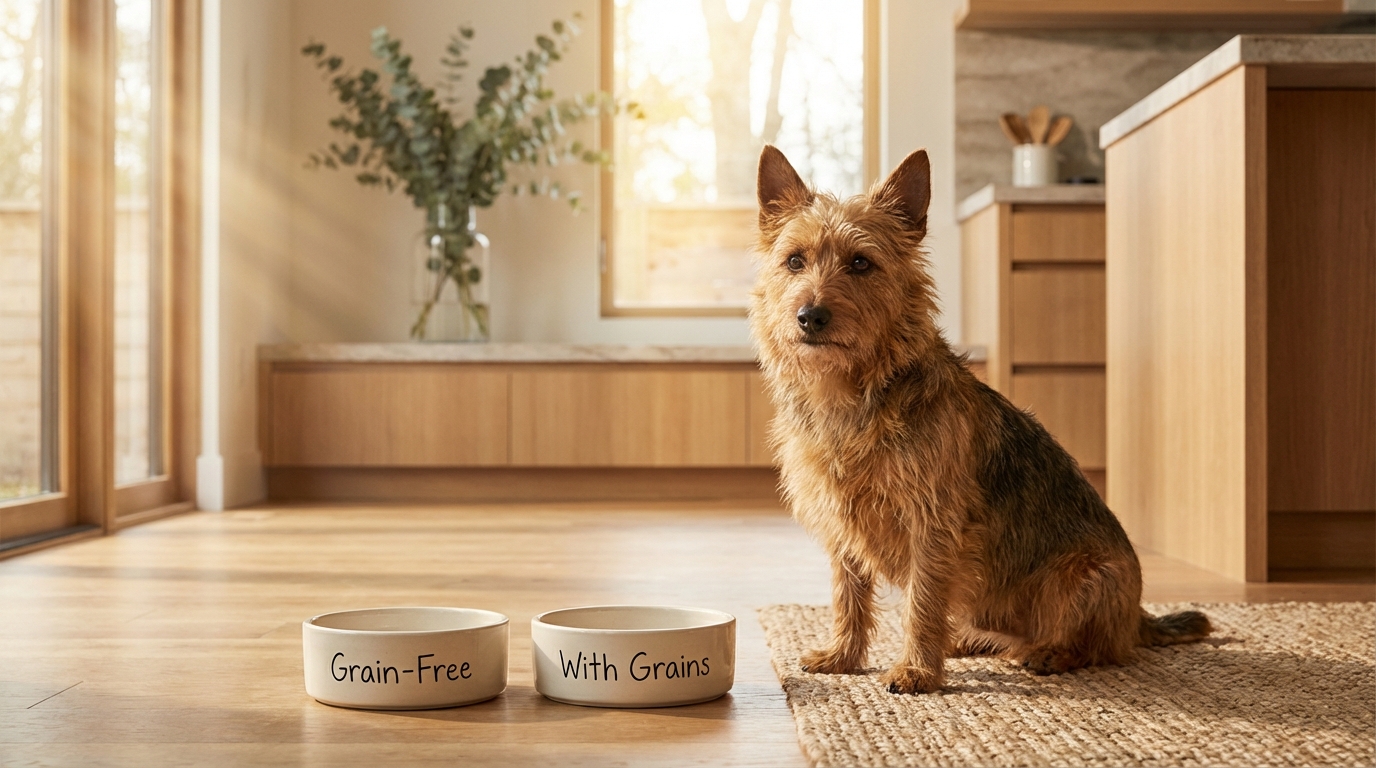
Grain-free vs grain-inclusive: a quick comparison
Use this checklist to keep the decision practical. The goal is comfort and consistency—especially during hot Australian summers when appetite and hydration can shift, or during spring when environmental allergies can muddy the picture.
- Carbohydrates: Grain-free isn’t automatically lower-carb; starch may come from legumes or tubers instead of cereals.
- Fibre and stools: Some dogs do best on the fibre profile in grain-inclusive diets; others prefer the fibre sources used in grain-free recipes.
- Skin and ears: Either option can work. Improvements usually depend on the full formula (including the protein source), not just the presence or absence of grains.
- Ingredient simplicity: If you’re doing a diet trial, the “best” choice is often the one with fewer variables and a clear, consistent formulation.
- Energy and weight: Compare calories and feeding guidance. A label claim won’t tell you whether the diet will suit a couch companion or a highly active dog.
- Budget and availability: The most sustainable choice is the one you can feed consistently without frequent switches.
Which dogs might benefit from grain-free
Grain-free dog food may be worth considering if your dog has ongoing digestive upset or skin irritation that hasn’t improved with basic changes. It can also suit dogs that have tried a few well-formulated options and consistently do best when certain grain ingredients are removed.
It’s important to separate “grain-free” from “hypoallergenic”. If your dog reacts to a protein such as chicken or beef, removing grains alone won’t necessarily help.
- Potential candidates: dogs with suspected food sensitivities after a clear, repeatable pattern; dogs that do better on limited-ingredient style recipes; fussy eaters that respond better to a different texture or ingredient base.
- Less clear benefit: healthy dogs already thriving on a balanced diet that includes grains, with stable stools, comfortable skin, and good body condition.
When you’re assessing whether a change is worthwhile, focus on outcomes: stool consistency, scratching/licking, ear odour, coat condition, and overall comfort. Keep treats and extras steady so you can trust what you’re seeing. If you’re reviewing everything your dog eats, check your options in our dog food and treats range and keep add-ons consistent while you evaluate a new main food.
A note on DCM and legume-heavy grain-free diets
Some owners avoid grain-free diets due to concerns raised in past discussions and reports about a potential association between certain diets and dilated cardiomyopathy (DCM), particularly formulations that rely heavily on legumes (like peas and lentils) as main ingredients.
At the time of writing, there isn’t a simple rule such as “grain-free causes DCM”. The topic is complex and may involve multiple factors, including overall formulation, nutrient balance, and individual risk. What is sensible is to be thoughtful about long-term feeding—especially if the first several ingredients are predominantly legumes, or if your dog has a breed predisposition or existing heart concerns.
If you’re considering a grain-free diet as your dog’s long-term everyday food, or you’re unsure whether a particular recipe is appropriate, it’s wise to discuss it with your veterinarian. They can help you weigh up your dog’s history, body condition, and any signs that warrant closer monitoring.
Switching foods without stomach upsets
Whether you’re moving to grain-free or returning to a grain-inclusive recipe, transition gradually. Sudden changes are a common reason for soft stools, gas, or reduced appetite—especially in dogs with sensitive guts.
- Days 1–3: mostly old food with a small amount of the new
- Days 4–6: half old, half new
- Days 7–10: mostly new food
Keep treats simple during the transition and avoid introducing new chews at the same time. If you need training rewards, choose something compatible with the new diet from our food and treats selection and stick to one type until your dog is fully settled.
Monitor stool consistency, scratching/licking, ear odour, appetite, and energy. If problems appear, pause at the current mix for a few days rather than rushing ahead. If your dog develops ongoing vomiting, significant diarrhoea, or you’re concerned about dehydration (particularly in warm weather), seek veterinary advice.
Frequently Asked Questions
Does grain-free mean low-carb?
Not necessarily. Many grain-free recipes replace cereal grains with potato, sweet potato, legumes, or tapioca, so the overall carbohydrate level can be similar. Use the nutrition panel and ingredient list to compare foods realistically.
Are grains just “fillers” in dog food?
They can be used poorly, but they’re not automatically fillers. In a well-formulated diet, grains can contribute energy, fibre, and nutrients, and many dogs digest them well.
Is grain-free better for dogs with itchy skin?
Sometimes, but it depends on the cause. Itchy skin can be triggered by protein sensitivities, environmental allergies (often worse in spring), parasites, or grooming products. If food is suspected, a consistent diet trial—keeping treats the same—is usually more informative than frequent switches.
How do I choose between grain-free and grain-inclusive foods?
Start with your dog’s outcomes: steady stools, comfortable skin, healthy weight, good energy, and a shiny coat. Then choose a well-formulated recipe that fits life stage and activity level, and feed it consistently long enough to judge results. If you’re weighing up options, browse our dog food and treats range and stick to a single plan for a few weeks before changing again. If you’re managing ongoing skin or gut issues, a vet can help you plan a more targeted diet trial.