


Your dog's dental health affects far more than just their breath — it plays a critical role in their overall wellbeing. Studies suggest that most dogs show signs of dental disease by age three, yet many pet owners overlook the importance of keeping those teeth clean. This guide walks you through everything you need to know about caring for your dog's teeth, from daily brushing to choosing the right chews.
Why Dental Care Matters for Dogs
Plaque and tartar don't just cause bad breath — left unchecked, they lead to gum disease, tooth loss, and bacterial infections that can spread to the heart, liver, and kidneys. Periodontal disease is one of the most common conditions veterinarians diagnose in Australian dogs, regardless of breed or size.
Prevention is significantly cheaper and less stressful than treatment. A solid approach to dental care for dogs can save you thousands in vet bills and, more importantly, spare your pet unnecessary pain. Think of it the same way you think about your own teeth: a few minutes of daily maintenance prevents major problems down the track.
Signs Your Dog May Have Dental Problems
Dogs are experts at hiding discomfort, so dental issues can progress quite far before you notice anything obvious. Keep an eye out for these warning signs:
- Persistent bad breath — occasional doggy breath is normal, but a consistently foul smell often signals bacteria buildup or infection.
- Red, swollen, or bleeding gums — healthy gums should be pink and firm.
- Difficulty eating or dropping food — pain in the mouth can make chewing uncomfortable.
- Excessive drooling or pawing at the face.
- Discoloured, loose, or broken teeth.
- Reluctance to play with toys they previously enjoyed.
If you spot any of these, it's worth getting a professional assessment sooner rather than later. Early intervention keeps things simple and far less costly.
How to Clean Your Dog's Teeth at Home
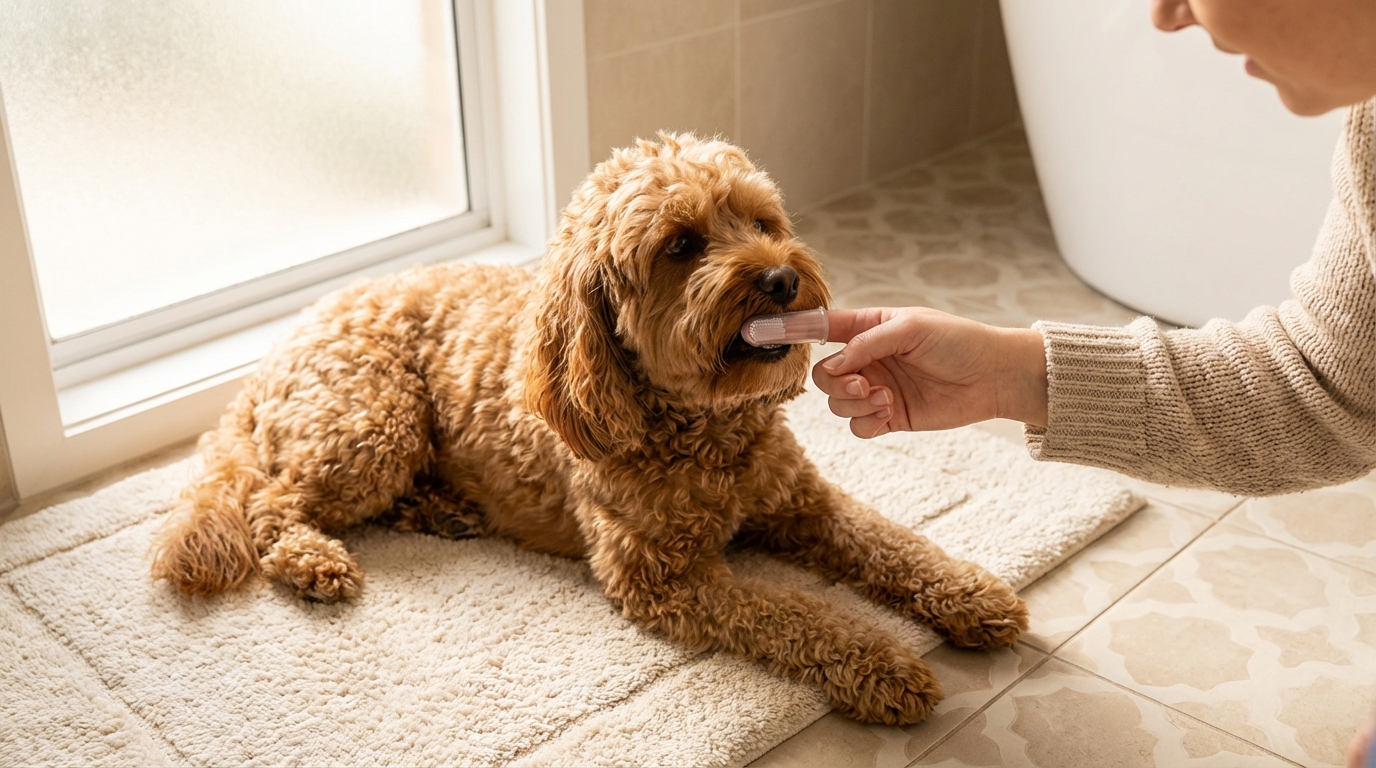
Regular teeth cleaning is the single most effective thing you can do for your dog's mouth. The gold standard is brushing with a dog-specific toothbrush and enzymatic toothpaste — never use human toothpaste, as it contains ingredients that are toxic to dogs.
Start slowly if your dog isn't used to it. Let them lick the toothpaste off your finger for a few days, then gently introduce the brush along the gum line. Focus on the outer surfaces of the teeth, where plaque accumulates most. Even 30 seconds of brushing a few times a week makes a measurable difference.
For dogs that won't tolerate a brush, finger brushes, dental wipes, and water additives offer useful alternatives. They're not quite as thorough, but they're far better than doing nothing at all.
Quick tip: Brush in the evening after your dog's last meal. They're usually calmer, and you won't be fighting food residue all day. Pair brushing with a small reward afterwards to build a positive association.
Dental Chews, Treats, and Diet
What your dog eats has a direct impact on their oral health. Crunchy kibble provides a mild abrasive action that can help reduce plaque, while certain dental chews are specifically textured to scrape buildup off teeth as your dog gnaws.
Look for dental treats that carry the VOHC (Veterinary Oral Health Council) seal of acceptance — this means they've been independently tested and proven to reduce plaque or tartar. You'll find a wide selection of quality options in our dog food and treats range, including long-lasting chews suited to different jaw sizes.
Avoid giving your dog cooked bones, antlers, or extremely hard chews that can fracture teeth. A good rule of thumb: if you can't dent it with your thumbnail, it's too hard for your dog's teeth. Raw, meaty bones can be appropriate for some dogs, but size and supervision matter.
Diet also plays a role beyond texture. Quality nutrition supports a strong immune system, which in turn helps your dog fight off oral bacteria more effectively. If you're reassessing your dog's diet, it's worth considering dental health as part of the picture.
Building a Daily Dental Routine
Consistency is everything when it comes to looking after your dog's teeth. Here's a practical framework you can adapt to your lifestyle:
- Daily: Brush teeth or use a dental wipe. Even a quick 30-second session counts.
- Several times a week: Offer a dental chew or appropriate raw bone under supervision.
- Monthly: Lift your dog's lips and inspect their gums and teeth for any changes in colour, swelling, or damage.
- Annually: Schedule a professional dental check as part of your dog's yearly health review.
Starting young gives you a massive advantage. Puppies that get used to having their mouths handled grow into adults that tolerate brushing without fuss. But it's never too late to begin — older dogs can learn to accept a dental routine with patience and positive reinforcement.
Pair your dental care efforts with the right dog health and wellness products to cover all bases, from oral hygiene to parasite prevention. A holistic approach keeps your dog comfortable year-round, whether you're battling humid Queensland summers or dry inland winters.
Frequently Asked Questions
How often should I brush my dog's teeth?
Daily brushing is ideal, but even three to four times a week delivers real benefits. The key is consistency — a short, gentle session every other day is far more effective than an occasional thorough scrub. Supplement brushing days with dental chews to maintain momentum.
Are dental chews enough to keep my dog's teeth clean?
Dental chews are a helpful addition, but they shouldn't replace brushing entirely. Think of them as flossing — useful, but not a substitute for the main event. Used together with regular brushing and a good diet, they form a solid three-pronged approach to oral care.
At what age should I start caring for my dog's dental health?
Start handling your puppy's mouth from around eight weeks of age, even before their adult teeth come through. This gets them comfortable with the sensation early. You can introduce a soft puppy toothbrush and enzymatic paste once their adult teeth begin emerging, usually around four to six months.
Good dental habits are one of the simplest ways to add healthy, happy years to your dog's life. Browse our full range of dog care essentials to find everything you need — and if you're ever unsure about the state of your dog's teeth, have a chat with your vet for personalised advice.