


Noise anxiety during thunderstorms and fireworks can turn an ordinary evening into a frightening experience for dogs (and their people). In many Australian homes, thunder, lightning, hail on a tin roof, or sudden bangs can trigger pacing, panting, trembling, barking, or attempts to hide. The good news: with a few practical changes (and the right gear set up ahead of time), you can reduce the impact and help your dog feel safer.
Medical note: Noise fear can be mild, moderate, or severe. This article shares general support strategies, not a diagnosis or treatment plan. If your dog’s reactions are intense, worsening, or putting them at risk of injury, contact your vet or a qualified behaviour professional. If medication or supplements are being considered, they should be discussed with your vet—especially for severe panic.
Spot the early signs (and why timing matters)
The best results usually come from acting early—before your dog tips into full panic. Many dogs show subtle “pre-stress” signals well ahead of the first crack of thunder or bang outside.
- Early clues: lip licking, yawning, whale eye (showing the whites), clinginess, scanning windows, sudden startle, shaking off, refusing food, or leaving the room.
- Escalation signs: frantic pacing, heavy panting, drooling, trying to wedge into tight spaces, destructive scratching at doors, or attempts to jump fences.
- Safety first: if your dog is trying to escape, injuring themselves, or is inconsolable for long periods, don’t “wait it out”—seek veterinary and behaviour support.
One practical habit that helps: keep a simple log in your notes app. Record what the first sign was, how quickly it escalated, and what helped (or didn’t). Over time you’ll spot patterns—like wind gusts, distant rumbles, lightning flashes, or the sharp crack of fireworks being the real trigger.
Set up a calm “safe zone” at home
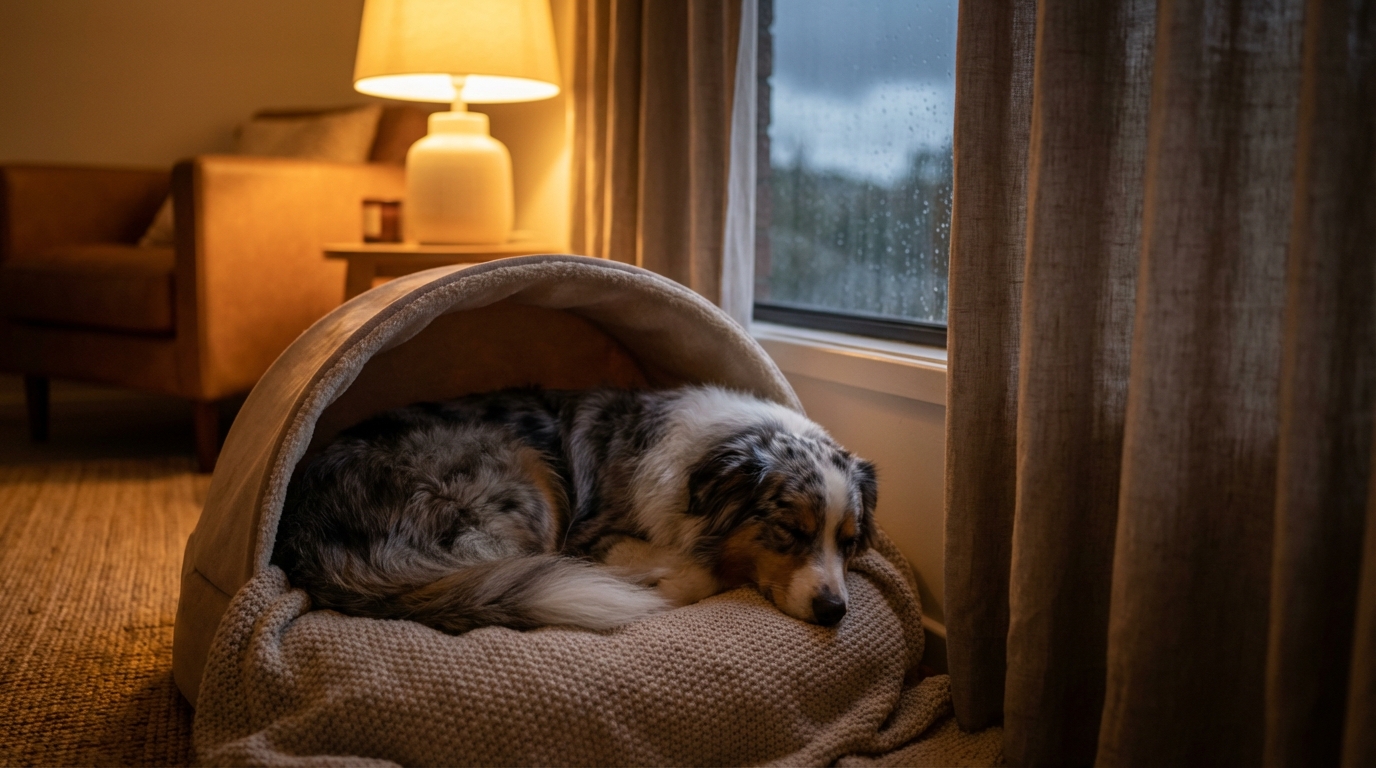
A predictable hideaway can lower stress because your dog knows exactly where to go. Pick an internal spot that’s naturally quieter—laundry, hallway nook, or a bedroom away from windows. For some dogs, a covered crate works well; for others, it’s a corner beside the couch. The key is choice: your dog should be able to enter and leave freely.
Make the space den-like and familiar. A low table draped with a thick blanket can muffle sound and block flashes. Add bedding that smells like home and something appropriate to chew (only if your dog can safely have it when stressed).
- Lighting: keep lights on from dusk to soften the contrast of lightning.
- Comfort: include a worn T-shirt, favourite mat, and a water bowl.
- Access: leave the safe zone available year-round so it isn’t only associated with scary events.
Quick tip: If your dog wedges behind the toilet or under the bed, don’t block them off in a panic. Instead, shift the safe zone closer to that “enclosed” feeling and reward them for choosing it when things get noisy.
Reduce the impact with smart sound and light management
You often can’t stop the noise, but you can change how much of it reaches your dog—and how predictable the environment feels. Close windows, draw curtains, and use fans or air con to create steady background sound. In Queensland summer storms or southern winter fronts, starting your routine early can make a noticeable difference.
Try a “sound sandwich”: a constant base noise (fan) plus low music or talkback radio. Start it before the first rumble or bang, so your dog doesn’t link the new background sound with the scary one.
- TV or playlists: choose consistent audio (avoid shows with sudden explosions or long quiet scenes).
- Block visual triggers: close blinds to reduce lightning flashes and outdoor movement.
- Earlier enrichment: a sniffy game or short training session earlier in the day can take the edge off without over-arousing your dog.
If your dog is already highly stressed, keep things simple: guide them towards their safe zone, keep your movements slow, and avoid repeatedly checking outside. Calm predictability helps.
Calming supports you can layer together
For frequent noise-related fear, a layered approach tends to work better than relying on one tactic. The goal is to reduce arousal, increase a sense of safety, and create a repeatable routine your dog recognises.
Pheromone support can be a helpful addition, particularly for dogs that are generally worried or easily startled. Consider Adaptil calming pheromone products as part of your setup—many owners place them near the safe zone to encourage a more settled atmosphere.
Pressure wraps may help some dogs by providing gentle, even pressure around the torso (similar to swaddling). Introduce any wrap on calm days first, pair it with treats or play, and ensure your dog can move comfortably and isn’t overheating.
- Enrichment: stuffed food toys, lick mats, or scatter feeding can redirect nervous energy into soothing, repetitive behaviour.
- Comfort without amplifying worry: stay calm, speak softly, and reward relaxed choices (lying down, choosing the safe zone, taking food).
- Avoid punishment: scolding or forced “toughening up” can increase fear and make future events harder.
Safety note for chew/food toys during high stress: supervise any chew, lick mat, or stuffed toy, especially if your dog is gulping, frantic, or prone to shredding. Choose options appropriate for your dog’s size and chewing style to reduce choking or blockage risk, and avoid using food toys in multi-dog settings if any dog guards resources.
If your dog won’t eat during storms or fireworks, that’s common. Don’t force it—focus on safety and calm. When they can take a treat, use something high-value and easy to swallow.
Storms and fireworks checklist (quick prep)
Use this as a simple routine on high-risk days (storm season, holiday fireworks, local events, or unpredictable neighbourhood noise):
- Check the timing: look at weather alerts or local event notices so you can start early, not mid-panic.
- Bring your dog inside early: do a toilet break before the noise peaks; shut side gates and check doors latch properly.
- Set up the safe zone: bedding down, water available, lights on, curtains closed.
- Start background sound: fan/air con plus steady music or radio before the first rumble or bang.
- Prep calming activities: have a simple lick/chew option ready if your dog can safely use it when stressed (supervised).
- Minimise exits and hazards: remove access to balconies, back fences, or rooms where your dog could scratch at glass or chew cords.
- ID check: collar tag on and microchip details up to date (a common issue after surprise fireworks).
- Your role: keep your body language relaxed, move slowly, and avoid repeatedly going outside to “check the noise”.
Desensitisation, medication options, and professional support
In many parts of Australia, storms can arrive quickly and fireworks can be unpredictable around holiday periods. A simple plan reduces last-minute scrambling—and dogs often mirror our stress. On high-risk days, do an early toilet break, then bring your dog inside well before thunder. If fireworks are expected, keep your dog indoors from late arvo.
Desensitisation (sometimes paired with counter-conditioning) can help change your dog’s emotional response over time, but it must be done carefully to avoid making the fear stronger.
- Keep volume sub-threshold: start with thunder/fireworks recordings so quiet your dog notices but stays relaxed (still eating, sniffing, or playing). If they startle, freeze, or leave—it's too loud.
- Short sessions: aim for brief, positive practice (a few minutes), then stop. Several easy sessions across a week beats one long session.
- Pair with high-value rewards: feed something special or play a favourite game while the sound is on, then stop the sound before your dog becomes tense.
- Stop if stress shows: if your dog pants, trembles, refuses food, or scans for exits, end the session and lower the difficulty next time.
Medication and professional support overview: for dogs with severe panic, escape behaviour, or long recovery times, behaviour medication prescribed by a vet may be recommended as part of a broader plan (not as a stand-alone “fix”). Your vet can advise on appropriate options for your dog’s health profile and may refer you to a veterinary behaviourist or a qualified trainer specialising in fear and anxiety. Early support can prevent the pattern from worsening each storm season.
Frequently Asked Questions
Should I cuddle my dog when they’re scared of thunder or fireworks?
You can offer comfort. Sit nearby, keep your voice calm, and allow your dog to lean on you if they choose. Aim to reward calm moments (soft body, lying down, taking food) and guide them towards the safe zone rather than trying to restrain them.
Why does my dog react before the storm arrives?
Many dogs notice changes in air pressure, static, wind, and distant rumbles before we do. Treat that early warning as your cue to start the routine—close up the house, set the sound management, and get your dog settled before the noise peaks.
What if my dog tries to escape the yard during fireworks?
Bring them indoors well before the noise starts and secure doors, gates, and side access. Keep ID on their collar and ensure microchip details are current. If your dog has a history of escape attempts or self-injury, speak to your vet or a qualified behaviour professional—this level of panic often needs a tailored plan.
When should I contact a vet or behaviourist?
Seek help if your dog is injuring themselves, destroying doors/windows, refusing food for long periods, showing prolonged distress after the event, or if the fear is getting worse each season. Your vet can also discuss whether prescription support is appropriate as part of a broader behaviour plan.
If you want an easy, home-based way to support calmer behaviour, explore Adaptil calming options to add to your storm and fireworks plan. For severe or escalating fear, chat to your vet about a tailored behaviour approach.
References (Australia): Australian Veterinary Association (AVA) guidance on pet behaviour and welfare; RSPCA Australia advice on fearful behaviour and helping pets cope with loud noises.
Reviewed by: Sierra Pet Products content team (pet care). This article is educational and not a substitute for veterinary advice.