


Learning how to brush dog teeth at home is one of the fastest ways to improve daily comfort and reduce bad breath. With the right tools and a calm routine, most dogs can learn to accept (and even enjoy) toothbrushing. This step-by-step dog toothbrush guide walks you through what to use, what to do, and how to make dog dental hygiene stick.
Why brushing matters for dog dental hygiene
Plaque starts forming within hours of eating. If it’s not removed, it hardens into tartar, which is much harder to shift and can contribute to sore gums and ongoing mouth odour.
Brushing is the most direct way to disrupt plaque daily, especially along the gumline where problems commonly begin. It’s also a quick “health check” that helps you spot broken teeth, swelling, or unusual breath early.
- Better breath (often within 1–2 weeks of consistency)
- Healthier gums by reducing plaque build-up
- Less tartar over time, especially on back molars
What you need before you start
Set yourself up for success by choosing the right tools and keeping the session short. In humid Australian summers, dental odour can feel worse, so starting with good gear helps you stay consistent.
- Dog-specific toothbrush: a small-headed brush, double-ended brush, or finger brush. Pick the style your dog tolerates best.
- Dog toothpaste: use pet toothpaste only (human toothpaste can be unsafe for dogs).
- Non-slip spot: a mat on the laundry floor, or your dog’s bed, so they feel stable.
- Rewards: tiny treats and calm praise to build a positive association.
If you’re shopping for supplies, start with the essentials in our Dental Care range, then add extras once brushing is routine. For dogs who already get regular preventatives, it can be handy to bundle habits: do teeth after you apply monthly care from Flea, Tick & Heartworm Prevention so it becomes part of a set schedule.
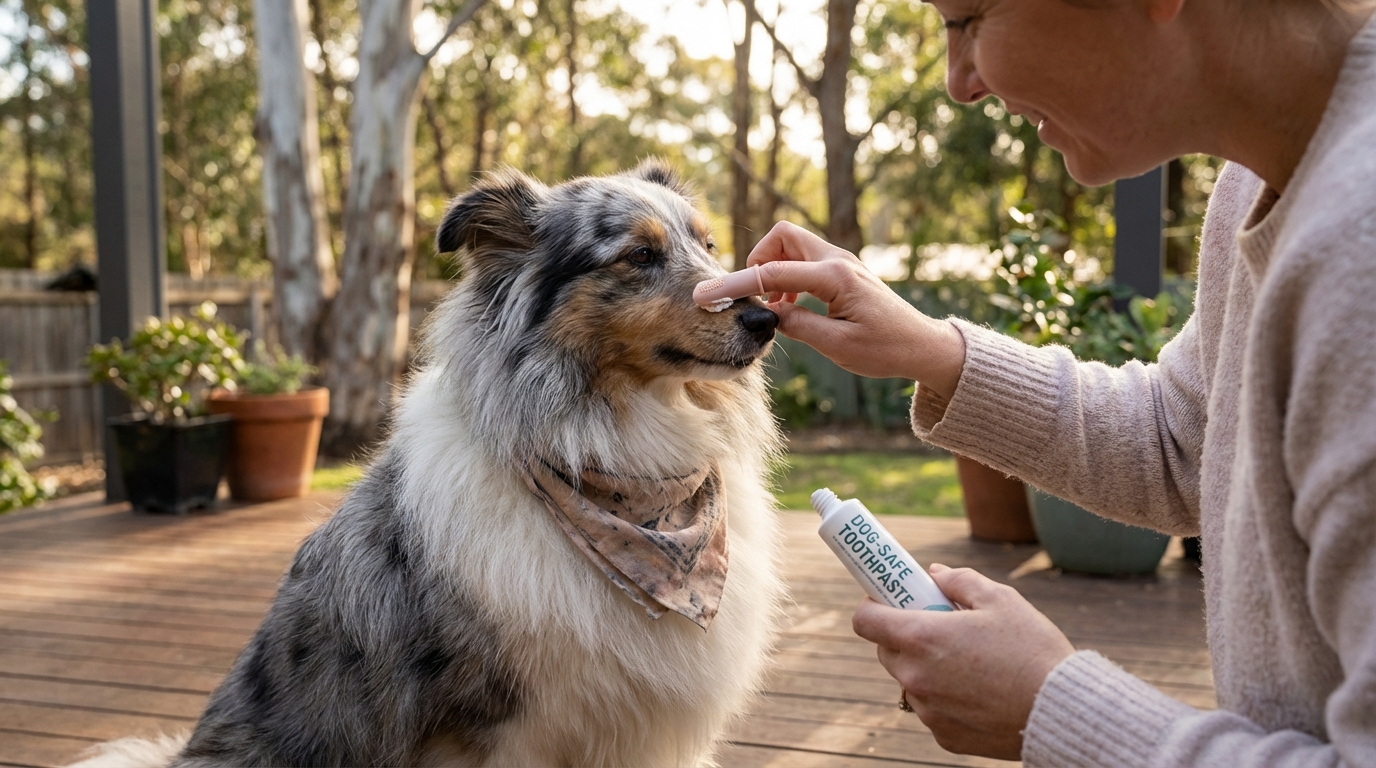
Step-by-step: how to brush your dog’s teeth
Plan for 30–60 seconds at first. The goal is calm repetition, not a perfect clean on day one. Most dogs accept brushing faster when you build it in small stages.
- Step 1: Choose the right moment. Aim for a time when your dog is relaxed (after a walk, not during peak excitement). Keep your voice low and movements slow.
- Step 2: Let them taste the toothpaste. Put a small smear on your finger and let them lick it. This turns the routine into something predictable and pleasant.
- Step 3: Get them used to mouth handling. Gently lift the lip for 1–2 seconds, then reward. Repeat a few times over a couple of days until your dog stays calm.
- Step 4: Introduce the toothbrush. Let them sniff the brush, then touch it to a front tooth for a second and reward. Build up to a few teeth at a time.
- Step 5: Start brushing the outer surfaces. Hold the brush at about a 45-degree angle toward the gumline. Use small circles or short back-and-forth strokes on the outside of the teeth (cheek side), where plaque accumulates most.
- Step 6: Focus on the “hot spots”. Spend extra time on the back molars and upper canines. These areas commonly collect tartar, especially in smaller breeds.
- Step 7: Keep it short and end well. Stop before your dog gets fed up. Reward immediately and move on—consistency matters more than duration.
Quick tip: If your dog resists, don’t wrestle. Do three gentle brush touches (one tooth each), reward, and finish. Increase the number of teeth over days, not minutes.
This dog toothbrush guide works best when you stay predictable: same place, same order, same calm tone. Within a couple of weeks, many dogs start anticipating the routine.
How often to brush + common problems
For most households, daily brushing gives the best results, but 3–4 times a week is a realistic target if you’re starting out. The key is frequency: plaque builds quickly, so “once in a while” rarely makes a difference.
- My dog clamps their mouth shut. Go back a step. Practise lip lifts and toothpaste licks for a few days, then reintroduce the brush briefly.
- My dog hates the toothbrush. Try a finger brush or a smaller head size. Some dogs prefer softer bristles and slower strokes.
- Bleeding gums. A small amount can happen when gums are inflamed and you begin brushing, but it should improve as gums settle. If bleeding is heavy or persists, pause and seek advice.
- Bad breath won’t improve. Check you’re reaching the back molars and brushing regularly. Persistent odour can also be linked to issues beyond plaque.
Set a simple schedule you’ll actually keep—after dinner is a common win, because you’re already in the kitchen and your dog expects routine. If your dog is wriggly, try brushing on the floor with them sitting between your knees, facing away from you.
Extra ways to support clean teeth between brushes
Toothbrushing is the gold standard, but the best plan is the one your dog can maintain. If you can’t brush every day, add safe “support” options that reduce build-up between sessions.
- Dental chews and toys: Look for options designed to scrub as your dog chews. Always supervise, and choose the right size for your dog.
- Dental gels or wipes: Helpful for dogs that won’t tolerate bristles yet. They’re often easier for beginners and can be a stepping stone to brushing.
- Water additives: Can complement brushing, especially for multi-dog homes, but they’re not a replacement for mechanical cleaning.
- Diet and habits: Sticky table scraps can cling to teeth. Keeping treats measured and choosing dental-friendly options can make brushing easier.
For a simple routine, pair brushing with a weekly “mouth check”: lift the lip and look for tartar along the gumline, redness, or chips. It takes 10 seconds and helps you act early.
Frequently Asked Questions
What if I can’t brush my dog’s teeth every day?
Aim for consistency over perfection. Brushing 3–4 times per week is still beneficial, especially if you focus on the outer surfaces and back molars.
Can I use human toothpaste to clean my dog’s teeth?
No—use dog toothpaste only. Human toothpaste may contain ingredients that aren’t suitable for dogs, and the foaming can make them more likely to resist.
How long should a brushing session take?
Start with 30–60 seconds and build up to around 1–2 minutes as your dog relaxes. Even a short, calm session is valuable when done regularly.
Ready to start? Stock up on dog-safe toothpaste and an easy-to-hold brush from our Dental Care range, then build the habit one calm session at a time. If you notice persistent bleeding, swelling, or your dog avoids eating, chat to your vet.