


Not all dental chews for dogs are created equal—some mainly freshen breath, while others genuinely help reduce plaque build-up. If you’re shopping for dental chews that help clean teeth (not just mask odour), the trick is knowing what to look for on the label and in the shape, texture, and size.
This buyer’s guide breaks down how dental chews work, what “effective” really means, and how to choose the best option for your dog’s mouth and chewing style.
What makes a dental chew effective?
The best dental chews work through mechanical action: as your dog bites and gnaws, the chew rubs along the tooth surface and near the gumline. That friction helps disrupt soft plaque before it hardens into tartar.
Look for chews with ridges, nubs, grooves, or a textured surface and enough firmness to last more than a few seconds. If a chew is swallowed quickly or crumbles instantly, it may not provide enough contact time to do much beyond acting like a treat.
Also consider where your dog’s build-up tends to show up. Back molars often carry the most tartar, so choose a shape your dog will work with their back teeth rather than gulp at the front.
A simple trust cue to look for: some dental items (including certain chews, diets, and other oral-care products) carry the VOHC seal. VOHC stands for the Veterinary Oral Health Council—an independent organisation that reviews submitted data for products shown to help control plaque and/or tartar. The seal doesn’t mean “perfect for every dog”, but it can be a helpful sign you’re choosing something with evidence behind it.
Types of chews: which style suits your dog?
Different dental chews suit different chewers. Matching the style to your dog’s bite strength and enthusiasm is one of the easiest ways to get better results (and fewer half-chewed leftovers on the rug).
- Textured sticks and bars: Great for daily use and most dogs. Choose a size that encourages chewing, not swallowing.
- Star, ring, or spiral shapes: The angles can reach more tooth surfaces. Often helpful for dogs that “crunch” rather than slowly gnaw.
- Long-lasting chews: Better for determined chewers who finish standard chews too fast. Aim for controlled gnawing time rather than extreme hardness.
- Dental toys (chewable): Some dogs do best when you turn chewing into a habit. Rotating options from your dog toys stash can keep interest high while supporting healthy chewing behaviour.
No matter the style, the goal is the same: steady, safe chewing that creates repeated tooth contact. That’s what separates a “nice snack” from a chew that genuinely supports day-to-day plaque control.
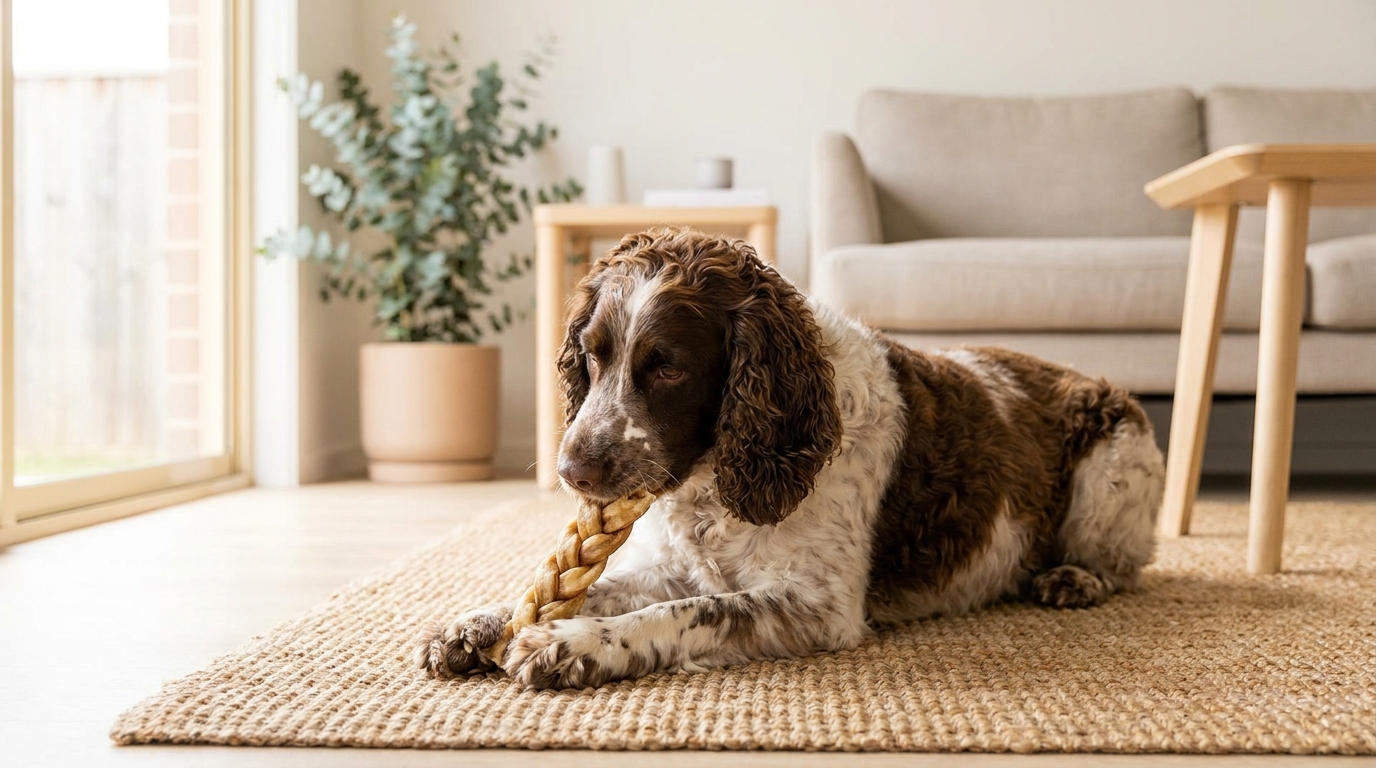
How to choose the right chew (size, texture, ingredients)
Choosing the best dental chews starts with a few practical checks. These help you avoid common issues like gulping, tummy upsets, and products that disappear before they’ve had a chance to scrub.
- Size: Pick a chew longer/wider than your dog’s mouth so they must chew it. Too small usually means “swallow whole”.
- Texture: You want firm but not rock-hard. Extremely hard chews can risk tooth damage, while very soft chews may smear without much cleaning.
- Chewing style: Crunchers often do well with ridged shapes; gentle gnawers benefit from longer-lasting designs with lots of texture.
- Ingredients: If your dog has sensitivities, keep it simple. Watch for high-calorie chews if your dog gains weight easily.
- Digestibility: If your dog has a sensitive stomach, introduce new chews slowly and avoid giving multiple new products at once.
Quick tip: Time your dog the first few uses. If the chew is gone in under a minute, go up a size or choose a longer-lasting texture so it can actually do some scrubbing.
Finally, remember what chews can and can’t do. Dental chews can help manage plaque and support fresher breath, but they won’t replace professional dental care if tartar is already thick or gums are inflamed.
How to use dental chews in a real-world routine
Consistency matters more than perfection. A chew used most days will usually beat an “amazing” chew used once a week.
- Set a schedule: Use chews at the same time each day (after breakfast or your evening walk) so it becomes automatic.
- Supervise chewing: Especially with enthusiastic gulpers or dogs that like to break chews into chunks.
- Balance calories: Treat chews like food. If you’re using a daily dental chew, reduce other treats slightly.
- Pair with play: If your dog loses interest, alternate between chews and safe chew-focused options from dog toys to keep the habit enjoyable.
In warmer Australian weather, you might notice breath seems worse on some days. That’s often less about the season itself and more about oral bacteria plus hydration and hygiene: panting and a dry mouth can leave the mouth feeling “stale”, and dirty water bowls can add to the overall smell in the home. Daily chewing, fresh water, and regular bowl cleaning can help keep things on track.
If you’re also brushing, use chews as the backup plan on busy nights. Think of them as a practical layer in your dental toolkit, not the only tool.
Frequently Asked Questions
How often should I give my dog a dental chew?
For most dogs, daily or near-daily use is what supports a real routine. Follow the product directions and adjust other treats to avoid overfeeding.
Are dental chews safe for aggressive chewers?
They can be, but choose an appropriate size and supervise. As a rule of thumb, discard the chew once it becomes small enough to fit fully in your dog’s mouth (or small enough that you worry it could be swallowed in one go). Avoid ultra-hard options if your dog is a power chewer.
My dog has bad teeth already—should they still have chews?
If your dog has existing dental disease, very sore gums, or a history of tooth fractures, check with your vet before offering hard or long-lasting chews. Some dogs need a gentler option (or dental treatment first) so chewing doesn’t cause pain or damage.
Do dental chews remove tartar or just plaque?
They’re mainly aimed at reducing plaque and slowing tartar build-up. If tartar is already thick or there’s gum redness, chews may not be enough on their own.
Ready to upgrade your dog’s daily chew routine? Browse our durable, chew-friendly options in dog toys, and if you’re unsure what’s best for your dog’s mouth, have a quick chat to your vet.