


Dog dementia can be confronting, especially when your steady companion starts acting lost in their own home. Cognitive changes in ageing pets are common, and early support can make daily life calmer for everyone. Here’s how to recognise cognitive decline in dogs and build a practical routine that reduces senior dog confusion.
Signs your older dog may be struggling
Cognitive decline in dogs often shows up as small changes that gradually become harder to ignore. You might notice your dog staring at walls, getting stuck behind furniture, or seeming unsure about familiar rooms. Some dogs pace at night, vocalise more, or struggle to settle.
Other common patterns include changes in social behaviour (clingier or more withdrawn), forgetting house training, or appearing disoriented on walks they’ve done for years. Senior dog confusion can also look like “selective hearing”, but it’s more about processing and memory than stubbornness.
- Disorientation: getting lost in the backyard, standing at the wrong side of a door
- Sleep-wake changes: restless nights, daytime drowsiness
- House-soiling: accidents despite consistent toilet access
- Anxiety: increased startle response, pacing, shadow-chasing
- Interaction changes: less interest in play, or unusual irritability
Rule out medical causes first
Many issues can mimic dog dementia, including arthritis pain, hearing or vision loss, dental discomfort, urinary infections, hormone changes, or digestive upset. A dog who can’t see well may bump into things; a dog with sore joints may avoid walks and seem “different”. Treating the underlying problem can dramatically improve behaviour and comfort.
Keep a simple symptom diary for 1–2 weeks: note sleep patterns, appetite, toileting, pacing, and any new triggers. Also record what time symptoms appear (for example, evening restlessness) and any recent changes at home (moving furniture, visitors, travel, storms).
Home set-up to reduce confusion and anxiety
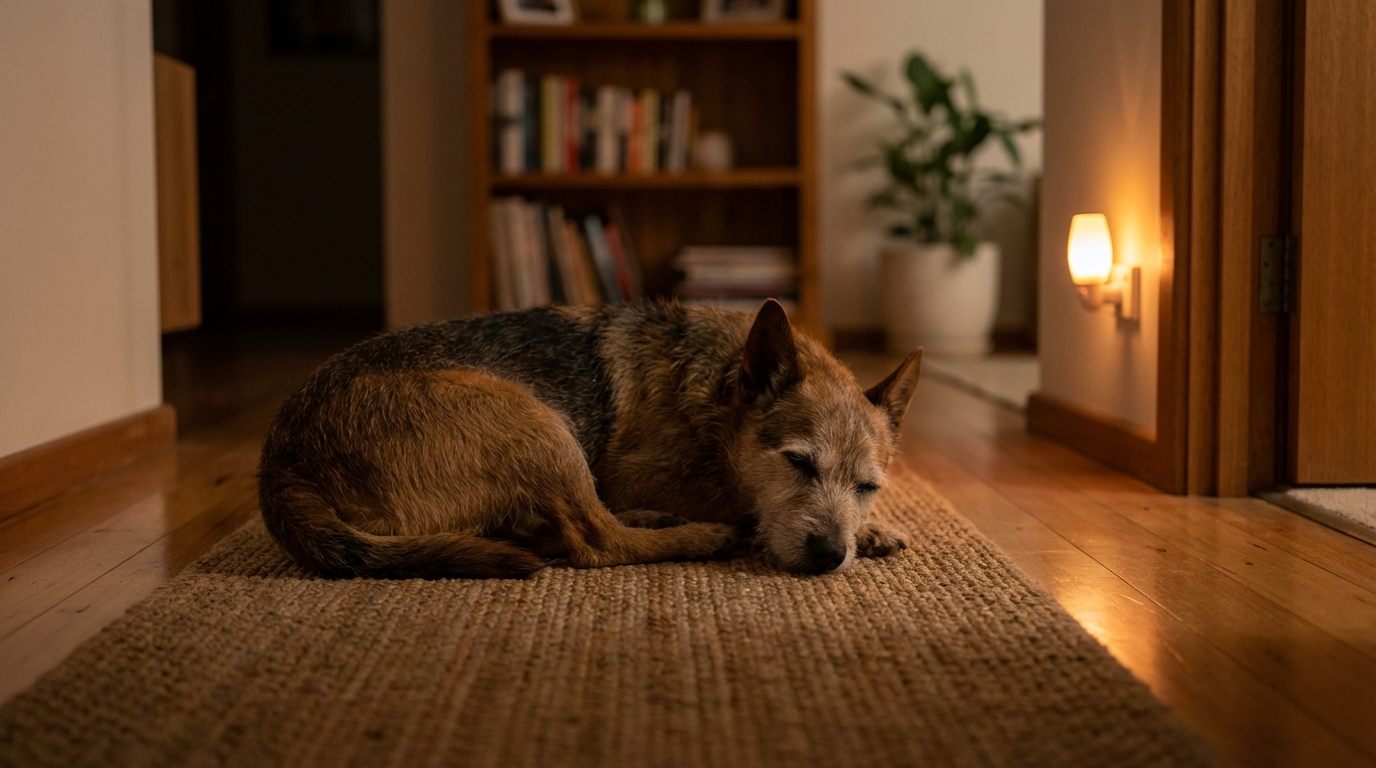
A predictable environment is one of the most effective tools for cognitive decline in dogs. Aim to make the house easy to navigate and minimise “surprises”. In Australian summers, keep cool resting spots available and avoid slippery floors that increase falls when dogs move awkwardly or rush.
- Keep furniture layouts stable: avoid frequent rearranging so pathways stay familiar
- Add traction: use runners or non-slip mats in hallways and near food/water
- Night lights: soft lighting helps dogs who wake disoriented after dark
- Create calm zones: a quiet bed away from busy walkways and noisy doors
- Make resources obvious: place extra water bowls and a second toilet option if needed
Quick tip: If your dog tends to “get stuck” in corners, block problem areas with a baby gate or a low piece of furniture, and guide them to open pathways instead.
For some dogs, background sound (low-volume radio) can reduce startling and help them settle, particularly during evening “sundowning” behaviours. If your dog is prone to anxious pacing, avoid scolding—redirect gently to a familiar mat, then reward calm behaviour.
Routine, enrichment, and brain-friendly habits
Older dogs do best with a steady daily rhythm: same meal times, the same short walk windows, and predictable rest periods. Routine reduces senior dog confusion because your dog doesn’t have to “figure out” what happens next. Keep exercise low-impact and consistent; two short strolls can be better than one long outing.
Enrichment should be simple and success-based. Choose activities that your dog can complete easily, then finish while they’re still comfortable and engaged.
- Food puzzles (easy level): scatter feeding on a towel, snuffle mats, or a simple treat ball
- Scent games: hide a few treats in one room and let your dog “search”
- Short training refreshers: sit, touch, or “find it” for 1–3 minutes
- Gentle grooming: a calming brush session can become a reassuring daily cue
When symptoms flare, scale back stimulation rather than adding more. A dog with cognitive changes can become overwhelmed by busy dog parks, loud family gatherings, or long car trips—especially during holiday periods and storm season.
If you’re shopping for supportive essentials, explore senior dog health supplies and calming and comfort products that make daily routines easier to maintain. Focus on consistency: the “best” solution is the one you can reliably use every day.
Safety, hygiene, and prevention essentials
As dog dementia progresses, safety planning becomes as important as enrichment. Dogs may wander, misjudge steps, or forget learned boundaries. Simple home management reduces risk without making your dog feel restricted.
- ID and containment: ensure your dog’s ID tag details are current; check gate latches regularly
- Supervise water access: older dogs can drink less due to forgetfulness—offer water frequently
- Toileting support: increase toilet breaks; consider an indoor option for rainy nights
- Comfort handling: approach from the front, speak softly, and avoid sudden touches that startle
Don’t overlook parasite prevention as your dog ages. Senior dogs still need reliable protection from fleas, ticks, and heartworm—especially in warm, humid parts of Australia where parasites stay active for long stretches of the year. An itchy, uncomfortable dog sleeps worse, paces more, and can appear more unsettled, so consistent prevention supports overall wellbeing.
To make care simpler, set reminders for regular preventative routines and keep supplies in one visible spot. If you’re building a streamlined care kit, browse flea and tick prevention and heartworm prevention options that fit your dog’s size and lifestyle.
Frequently Asked Questions
How is cognitive decline in dogs different from normal ageing?
Normal ageing might mean slower movement or greying fur, but cognitive changes are more about disorientation, altered sleep patterns, and behaviour that seems “out of character”. If your dog appears lost in familiar spaces or forgets routines they knew well, that’s worth investigating.
What can I do at night if my dog paces or seems unsettled?
Keep evenings predictable: a gentle toilet break, a calm wind-down routine, and soft lighting can help. Make sure the bed is easy to access and consider blocking off confusing areas so your dog can’t get stuck and panic.
Can parasite problems make senior dog confusion worse?
Yes—ongoing itch, skin irritation, or general discomfort can disrupt sleep and increase restlessness, which may look like cognitive issues. Staying consistent with vet-grade preventatives helps reduce one common source of background stress in older dogs.
If you’re supporting an ageing dog, stock up on prevention essentials in our senior pet health range to keep routines simple and consistent. For personalised guidance on behaviour changes and underlying health checks, chat to your vet.