


Easter is a time for family gatherings, long weekends, and far too much chocolate — but keeping your dog safe around Easter hazards deserves just as much attention as the egg hunt itself. From theobromine poisoning to hidden dangers in decorations, a little planning goes a long way. Here's how to make the long weekend fun for every member of the household, including the four-legged ones.
Why Easter Poses Risks for Dogs
Across Australia, Easter falls in mid-autumn — a time when families gather indoors more often, leaving bowls of sweets on coffee tables and foil-wrapped eggs within easy snout reach. Dogs are naturally curious scavengers, and a house full of guests means more open doors, dropped food, and distracted supervision.
The combination of rich foods, unfamiliar visitors, and shiny wrappers creates a perfect storm. Every year, Australian veterinary emergency centres report a spike in dog-related incidents over the Easter long weekend, with most cases entirely preventable.
Chocolate and Dogs: Understanding the Danger
Chocolate contains theobromine and caffeine — two compounds that dogs metabolise far more slowly than humans. Even a small amount of dark or cooking chocolate can cause serious illness, and theobromine poisoning is one of the most common cases vets treat during the Easter period.
Symptoms to watch for include vomiting, diarrhoea, rapid breathing, restlessness, and muscle tremors. These can appear anywhere from two to twelve hours after ingestion.
The darker the chocolate, the higher the theobromine concentration. White chocolate contains very little, milk chocolate sits in the middle, and dark or baking chocolate is the most dangerous. Foil wrappers themselves can also cause gastrointestinal blockages if swallowed.
If your dog eats chocolate, act fast. Note the type and approximate amount consumed, then contact your nearest emergency vet immediately. Time matters.
Safe Easter Treats Your Dog Will Love
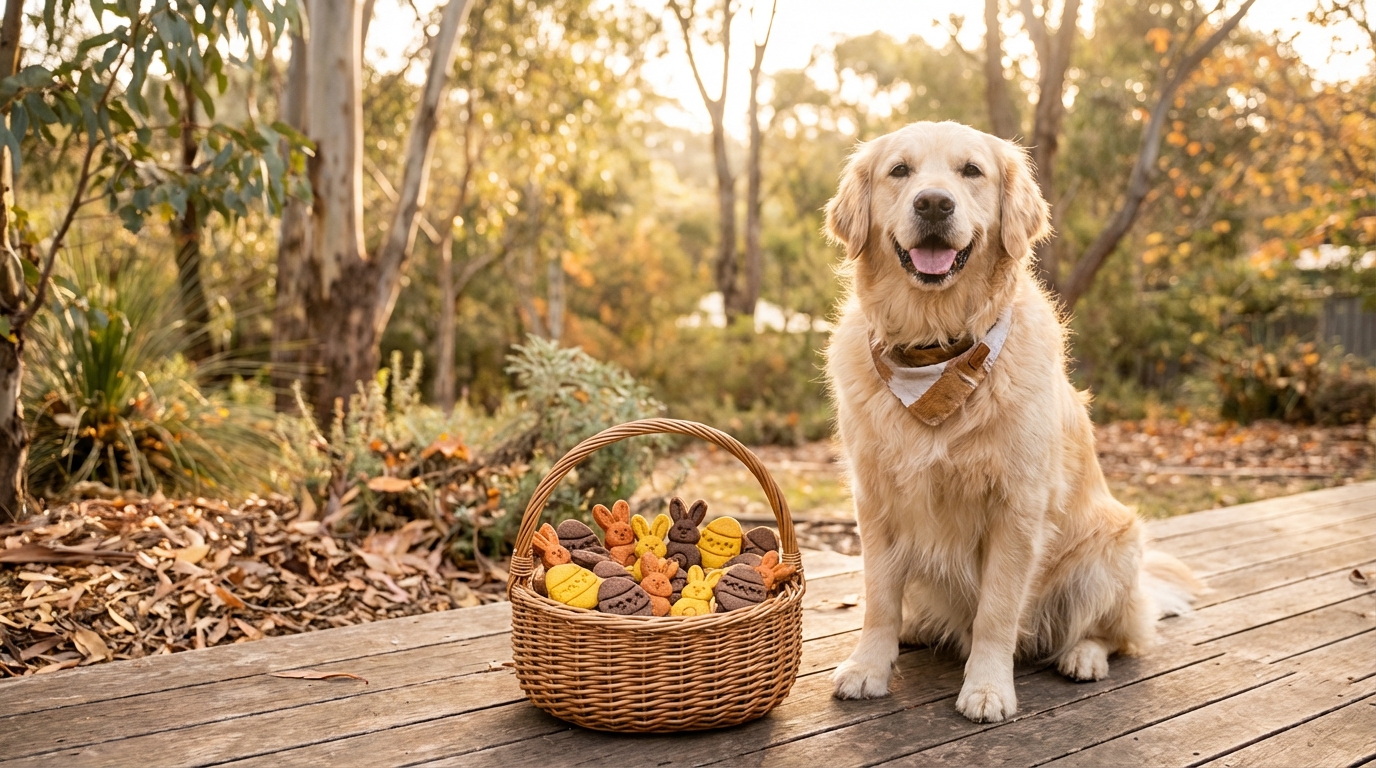
Just because chocolate is off the menu doesn't mean your dog has to miss out on the festivities. There are plenty of dog-safe options that let your pup join the celebration. Browse our full range of dog food and treats for ideas that go well beyond the Easter weekend.
Carob is a popular chocolate alternative that's completely safe for dogs. You'll find carob-coated biscuits and carob drops specifically made for canine taste buds. Frozen treats made from plain yoghurt and mashed banana also work brilliantly — especially if the autumn weather is still warm where you are.
Dehydrated sweet potato chews, plain cooked chicken pieces, or small cubes of watermelon (seeds removed) are other crowd-pleasers. Keep portions small and introduce any new treat gradually to avoid tummy upsets.
Quick tip: Host a dog-friendly Easter egg hunt by hiding a few pieces of your pup's favourite treats around the garden. Use brightly coloured reusable containers so you can easily spot any that go undiscovered — you don't want them attracting ants once the weekend's over.
Easter Hazards Beyond Chocolate
Chocolate gets the most attention, but it's not the only Easter danger. Hot cross buns contain sultanas, raisins, and currants — all of which are toxic to dogs and can cause acute kidney failure even in small amounts.
Easter lilies are highly toxic to cats, but certain lily species pose genuine risks to dogs as well. Peace Lilies, for example, contain calcium oxalate crystals that can cause painful oral irritation, excessive drooling, and difficulty swallowing in dogs. Lily of the Valley is even more serious — it contains cardiac glycosides that can affect a dog's heart rate. If you suspect your dog has chewed or ingested any part of any lily variety, contact your vet promptly, even if symptoms haven't appeared yet. When decorating with fresh flowers, keep arrangements well out of reach or opt for pet-safe alternatives such as sunflowers or roses (thorns removed).
Plastic grass used in Easter baskets is another sneaky hazard. If ingested, it can tangle in a dog's intestines and may require surgical removal. Stick to shredded paper or tissue if your basket is anywhere your dog can access.
Finally, be mindful of xylitol (also labelled as birch sugar), an artificial sweetener found in some sugar-free Easter confectionery. It's extremely toxic to dogs, even in tiny quantities, and can trigger a rapid drop in blood sugar or liver failure. Always check ingredient labels on any treats that end up on your Easter table.
Dog-Friendly Easter Activities
The Easter long weekend is the perfect excuse to spend quality time with your dog. With autumn settling in across most of Australia, the cooler mornings and evenings make it ideal for longer walks, bushland hikes, or trips to the beach before the water gets too cold.
Set up an enrichment station at home using snuffle mats, puzzle feeders, or a frozen Kong stuffed with dog-safe peanut butter. These keep your dog mentally stimulated while the rest of the family enjoys their Easter eggs in peace.
If you're planning an outdoor adventure, consider exploring one of Australia's many dog-friendly national park trails. Pack fresh water, a collapsible bowl, and a basic pet first-aid kit — particularly if you're heading into bushland where you may be some distance from veterinary services. Keep your dog on-lead where required, and watch for snakes that are still active in warmer parts of the country during early autumn.
If you're having guests over, create a quiet retreat space for your dog with fresh water, a comfortable bed, and a long-lasting chew. Some dogs love a crowd; others find it overwhelming. Knowing your dog's comfort level will keep the weekend stress-free for everyone.
Stocking up before the long weekend is always a smart move — browse our full dog enrichment and treat range so you're not caught short when the shops close on Good Friday.
Frequently Asked Questions
How much chocolate is dangerous for a dog?
It depends on the type of chocolate and your dog's size, but even a small amount of dark chocolate can be harmful. Rather than trying to calculate a "safe" threshold, treat any chocolate ingestion as an emergency and contact your vet straight away.
Can dogs eat hot cross buns?
No. Hot cross buns contain dried grapes (sultanas, raisins, or currants), which are toxic to dogs and can lead to kidney failure. Even a few bites can cause serious harm, so keep them well out of reach.
What are some dog-safe alternatives to Easter chocolate?
Carob treats, frozen banana-and-yoghurt bites, and dehydrated meat chews are all excellent options. Look for treats specifically formulated for dogs to ensure they don't contain harmful ingredients like xylitol or added sugar.
This Easter, a little preparation keeps the long weekend joyful and incident-free for your whole family. Stock up on safe, vet-approved goodies from our dog treats collection and have a chat to your vet if you have any breed-specific dietary concerns. Happy Easter from the Sierra Pet Products team!