

When an older dog starts wandering aimlessly, forgetting routines, or seeming unsettled at night, it can be a sign of dog dementia. Cognitive changes can be subtle at first, but early support often makes day-to-day life calmer for both of you. Here’s how to recognise age-related cognitive change in dogs and create a plan that suits your household.
Medical note: This article is general information only and isn’t a substitute for veterinary advice. Because behaviour changes can have medical causes, and because diet, supplements, and parasite prevention choices should be tailored to your dog’s health history, book a vet assessment before making major changes.
Early signs you might be seeing
Ageing can bring slower reactions and deeper sleep, but cognitive change tends to look like a pattern of “not quite themselves”. Many owners first notice senior dog confusion: getting stuck behind furniture, staring at walls, or seeming lost in familiar rooms.
Common signs linked with canine cognitive dysfunction (CCD) include changes in sleep (restless nights), new anxiety, altered social behaviour, and house-training accidents. You may also see pacing, more vocalising, or reduced interest in favourite games. Keep a simple notes list for two weeks so you can spot whether it’s occasional or increasing.
- Disorientation: wandering, getting stuck, hesitating at doorways
- Sleep changes: awake at night, sleepy during the day
- Interaction changes: clingy, withdrawn, or irritable
- Toileting changes: accidents despite access to outdoors
It can help to note the time of day you see the behaviour. Many dogs seem worse in the evening (often called “sundowning”), especially if the house is noisier, lighting is lower, or your routine changes after work.
Rule out look-alike problems first
Before assuming cognitive decline in dogs, it’s worth considering other issues that can mimic it. Pain (including arthritis), hearing or vision loss, urinary infections, thyroid changes, and dental disease can all cause restlessness, accidents, or changed behaviour.
Your vet may discuss CCD as a possible explanation for the pattern of changes you’re seeing, but the first step is often checking for treatable contributors. Also look at triggers at home. A new slippery floor, changed furniture layout, louder neighbourhood noises, or a shift in your work schedule can add stress for older dogs. If you’ve recently moved house or had summer storms and fireworks, the timing can be telling.
Because older dogs can have more than one condition at once, it helps to focus on what’s most disruptive (night waking, anxiety, accidents) and tackle that first. Even small improvements to comfort and predictability can noticeably reduce senior dog confusion.
Home routines that reduce stress
The best day-to-day support for dog dementia is consistency. Keep meals, walks, and bedtime at the same times, and try not to change the route or the order of activities too often. Predictable routines reduce decision-making and help your dog feel secure.
Make your home easier to “read”. Use baby gates to block dead-ends, keep water and bedding in the same spot, and avoid rearranging furniture. If your dog slips, add runners or non-slip mats in high-traffic areas like hallways and near doorways.
Quick tip: If your dog paces or seems unsettled at dusk, try a short, calm sniff walk and a toilet break at the same time each evening, followed by a dim, quiet wind-down routine.
Plan for accidents kindly and practically. Take your dog out more often, praise toileting outside, and clean indoor spots thoroughly to remove odour cues. Consider washable bedding layers so you can swap and launder quickly without disrupting their sleeping place.
Daily routine sample (adjust to your household)
- Morning: toilet break straight after waking, breakfast, short gentle walk (cooler hours in Australian summer), then a quiet rest period
- Midday: water check, brief toilet break, 5–10 minutes of low-frustration enrichment, then a nap in a familiar spot
- Evening: early dinner, calm sniff walk, toileting, dim lights and reduced noise, then bedtime at a consistent hour
To make this easier to follow day-to-day, here’s a quick home checklist you can save or print:
- Keep a steady schedule: meals, walks, naps, and bedtime at similar times
- Reduce decision points: block dead-ends with gates; keep key items in consistent locations
- Improve footing: add non-slip surfaces on slick floors and near doorways
- Support sleep: calm evening routine, dim lighting, quiet sleeping area
- Prevent accidents: extra toilet breaks; enzymatic cleaning; washable bedding layers
- Keep pathways clear: easy access to water, bed, and exits (especially at night)
- Update ID: check tag and microchip details are current
Food, enrichment, and movement for ageing brains
Supporting cognitive change in dogs isn’t about “more activity” as much as the right kind of activity. Gentle, regular movement supports joint comfort and sleep quality, which can reduce night-time restlessness. In Australia’s warmer months, walk in the cooler parts of the day and keep sessions shorter if your dog tires easily.
Enrichment should be low-frustration and repeatable. Try scatter-feeding in grass, simple food puzzles, or a “find it” game with a few treats in easy locations. Keep sessions brief (5–10 minutes) and end while your dog is still engaged, not overwhelmed.
For mental comfort, revisit familiar cues rather than teaching lots of new ones. A few easy wins—like “touch”, “sit”, or a relaxed mat settle—can build confidence. If your dog seems stressed by training, scale back and focus on calm companionship and predictable routines.
Older dogs can also be more vulnerable to parasites because illness and itch can disrupt sleep and make behaviour changes seem worse. Maintaining year-round prevention helps avoid extra discomfort, especially in humid coastal areas where fleas can be persistent. If you’re considering changing parasite prevention, check in with your vet first—especially if your dog has other medical conditions or takes regular medications.
Safety set-ups for nights and outdoors
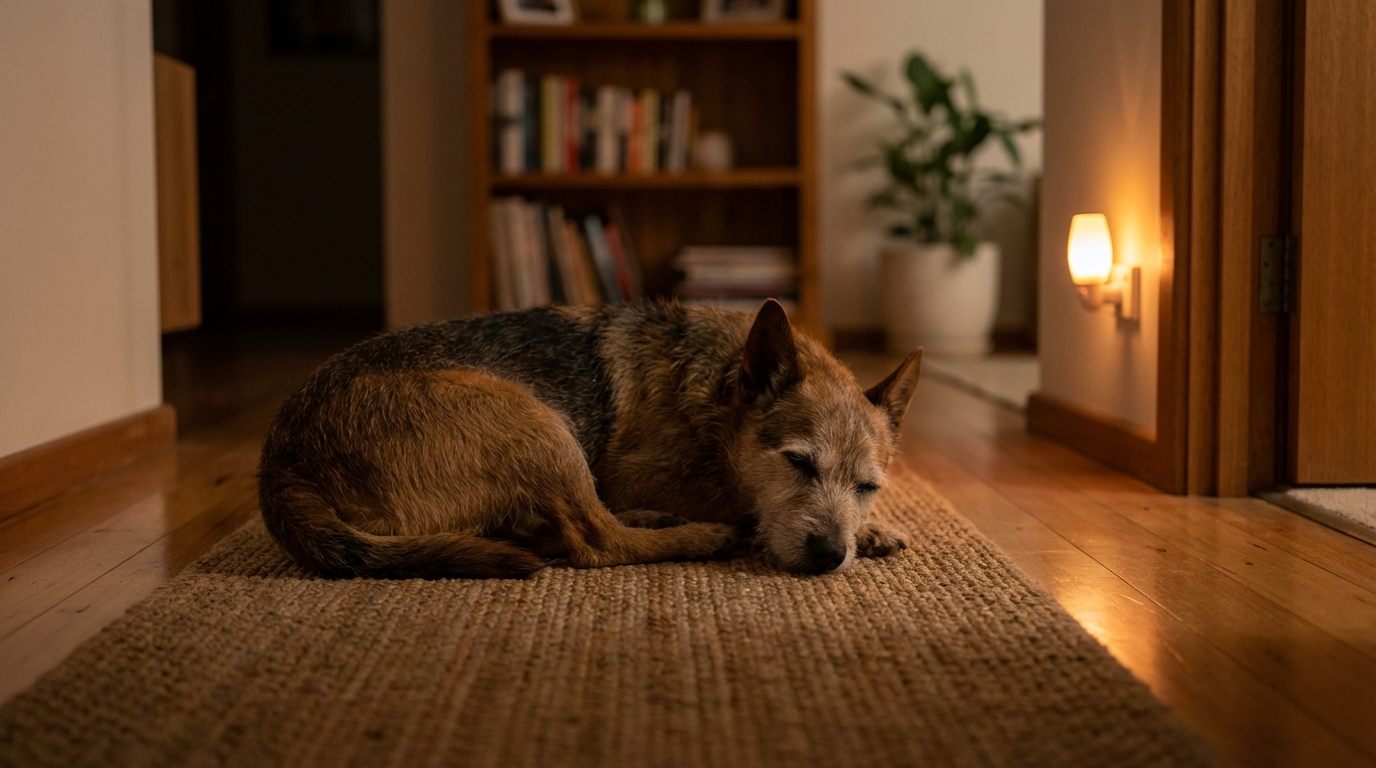
When senior dog confusion increases, safety becomes your best friend. Add a soft night light in hallways so your dog can orient themselves, and keep pathways clear to water and toileting areas. If stairs are tricky, block access and create a comfortable ground-floor set-up.
Outside, supervise more closely—especially at night. A dog who used to navigate the yard confidently may suddenly hesitate, circle, or forget why they went out. Keep toileting trips short and calm, and consider a lead in the backyard if wandering or getting “stuck” is an issue.
Also check identification. If your older dog slips out a gate or door during a disoriented moment, current ID tags and microchip details matter. Simple prevention is far easier than searching after dark.
Vet-supported treatment options and tracking progress
There isn’t a one-size-fits-all fix for dog dementia, but vets can often help reduce distress and improve quality of life. Depending on your dog’s exam and test results, your vet may recommend a mix of approaches such as prescription medications to support cognition, medications for anxiety, or short-term sleep support. If pain is contributing, a pain-management plan may be part of the picture. In some cases, your vet may suggest a referral (for example, to a veterinary behaviourist or neurologist) for a structured behaviour plan and further assessment.
Monitoring matters, because changes can be gradual and easy to miss. Keep a simple weekly tracker (notes in your phone is fine) and score key issues from 0–3 (none to severe): night waking, pacing/vocalising, accidents, appetite, and confidence on walks. Bring this to rechecks so your vet can see whether the plan is helping, needs tweaking, or whether new problems (like worsening vision or arthritis) may be driving the behaviour.
Trust note: Guidance on recognising and managing CCD typically emphasises veterinary assessment to rule out medical causes, plus a combination of environmental management, predictable routines, and appropriate medical support when indicated. For further reading, see client resources from organisations such as the Australian Veterinary Association (AVA) and veterinary teaching hospitals.
Frequently Asked Questions
Is dog dementia the same as normal ageing?
No. Normal ageing can mean slower movement or more naps, but dog dementia tends to involve changes in orientation, sleep-wake patterns, and learned behaviours like toileting. If the changes are frequent or getting worse, it’s worth investigating.
How do I help with night-time pacing and barking?
Keep evenings predictable: a calm toilet break, a light snack if it suits your dog, and a quiet sleeping area with a dim light. Reduce stimulation late in the day and try gentle daytime exercise so your dog is naturally ready to rest at night. If the change is sudden or severe, book a vet check to rule out pain or medical causes.
Will my dog forget me if they have cognitive decline?
Many dogs still recognise their people but may seem “different” due to confusion, anxiety, or disrupted sleep. Staying consistent with routines, handling, and familiar cues can help your dog feel secure even as cognitive changes progress.
If you’re noticing ongoing cognitive changes in your senior dog, focus on comfort, routine, and prevention of avoidable health stressors—and chat to your vet for a tailored plan.
Sources: Australian Veterinary Association (client guidance); veterinary teaching hospital resources on canine cognitive dysfunction and senior pet care.