


A tired dog isn't just one that's been for a long run — some of the best ways to wear out your pup involve brain games that challenge dogs to think, problem-solve, and earn their rewards. Mental stimulation keeps dogs engaged, reduces boredom-related behaviours, and strengthens the bond between you and your four-legged mate. Whether you've got a working breed or a couch-loving companion, every dog benefits from a good mental workout.
Why Mental Exercise Matters Just as Much as Physical
Dogs are intelligent animals that were originally bred to perform tasks — herding, hunting, guarding, and retrieving. When we bring them into suburban homes without giving their brains something to do, that pent-up mental energy often comes out as destructive chewing, excessive barking, or anxious pacing.
Studies in canine behaviour consistently show that dogs who receive regular mental stimulation are calmer, more confident, and less prone to behavioural issues. It's especially important during Australia's hotter months when long outdoor walks might not be practical — a puzzle feeder in the air conditioning can be just as tiring as a trip to the park.
Senior dogs benefit enormously too. Just like humans, keeping the mind active as dogs age can help maintain cognitive function and slow the onset of age-related confusion.
The Best Brain Games to Play With Your Dog
You don't need fancy equipment to get started. Some of the most effective brain games for dogs use nothing more than your hands, a few treats, and a bit of creativity.
- The cup game: Place a treat under one of three cups, shuffle them around, and let your dog find it. Start slowly and increase the speed as they improve.
- Hide and seek: Ask your dog to stay, hide somewhere in the house, then call them. This reinforces recall training while engaging their nose and problem-solving skills.
- Name that toy: Teach your dog the names of different toys and ask them to fetch specific ones. Border Collies and Kelpies often excel at this, but any breed can learn with patience.
- Treasure hunt: Scatter kibble or treats around a room or garden and let your dog sniff them out. This taps into their natural foraging instincts.
Start with easier challenges and gradually increase difficulty. The goal is to keep your dog in that sweet spot between engaged and frustrated.
Quick tip: Use a portion of your dog's regular meal for training games and puzzle feeders rather than adding extra treats. This keeps the mental workout calorie-neutral and prevents weight gain — a common issue for less active dogs during the Australian summer.
Choosing Interactive Toys That Actually Work
The right interactive dog toys can keep your pup occupied for extended periods, even when you're busy. Look for toys that require your dog to manipulate levers, slide compartments, or work out how to release hidden food.
When shopping for dog toys, consider your dog's size, chewing strength, and experience level. A toy that's too easy will be abandoned in minutes, while one that's too difficult can cause frustration. Many puzzle toys come with adjustable difficulty settings — these are worth the investment because they grow with your dog's skills.
Rubber treat-dispensing toys are a great entry point. Fill them with a smear of dog-safe peanut butter, freeze them overnight, and you've got a long-lasting challenge that doubles as a cooling treat on a warm day. Snuffle mats are another excellent option, mimicking the experience of foraging through grass.
Durability matters too. Australian dogs — particularly terriers and bull breeds — can make short work of flimsy toys. Choose products made from tough, non-toxic materials and always supervise your dog with a new toy until you know how they'll treat it.
DIY Enrichment Ideas Using Household Items
You don't need to spend a fortune to provide meaningful mental stimulation for your dog. Plenty of everyday household items can be repurposed into enrichment activities.
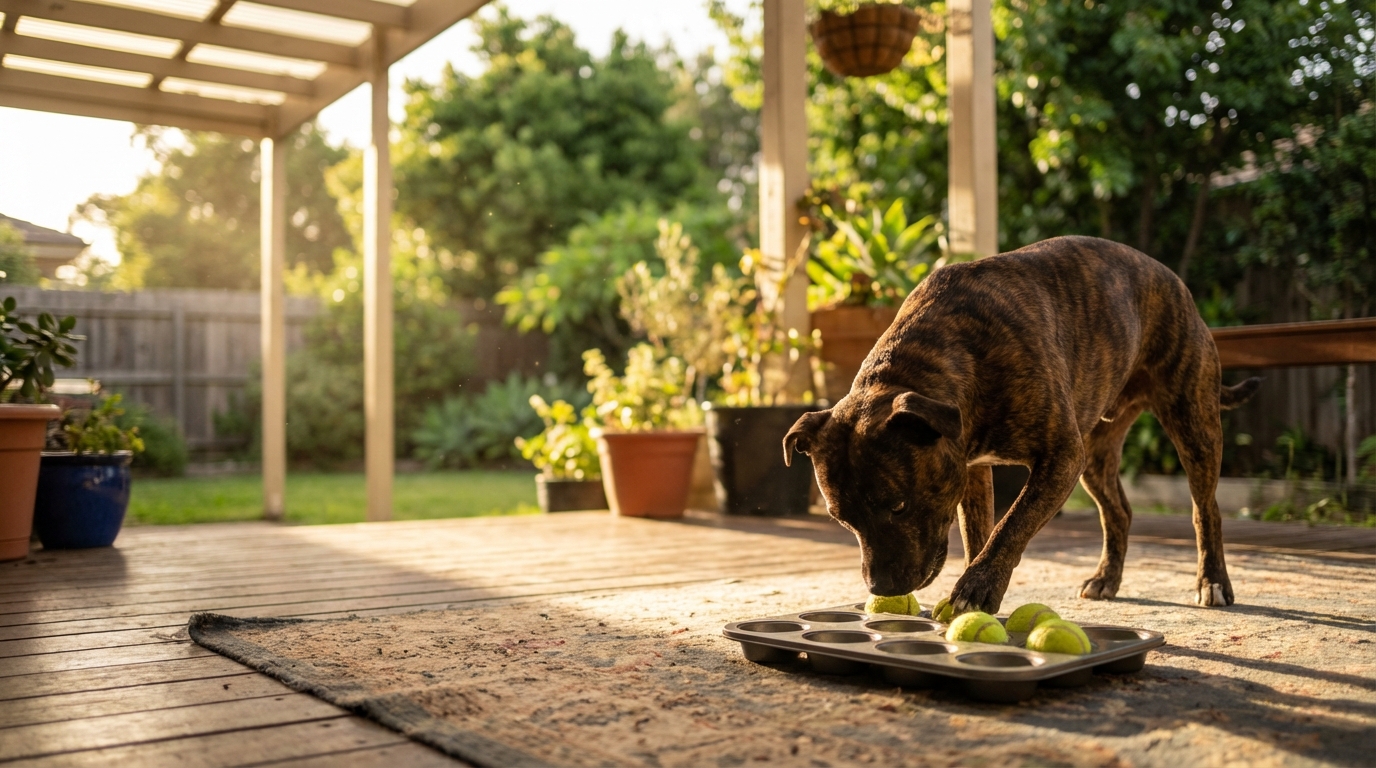
- Muffin tin puzzle: Place treats in a muffin tin and cover each hole with a tennis ball. Your dog has to figure out how to remove the balls to reach the reward.
- Cardboard box dig: Fill a cardboard box with scrunched-up newspaper and hide treats throughout. Let your dog shred and dig to their heart's content.
- Towel roll-up: Lay treats along a towel, roll it up tightly, and let your dog unroll it with their nose and paws.
- Frozen lick mat: Spread yoghurt, mashed banana, or wet food onto a textured mat, freeze it, and serve. The licking action is naturally calming for anxious dogs.
Always remove small parts, staples, or anything that could be swallowed. Supervise DIY enrichment sessions, especially the first few times, to make sure your dog is playing safely.
Building a Daily Mental Stimulation Routine
Consistency is key. Rather than marathon enrichment sessions once a week, aim for 10–20 minutes of brain work each day. This could be a training session in the morning, a puzzle feeder at lunchtime, and a quick game of hide and seek in the evening.
Rotate toys and activities regularly to keep things fresh. Dogs, like humans, lose interest in the same puzzle once they've mastered it. Having a small collection of dog enrichment products that you can cycle through makes this easy.
Pair mental challenges with physical exercise for the most well-rounded routine. A short walk followed by a training session is often more satisfying for your dog than twice the distance with no mental component. On rainy days or during extreme heat, you can skip the walk entirely and focus on indoor brain games — your dog won't miss out.
Pay attention to your dog's signals. A wagging tail and focused eyes mean they're engaged. Yawning, lip-licking, or walking away are signs they've had enough. End every session on a positive note with an easy win and plenty of praise.
Frequently Asked Questions
How long should I spend on brain games each day?
Most dogs do well with 10–20 minutes of focused mental enrichment per day, broken into a few short sessions. Puppies and senior dogs may tire more quickly, so watch for signs of fatigue and adjust accordingly.
Are puzzle toys safe to leave with my dog unsupervised?
It depends on the toy and your dog's chewing habits. Durable rubber treat dispensers are generally safe for unsupervised use, but puzzle toys with small removable parts should only be used while you're watching. Always check the manufacturer's guidelines.
My dog gives up on puzzles quickly — what should I do?
Start with the easiest setting and use high-value treats to build motivation. Let your dog see you place the treat so they know there's a reward worth working for. As their confidence grows, gradually increase the difficulty — patience is everything.
Keeping your dog's brain active is one of the simplest ways to improve their quality of life, and it doesn't have to be complicated. Browse our full range of dog toys and enrichment products to find the perfect challenge for your pup, and have a chat with your vet if you're noticing sudden behavioural changes that enrichment alone doesn't resolve.