


Wondering about Adaptil vs Feliway and which calming diffuser suits your household? Both use species-specific pheromones to help pets feel safer during common stressors like storms, visitors, moving house, or changes in routine. This guide breaks down the practical differences so you can choose the right option and set it up correctly.
- Adaptil: for dogs; helpful for settling at home during predictable stress (alone time, visitors, storms).
- Feliway: for cats; helpful for home-based stress like hiding, tension between cats, scratching changes, or urine marking.
- Not interchangeable: dog pheromone products aren’t intended for cats, and cat pheromone products aren’t intended for dogs.
- Best results: consistent use in the main problem area, paired with routine and environmental support.
What these diffusers do (and don’t do)
Both products are designed to support calmer behaviour by releasing synthetic versions of natural pheromones into the air. Pets detect these signals through their scent systems and may respond by feeling more comfortable in their environment.
A diffuser isn’t a sedative and won’t “fix” every behaviour issue on its own. Think of it as a supportive tool that can make training, routine changes, and stressful seasons (like summer storms in QLD, or fireworks around New Year’s) easier to manage.
- Best for: mild-to-moderate stress, household changes, new environments, and predictable triggers.
- Not a substitute for: behaviour modification, enrichment, pain checks, or professional advice for severe anxiety.
It’s also worth setting realistic expectations. According to manufacturer guidance and common veterinary behaviour recommendations, pheromone products are typically used as part of a broader plan: consistent routine, safe resting areas, and (where needed) a structured behaviour program for the specific trigger.
Adaptil vs Feliway: the key differences
The simplest way to approach a pheromone diffuser comparison is to start with species. Adaptil is formulated for dogs, while Feliway is formulated for cats—each mimics different pheromone signals that are meaningful to that animal.
In other words: dog pheromone products won’t help cats in the same way, and cat pheromone products won’t help dogs. If you have both species at home, you may need separate products in the areas they spend the most time.
- Choose Adaptil for: dogs showing signs of stress such as pacing, whining, trembling, barking more than usual, or difficulty settling.
- Choose Feliway for: cats who are hiding more, scratching in new places, urine marking, or reacting to changes in the home (including new pets, guests, or renovations).
- Home set-up: diffusers work best in the main “problem zone” (living area, hallway near the front door, or the room where your pet spends the most time).
If you’d like to browse options, see Adaptil calming products for dogs and Feliway calming products for cats.
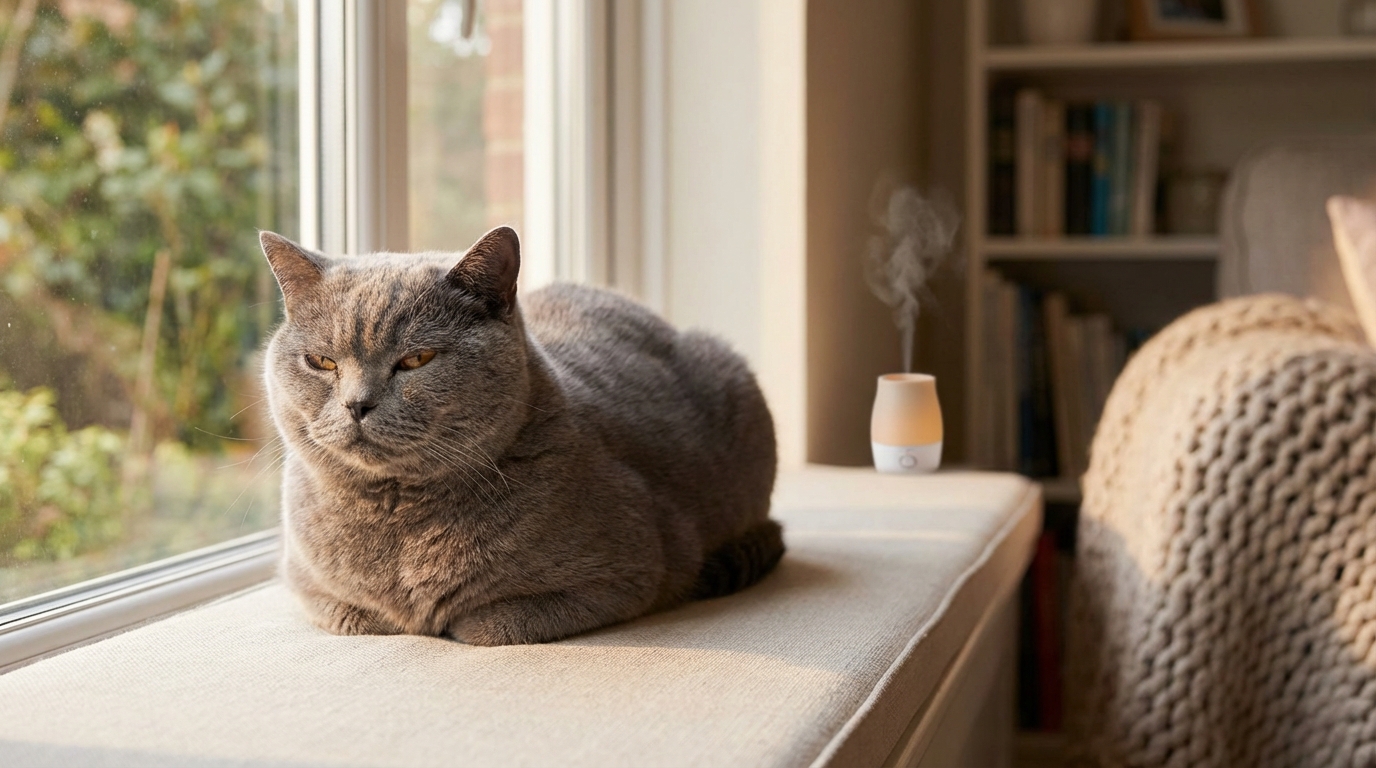
Product variants: which one suits your scenario?
Within each brand, you’ll often see versions designed for different goals. The key is matching the scenario to the format:
- Home diffusers: best for ongoing, area-based stress (for example, alone time near the entry, changes in household routine, or cats reacting in shared spaces). Choose this when the issue happens mostly in one room or zone.
- Transport or carrier support (often sprays): best for short, specific situations like car travel, vet visits, grooming appointments, or helping a pet settle into a crate or carrier. Choose this when you need targeted help on an item or in a small space.
For cats, some product lines are geared more toward general environmental comfort, while others focus more on multi-cat tension. If your main issue is friction between cats (blocking, staring, chasing, guarding resources), prioritise the option that’s positioned for inter-cat conflict rather than general calm-at-home support. For dogs, if the stress is mainly during outings, travel, or new places, a targeted format may make more sense than relying only on a single room diffuser.
Which one should you choose?
If you’re stuck deciding between Adaptil vs Feliway, use your pet type and trigger as the deciding factor. Then choose the format that fits your home: a plug-in diffuser for ongoing support in a main room, or a targeted format for carriers, cars, or bedding.
Choose a diffuser if the stress is happening mostly in one area (e.g., dogs struggling to settle when left alone near the entry, tension in the lounge room, or cats reacting to a new pet in shared spaces). Choose a targeted format if you need help for carriers, cars, or a specific item like bedding.
Quick tip: For best coverage, plug the diffuser into an open, properly functioning wall socket (not a powerboard), and avoid placing it behind curtains, furniture, or doors where airflow is blocked.
If your household includes multiple pets, prioritise the spaces that drive the stress: entry points, feeding areas, and the rooms where pets compete for attention. In many Australian homes, open-plan living means one diffuser may support a key zone, but closed doors, long hallways, and multi-storey layouts often need more deliberate placement.
How to set up a calming diffuser for pets
A calming diffuser for pets works most reliably when it’s used consistently. Plug it in and leave it running during the period you expect stress, rather than only switching it on during an episode.
- Placement: choose the main area your pet spends time in, or where the unwanted behaviour occurs.
- Coverage guidance: one diffuser is typically intended for a single main room area. Large, segmented homes may need more than one unit across key zones (for example, one for the main living area and one for the cat “core” room where litter and resting spaces are).
- Airflow matters: avoid placing it under shelves, behind couches, or anywhere airflow is blocked.
- Refills: most plug-in systems use a refill that lasts around a month under normal continuous use—check your specific product packaging and replace on schedule so support doesn’t drop off unexpectedly.
- Safety: use only in a standard wall socket in an upright position, keep it uncovered, and follow label instructions (especially in small enclosed spaces or where curious pets can reach it).
For cats, also look at the environment: add vertical spaces, provide multiple litter trays in multi-cat homes, and set up separate feeding and water stations to reduce conflict and guarding. For dogs, increase calm enrichment (sniffing walks, chew time, and settle training) so the pheromone support has something to “work with”.
If urine marking or inter-cat conflict is part of the picture, treat pheromone support as one layer. Cleaning soiled areas appropriately, reducing crowding around key resources, and improving safe escape routes between rooms are often just as important as diffuser placement (and may be essential for lasting change).
When to expect results (and when to reassess)
Some pets appear more settled within days, while others take longer—especially if the trigger is constant (like ongoing construction noise) or if stress has been building for months. Aim to assess progress over a couple of weeks by tracking specific behaviours (for example: fewer hiding episodes, less barking at the door, reduced scratching in new places, or improved ability to settle on a bed).
If you’re not seeing any change, reassess the basics: is the diffuser in the right room, is airflow blocked, is the refill current, and is the trigger happening elsewhere (like the garage, stairwell, outdoor fence line, or a different room where your pet spends time)? You may also need to combine pheromone support with a more structured behaviour plan rather than relying on one product alone.
If behaviour is severe, sudden, or escalating (especially sudden marking, aggression, or panic), contact your vet for tailored advice and to rule out underlying health contributors. Responsible-use guidance from veterinary behaviour sources generally positions pheromones as low-risk support, not a substitute for diagnosis or a complete behaviour program.
Frequently Asked Questions
Can I use a dog diffuser for my cat (or vice versa)?
No—each is designed for a specific species, and pets respond to different pheromone cues. For a useful comparison, the first rule is to match the product to your pet type.
Is a diffuser enough for separation anxiety or severe fear?
It can help some pets feel more secure, but it’s usually most effective as part of a broader approach including routine, enrichment, and training. If anxiety is intense or escalating, treat the diffuser as supportive rather than a standalone solution, and speak with your vet or a qualified behaviour professional.
Do I need more than one diffuser in a large home?
Possibly. Open-plan areas are often well-served by one unit in the main living zone, but multi-storey homes or closed-off rooms may require additional coverage where the behaviour occurs. If your cat’s stress is centred around a specific “core” room (litter, beds, feeding), place support there rather than in a room your cat rarely uses.
What if my cat is urine marking or my cats are fighting?
Pheromone support may help, but it works best alongside environmental changes (more trays, more resting spots, better spacing of resources) and careful management of interactions. If marking is new or frequent, or if there’s escalating conflict, book a vet check and get behaviour guidance to address the root cause.
If you’re ready to choose, browse Adaptil for dogs or Feliway for cats, and pick the option that matches your pet’s stress trigger and your home layout. If your pet’s anxiety is severe or sudden, chat to your vet for tailored advice.