


This guide is designed to get you through the first few days (and that first week at home) with fewer surprises and more purrs. The goal isn’t perfection—it’s creating a safe, predictable routine while you learn what your kitten needs. Below you’ll find practical setup steps, night-one tips, and early habits that support calm settling-in in Australian homes.
Before you pick them up: set up a safe base
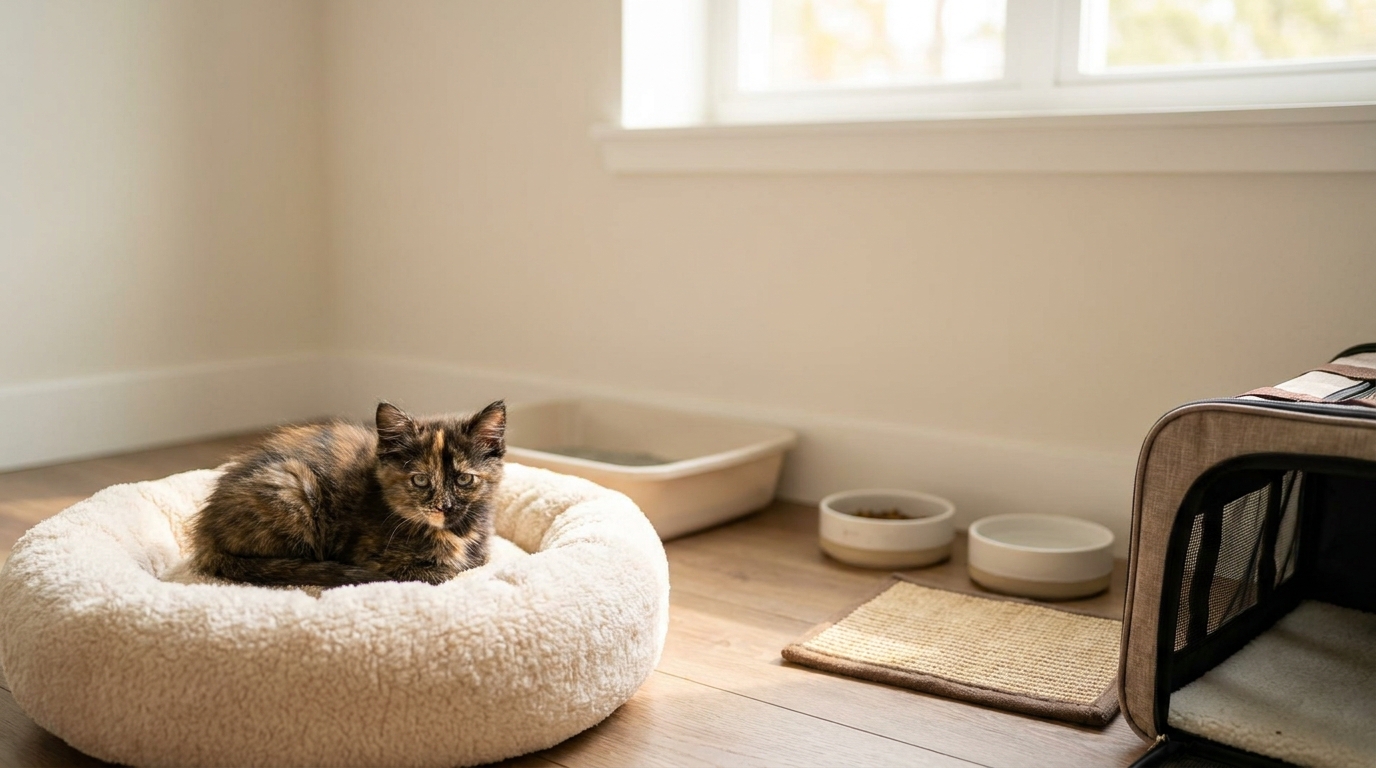
The biggest mistake early on is giving a kitten the whole house straight away. Start with one quiet “base camp” room (spare bedroom, study or laundry) where they can eat, sleep and toilet without feeling overwhelmed. Keep it warm in winter and well-ventilated in summer—Australian weather swings (and air-con or heaters) can stress a tiny newcomer.
Here’s a practical essentials checklist for day one:
- Carrier with a familiar-smelling towel or tee (yours is fine).
- Litter tray (low-sided) plus unscented litter.
- Food and water bowls (wide, shallow; many kittens dislike deep bowls).
- Kitten food matching what they’ve been eating, to avoid tummy upset.
- Bed and hiding spot (a covered bed or a box on its side).
- Scratching surface (vertical and/or horizontal) to protect furniture early.
- Toys for short play bursts (wand toy, small kicker, crinkle ball).
Do a quick “kitten-proof” sweep: secure loose cords, remove rubber bands and string, close recliners/sofas with gaps, and check flyscreens. If you have balcony access, assume a kitten can squeeze through anything wider than their head. In many Australian homes, also watch for open stairwells, laundry cupboards, and warm spots behind fridges that can become hard-to-reach hiding places.
Day 1: homecoming, hiding and first cuddles
Bring them straight to base camp and open the carrier door. Let your kitten come out on their own timeline—many will hide at first, and that’s normal in the first days. Sit on the floor, speak softly, and let them investigate you rather than reaching in.
Offer water and a small meal, then show the litter tray. Place them in the tray once (no forcing), then leave it nearby and easy to access. If they won’t eat in the first few hours, don’t panic—moving day is big.
Night one is often the hardest. Keep lights dim, give a short play session, then offer a small meal to encourage sleep. If crying starts, avoid “rewarding” it with constant attention; instead, offer calm reassurance, then let them settle. A warm (not hot) heat source outside the bed can help in cooler states and during winter nights—just ensure there’s room for them to move away if they feel too warm.
Days 2–4: routine, feeding and litter success
By day two, aim for a predictable rhythm: wake, toilet, eat, play, nap—repeat. Kittens thrive on routine, and this is where a simple plan really pays off. Short, frequent play (5–10 minutes) helps burn energy without overtiring them.
Feeding tips that prevent most early-week dramas:
- Keep the same food for at least several days before changing anything.
- Small meals suit small stomachs; leave fresh water available.
- Watch the litter: normal wee and poo tells you they’re coping well.
Quick tip: Put the litter tray in a quiet corner, not beside the food bowls. If accidents happen, clean with an enzyme cleaner and place the tray closer to where your kitten is spending time.
Start gentle handling now: touch paws, look in ears, and briefly lift them, then reward with a treat or play. This sets you up for easier nail trims, carrier trips and health checks later.
If you have children, teach “quiet hands” from the beginning: sitting on the floor, offering a toy (not fingers), and letting the kitten approach. Keep interactions short and supervised—especially during the settling-in period when they’re still learning what’s safe.
Days 5–7: health, safety and parasite protection
As confidence grows, you can gradually expand their space—one extra room at a time, supervised. Keep the base camp available so they always have a “safe return” zone. If you have other pets, keep introductions slow: scent swaps first, then brief visual contact, then supervised time together. For resident cats, separate resources (food, water, beds and trays) can reduce tension while everyone adjusts.
Health-wise, do a simple daily check: bright eyes, clean nose, steady appetite, and normal toileting. Mild sneezing right after arrival can be stress-related, but ongoing signs like runny eyes, lethargy, vomiting, diarrhoea, or not eating deserve prompt attention.
Parasite prevention is part of smart early care, especially in warm, humid areas where fleas thrive year-round. Even indoor kittens can pick up fleas via humans, other pets, or visiting animals. For Australian households, it’s best to ask your vet for a region-appropriate plan (including what’s suitable for your kitten’s age and size) and to confirm the right timing for vaccinations and worming. Avoid using dog-only products or anything not labelled for kittens.
First vet visit planning: If you don’t already have a health record from the breeder/rescue, consider booking a check-up soon after arrival so your vet can assess overall health, discuss vaccination scheduling, and talk through microchipping/desexing timing based on your kitten’s situation and local requirements. For general Australian guidance you can also review vaccination and parasite information from the Australian Veterinary Association (AVA) and the RSPCA (these are useful references, but your vet should tailor advice to your kitten).
Common first-week issues (and what to do)
“My kitten hides all day.” This is common in the early days. Keep the room quiet, sit nearby, and use food and play to build trust—avoid dragging them out of hiding. You can offer a “safe tunnel” (like a box on its side) so hiding doesn’t always mean disappearing under furniture.
“They’re biting my hands.” Kittens learn with teeth. Redirect to a toy immediately, keep play with hands to a minimum, and end play for 10–20 seconds if biting ramps up. Consistency matters more than intensity.
“Litter tray accidents.” Most are location, stress, or a tray that feels hard to use. Add a second tray, use unscented litter, and make sure the tray isn’t blocked by closed doors or loud appliances. If stools are very soft, there’s straining, or you see blood, contact your vet for advice.
“Night-time zoomies.” Add a play-and-feed routine before bed, keep daytime naps normal (don’t try to keep them awake), and consider a safe enrichment toy in base camp. Many kittens settle significantly once they feel secure and the household routine becomes predictable.
Frequently Asked Questions
How long should I keep my kitten in one room?
Most kittens do best with 2–7 days in a base camp room, depending on confidence. Expand their space once they’re eating well, using the litter reliably, and approaching you for attention.
What are the must-have essentials to buy before bringing a kitten home?
Focus on the basics: carrier, litter tray and litter, kitten-appropriate food, bowls, bed/hideaway, scratching surface, and a few toys. Those core essentials cover safety, hygiene, and settling-in comfort.
When should my kitten see a vet after coming home?
If you don’t have recent veterinary records, many owners book a check-up soon after arrival so they can confirm general health, discuss vaccinations and parasite prevention suited to your area, and plan microchipping/desexing. If your kitten isn’t eating, seems unwell, or has ongoing vomiting/diarrhoea, seek advice promptly.
Should I bathe my kitten in the first week?
Usually no—bathing can add stress and chill, especially in cooler months. If they’re dirty, use a warm damp cloth and keep them in a warm room; only bathe if truly necessary and keep it gentle and brief.
What should I have ready so I’m not scrambling in the first week?
Have a carrier, litter tray and unscented litter, kitten food (the same one they’re used to), bowls, a bed/hiding spot, a scratching surface, and a few simple toys ready before your kitten arrives. That setup covers the first week’s most common needs.
Stock up on the basics early so you’re not scrambling mid-week. If anything feels off with appetite, toileting, breathing, or energy, chat to your vet for personalised advice.