


When your dog has stiff hips, sore elbows, or early arthritis, the right movement matters. The best approach to dog exercise for joint problems is gentle, consistent, and focused on keeping muscles strong without stressing painful joints. Below are practical, low-impact ways to support comfort, confidence, and day-to-day mobility.
Why low-impact movement helps sore joints
Joint discomfort often leads to less activity, which can reduce muscle tone and make everyday movements harder. A thoughtful low impact dog exercise plan keeps key muscle groups working so joints have better support, especially around hips, knees, shoulders, and the spine.
Low-impact options also reduce sudden twisting and high landing forces that can flare soreness. For many pets, this is the sweet spot for ongoing movement: enough to maintain function, not so much that they’re limping later.
If you’re already managing other health priorities like parasite protection, it helps to keep care simple and consistent—pair gentle movement with routine essentials from our Joint & Mobility range and your regular Flea, Tick & Heartworm Prevention schedule.
Low-impact walks: small tweaks, big difference
Walking is often the easiest way to support senior dog fitness, but pace and terrain matter. Choose flatter routes (think footpaths, ovals, or packed dirt) instead of steep hills, deep sand, or rocky tracks that demand more joint flexion.
Aim for shorter, more frequent outings rather than one long walk. For example, two to three 10–15 minute strolls can be better than a single 45-minute walk that leaves your dog stiff for the rest of the day.
- Warm up slowly: Start with 3–5 minutes of easy pace before any brisk walking.
- Keep turns wide: Tight pivots can strain sore hips and elbows.
- Go at their speed: Let your dog set the tempo; avoid sudden accelerations.
- Choose cooler times: In Australian summers, early morning or later evening helps prevent overheating and fatigue.
If your dog pulls, a steady, controlled walk can be hard on the front end. Consider training for loose-lead walking so your dog’s shoulders and elbows aren’t absorbing repeated jolts.
Quick tip: Watch the “after-walk test”. If your dog is noticeably stiffer, slower to rise, or reluctant to use stairs later that day, reduce time or intensity next outing.
Water exercise and swimming (if your dog enjoys it)
Water can be an excellent low impact dog exercise because buoyancy reduces the load on painful joints while still letting muscles work. Some dogs love a gentle paddle; others prefer walking in shallow water along the shoreline.
Safety first: use a well-fitted dog life jacket, choose calm water, and keep sessions short. Rinse your dog after swims to remove salt or chlorine, and dry ears well—especially if they’re prone to ear irritation.
- Best for: Dogs that are comfortable in water and need joint-friendly conditioning.
- Keep it controlled: Avoid big wave action, fast currents, and frantic ball-chasing that can lead to awkward twisting.
- Try “water walking”: Belly-deep water encourages steady movement without heavy impact.
Not every dog is a swimmer, and that’s fine. The goal is consistent, comfortable movement—there’s no one-size-fits-all approach to dog exercise when joints are sensitive.
Gentle strength and balance for better stability
When joints hurt, dogs often shift weight away from the sore area, which can create weakness and wobbliness over time. Light strength and balance work helps with confidence on slippery floors, getting up from beds, and managing everyday steps.
- Sit-to-stand (controlled): Ask for a slow sit, then a slow stand. Do a small number of reps with breaks, focusing on smooth movement.
- Weight shifts: With your dog standing, lure their head gently side-to-side to encourage controlled weight transfer.
- Short “figure 8” walking: Wide turns around cones (or pot plants) can improve coordination without sharp pivots.
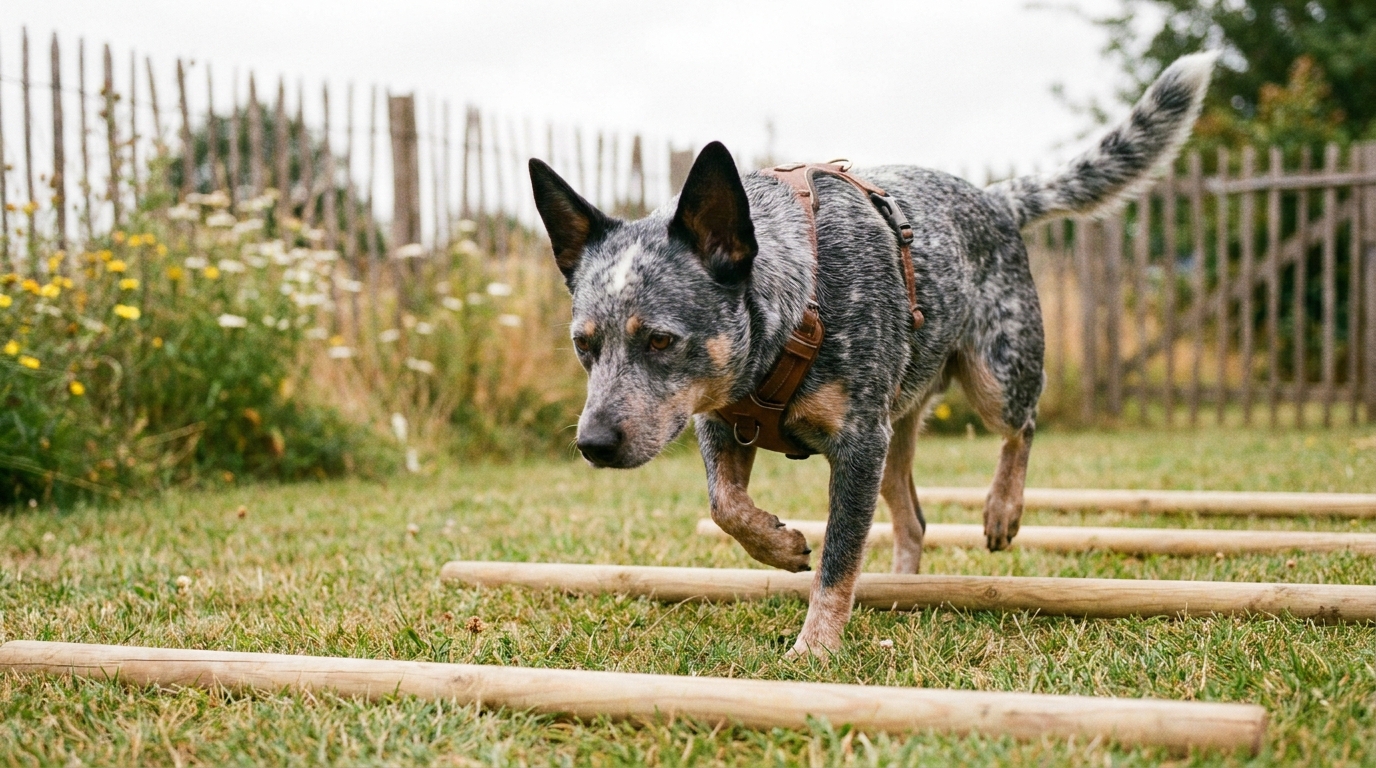
- Low step-overs: Step over a broom handle on the ground (not raised) to promote careful paw placement.
Keep sessions brief—think 3–8 minutes—then stop while your dog still feels good. If your dog has significant stiffness, you may also find it helpful to support their routine with everyday comfort tools from our Joint & Mobility category (like supportive gear and mobility aids) alongside gentle exercise.
Building a safe routine (and when to stop)
Consistency beats intensity. For senior dog fitness and ongoing joint comfort, build a weekly plan your dog can repeat without flare-ups—then increase very gradually (time first, intensity last).
Use simple tracking: note walk duration, terrain, and how your dog looks later that day and the next morning. That pattern is often more informative than how they seem in the moment (many dogs push through discomfort to stay with you).
- Good signs: Relaxed gait, willing to start the next session, normal appetite, settling comfortably afterwards.
- Stop and rest if you see: Limping, repeated stopping, panting that doesn’t settle, lagging behind, or sudden reluctance to move.
- Home setup helps: Use rugs or runners on slippery floors, keep nails trimmed for traction, and avoid high jumps on/off furniture.
If your dog needs to lose a little weight, keep exercise gentle and focus on steady, manageable movement—extra kilos can increase joint load. And if you’re doing more outdoor sessions (parks, beaches, bush tracks), keep your dog’s parasite protection current with items from our Flea, Tick & Heartworm Prevention category so you’re covering the essentials while they stay active.
Frequently Asked Questions
How often should I exercise a dog with sore joints?
Most dogs do better with shorter, more frequent sessions—often daily gentle movement rather than occasional big outings. Start small, watch how your dog feels later that day, and adjust duration before adding speed or hills.
Is it okay for my dog to play fetch if they have joint issues?
Fast sprints, skidding stops, and sharp turns can be tough on sore joints. If your dog loves it, switch to low-key versions like short tosses on grass, rolling a toy, or sniff-and-find games that keep movement steady.
What if my dog seems fine during exercise but is stiff afterwards?
That often means the session was a bit too long or too intense for their current comfort level. Reduce time, pick flatter ground, and build up slowly over a few weeks.
Ready to keep your dog moving comfortably? Explore supportive essentials in our Joint & Mobility range, and if you’re unsure what level of activity is right for your dog, chat to your vet.