


Noticing subtle signs of arthritis in dogs early can make a real difference to comfort and mobility. Many dogs don’t yelp or cry—they simply start moving differently, especially after rest or on cold mornings. The goal is to recognise patterns such as stiffness and intermittent limping before they become your dog’s “new normal”.
Important: This article is general information only and isn’t a diagnosis. If you suspect your dog has joint pain, or you’re considering any supplement or pain relief, speak with your vet first—especially if your dog is on other medications or has other health conditions.
Early signs owners often miss
Canine arthritis early on can look like “slowing down with age” rather than a clear injury. Many cases are related to osteoarthritis, where joint wear and inflammation build over time. The trick is noticing small changes that repeat—especially after naps, big play sessions, or chilly weather.
Look out for these common early signs:
- Hesitation before movement (pausing before getting up, jumping, or stepping off a kerb)
- Stiffness after rest that eases once they’ve warmed up
- Less enthusiasm for walks, fetch, or greetings at the door
- Changed posture such as a tucked pelvis, arched back, or standing “camped under”
- Licking or chewing joints (hips, elbows, wrists) without a skin issue
- Behaviour changes—more grumpy, restless at night, or avoiding pats around sore areas
Also watch for subtle weight shift. Many dogs quietly unload a sore limb by leaning onto the other side, which can create a knock-on effect in other joints over time.
What to watch for in walking, running and stairs
A classic clue is stiffness that’s worse first thing in the morning, after long car rides, or after lying on a cold floor. Limping may come and go, which is why it’s easy to dismiss as a “tweak”.
Pay attention to how your dog:
- Takes off: do they start with short, choppy steps then loosen up?
- Turns: do they “pivot” carefully or swing their back end wide?
- Trots: do they bunny-hop with the back legs or look uneven at speed?
- Uses stairs: do they pause, take one step at a time, or avoid going down?
- Jumps: are they reluctant to get into the car or onto the couch?
In Australian summers, warmth can help some dogs move more freely, while winter cold can make soreness more obvious. If you notice seasonal ups and downs, that’s still a useful pattern to track and share with your vet.
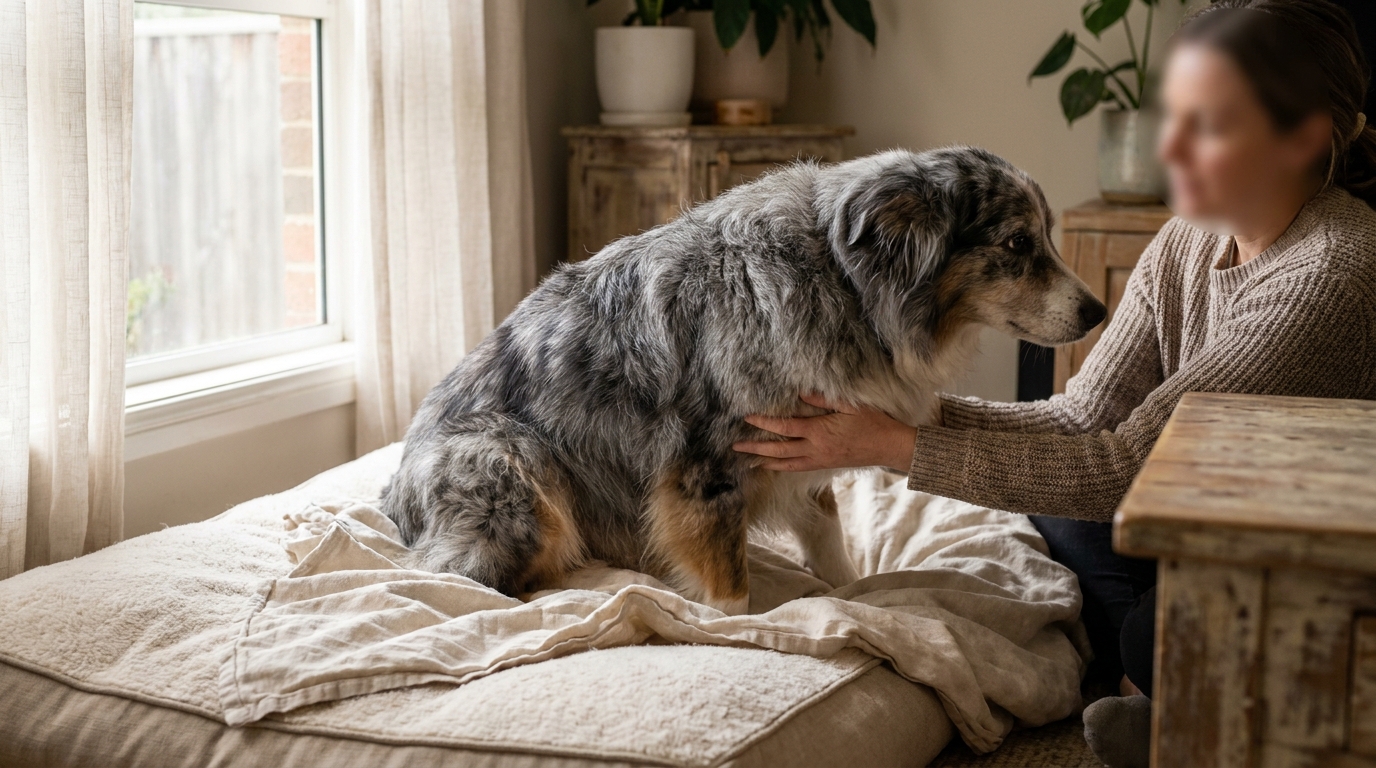
Some dogs show clearer discomfort in specific areas, such as hip/elbow arthritis. You might notice a sore back end when rising, difficulty jumping into the ute, or front-end stiffness after exercise—though only a vet exam (and sometimes imaging) can confirm which joints are involved.
Common risk factors (and why they matter)
Arthritis doesn’t appear out of nowhere. Understanding risk factors helps you take earlier action and ask your vet targeted questions.
- Body weight: extra kilos increase stress through hips, knees, shoulders, and paws. Even small, gradual weight gain can make existing joint pain more noticeable.
- Breed and build: larger breeds and deep-chested, heavy-boned dogs can be more prone to joint wear. Some smaller breeds can also be affected, particularly if they jump on and off furniture frequently.
- Previous injury or surgery: past cruciate injuries, fractures, or dislocations can change how a dog loads their limbs.
- High-impact lifestyle: repeated sprinting, sharp turns, and hard landings (especially on slippery surfaces) can add cumulative strain.
- Age: it’s common in seniors, but younger dogs can develop arthritis too—especially after injury or due to joint shape issues.
If your dog has one or more of these risk factors, take “minor” movement changes seriously and track them over time.
Simple at-home checks (no special gear)
You don’t need to “test” the joint—just observe gently and consistently. These checks can help you describe what you’re seeing, but they can’t diagnose arthritis or rule out other causes of lameness. If anything seems painful, stop and book a vet visit.
- The rise check: after your dog has been resting for 20–30 minutes, call them up and watch how they stand. Look for a head bob, a hip sway, or a slow “rocking” motion.
- The sit-to-stand: ask for a sit, then stand. A sore dog may sit crooked, kick one leg out, or hesitate before standing.
- Walk-out-and-back: on a flat surface, walk away and back at a normal pace. Compare stride length on each side and listen for nail scuffing.
- Touch tolerance: while relaxed, gently stroke around hips, knees, shoulders, and elbows. Pulling away, lip licking, or tense muscles can signal discomfort.
Quick tip: Film 10–15 seconds of your dog walking and trotting from the side and from behind. Changes are easier to see on video—especially subtle limps that come and go.
If you’re unsure whether you’re seeing a true limp or just tiredness, repeat the same check at the same time of day for a few days. Consistent patterns matter more than a one-off “off day”.
How to support joints day-to-day
Early support is about comfort, confidence, and protecting movement. Small home changes can reduce strain and help your dog keep doing the activities they love.
- Keep nails short: long nails change foot angle and can worsen soreness. If you hear nails clicking constantly on hard floors, it’s time for a trim.
- Add traction: runners on tiles or floor mats in favourite areas help prevent slips that jar sore joints.
- Choose gentle exercise: regular, moderate walks are often better than weekend “boom and bust” outings.
- Warmth helps: in cooler states and winter months, a warm bed off the floor can reduce morning stiffness.
- Use ramps or steps: for cars and couches to minimise repetitive jumping.
If you’re considering a joint supplement or other support, your vet can advise what’s appropriate for your dog’s age, weight, diet, and medical history. Avoid giving human pain relief—some products are toxic to dogs.
Separately, comfort matters in more than one way. For dogs with itchy skin from fleas or tick bites, constant scratching and restless sleep can reduce recovery time after exercise. Keeping parasites under control supports overall wellbeing—browse flea and tick prevention and heartworm prevention options that suit your dog’s lifestyle.
When to act fast (and what to do next)
Some changes are gradual, but certain signs deserve prompt attention. Sudden severe lameness, refusing to bear weight, yelping when moving, or a visibly swollen joint aren’t typical “ageing” signs.
Book a vet check soon (or urgently, depending on severity) if you notice:
- A limp that lasts more than a few days, even if it improves after warming up
- Rapid decline in willingness to walk, climb stairs, or jump into the car
- Repeated slipping on floors or a new fear of surfaces
- Muscle loss in one thigh or shoulder compared to the other side
- New vocalising or guarding when touched around the back, hips, shoulders, or elbows
While you’re monitoring signs, keep notes: when it happens (morning vs evening), after what activity, which leg, and whether cold weather makes it worse. That detail helps your vet narrow down causes and build a practical plan to manage pain and protect mobility.
Even when arthritis is suspected, it’s important to rule out other issues that can look similar (sprains, ligament injuries, paw pain, or spinal problems). Your vet may recommend a physical exam, weight and gait assessment, and sometimes imaging.
Frequently Asked Questions
Can arthritis start in young dogs?
Yes. While it’s more common with ageing, arthritis can develop earlier due to previous injury, joint shape issues, or high-impact activity. If a young dog shows persistent stiffness or recurring limps, organise a vet check.
Is limping always arthritis?
No—limping can come from nail injuries, paw pad cuts, sprains, or ligament issues. With arthritis, the pattern is often repeatable, such as stiffness after rest that improves once warmed up. A vet can help identify the true cause.
What’s the earliest sign most owners overlook?
Hesitation. Dogs often pause before jumping, climbing stairs, or standing up long before they show an obvious limp. Subtle changes in enthusiasm—like skipping a game they usually love—can be an early red flag.
Should I start supplements as soon as I suspect joint pain?
Talk to your vet first, especially if your dog is on other medications, has allergies, or has liver/kidney concerns. Your vet can also confirm whether the problem is likely arthritis or something else that needs different treatment.
If you’re seeing ongoing stiffness or a recurring limp, book a vet check and start a simple tracking routine (notes and short videos). Early support at home—traction, warm rest spots, steady exercise, and ramps—can make day-to-day movement easier while you and your vet work out the best plan.