


Wondering about Adaptil vs Feliway and which one will actually help your pet settle at home? These plug-in options are designed as a calming diffuser for pets, but they’re made for different species and different stress triggers. This guide breaks down the key differences so you can buy with confidence.
What Adaptil and Feliway are (and how they work)
Both products are pheromone-based calming aids that aim to create a familiar, safe “message” in your pet’s environment. In a pheromone diffuser comparison, the biggest difference is simple: one is formulated for dogs and the other for cats.
They’re not sedatives and won’t change your pet’s personality. Instead, they’re best thought of as environmental support—helpful during transitions like moving house, new routines, storms, or when you’re training calmer behaviour.
If you’re shopping by brand, you can browse Adaptil products for dogs or Feliway products for cats.
Which diffuser suits dogs vs cats
If your pet is a dog, choose Adaptil; if your pet is a cat, choose Feliway. That single rule answers most “Adaptil vs Feliway” decisions, because pheromones are species-specific and aren’t interchangeable.
- Adaptil (dogs): Often chosen for general settling at home, easing stress around visitors, helping puppies adjust, or supporting training goals like calm alone time.
- Feliway (cats): Commonly used for helping cats feel secure in their territory, smoothing household changes, and supporting calm interactions in multi-cat homes.
For households with both cats and dogs, you can use both in different areas—just treat each diffuser as a “zone” solution rather than expecting one unit to cover the entire home.
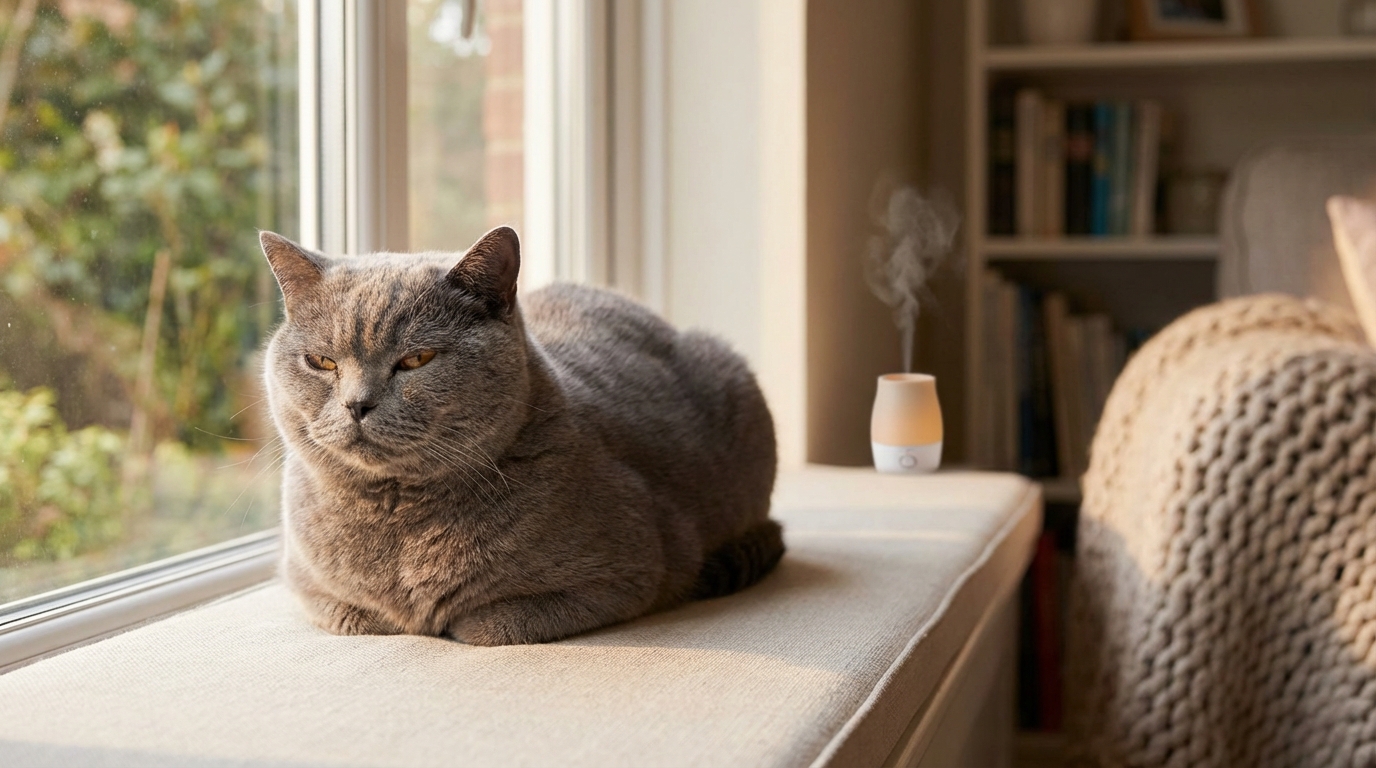
Choose by situation: travel, visitors, noise and multi-pet homes
The best calming diffuser for pets is the one that matches your pet’s stress trigger and the room where the problem shows up. Start by identifying the pattern: does your pet struggle when left alone, when the doorbell rings, during fireworks, or when another pet walks past their favourite spot?
- New home or renovations: A diffuser can help the main living area feel predictable while scents and layouts change.
- Visitors and busy weekends: Place the diffuser in the room where your pet retreats (or where excitement happens) so it supports calmer behaviour.
- Storm season and fireworks: In many parts of Australia, summer storms can be frequent and intense. A diffuser works best as a background support started early, paired with a safe retreat space.
- Multi-cat tension: Plug-ins can be useful where cats “bottleneck” (hallways, near litter areas, or favourite perches) to help reduce environmental pressure.
Quick tip: Set up the diffuser at least a few days before a predictable stressor (guests staying over, moving house, holiday travel). Pheromone products tend to work best when they’re part of the environment before anxiety peaks.
If your pet’s stress is very location-specific (for example, only the front lounge at night), prioritise that room first. If it’s home-wide (pacing, vocalising, hiding), consider whether you need multiple diffusers to cover key zones.
How to use a pheromone diffuser properly
Diffusers are straightforward, but placement makes a big difference. For the best results, plug it into an open socket in the main area your pet uses—think living rooms, open-plan spaces, or the room where your pet sleeps or spends the most time.
- Don’t hide it: Avoid plugging it behind furniture, curtains, or in tight corners where airflow is blocked.
- Choose the right room: Put it where the stress happens, not where it’s convenient.
- Keep routines stable: Pair the diffuser with consistent feeding, walking/play schedules, and a quiet retreat space.
- Support training: For dogs, combine with rewarding calm behaviour (settle on a mat, quiet greetings). For cats, provide vertical spaces and separate resources in multi-cat homes.
Remember, a pheromone diffuser comparison isn’t just about brand—it’s also about whether you’ve set it up for success. Even a great product can underperform if it’s in the wrong spot or you’re expecting it to solve every trigger on its own.
What to buy: diffuser kits, refills and value tips
Most people do best starting with a diffuser starter kit (diffuser unit plus initial refill), then moving to refills once they know it suits their pet and home. If you’ve already used a diffuser before, refills are the most cost-effective way to continue support.
- First time: Choose a starter kit so you have the full setup and can place it in the highest-impact room.
- Ongoing use: Keep a spare refill on hand so you don’t accidentally run out right before a stressful event (like holiday visitors or travel).
- Bigger homes: Consider multiple diffusers for separate zones rather than relying on one unit to cover several closed rooms.
If you’re deciding between the two and you have both species at home, it’s not an either/or purchase—Adaptil is for dogs and Feliway is for cats. Buying the correct species product is the most important “value tip” you can follow.
Frequently Asked Questions
Can I use Adaptil for my cat, or Feliway for my dog?
No—each diffuser is designed for a specific species, and they’re not meant to be swapped. If you’re comparing Adaptil vs Feliway, think of it as dogs vs cats first, then choose based on your pet’s situation and the room where stress occurs.
How long does it take to notice a difference?
Some pets seem to settle within days, while others need a couple of weeks of consistent use, especially if the stressor is ongoing. For best results, use it continuously and pair it with calm routines and environment management.
Will a diffuser stop all anxiety behaviours on its own?
It can help, but it’s rarely a complete solution by itself. Diffusers work best as part of a plan that includes enrichment, safe spaces, and training support for the behaviour you want to see more often.
Ready to choose? Shop dog-focused calming support in Adaptil or cat-specific options in Feliway—and if your pet’s anxiety is severe or suddenly worsening, chat to your vet.