


Whether you're a first-time owner or a seasoned dog parent, having a solid set of grooming tips for your dog makes bath time less stressful and far more effective. A good washing routine keeps skin healthy, reduces shedding, and gives you the chance to spot parasites or irritation early. Think of it as a regular health check wrapped in a sudsy, tail-wagging package.
How Often Should You Wash Your Dog?
There's no single answer — it depends on breed, coat type, activity level, and where you live. A short-coated Kelpie that spends weekends on a dusty farm will need washing more often than a Maltese that mostly lounges indoors.
As a general rule, most dogs benefit from a bath every four to six weeks. Over-washing strips natural oils from the coat and can lead to dry, flaky skin. If your dog swims in saltwater at the beach or rolls in something questionable at the park, an extra rinse is absolutely fine — just skip the shampoo if it hasn't been long since the last full wash.
Dogs with skin conditions or heavy parasite exposure may need a different schedule. If you're unsure, keep an eye on coat texture and odour as your best indicators.
Essential Gear and Pet Grooming Products
Gathering your supplies before you start prevents mid-bath chaos — nobody wants a soaking-wet Staffy bolting through the house while you hunt for a towel. Here's what to have on hand:
- Dog-specific shampoo — human shampoo has the wrong pH and can irritate canine skin.
- Conditioner — especially useful for long or double-coated breeds.
- A non-slip mat — for the laundry tub, bath, or shower floor.
- Absorbent towels — microfibre works brilliantly for thick coats.
- A slicker brush or rubber curry comb — for pre-bath de-tangling and post-bath finishing.
- Treats — positive reinforcement turns grooming into something your dog tolerates (or even enjoys).
You can browse a wide range of quality dog care products right here at Sierra Pet Products to make sure you're stocked up before bath day rolls around.
Step-by-Step Dog Washing Guide
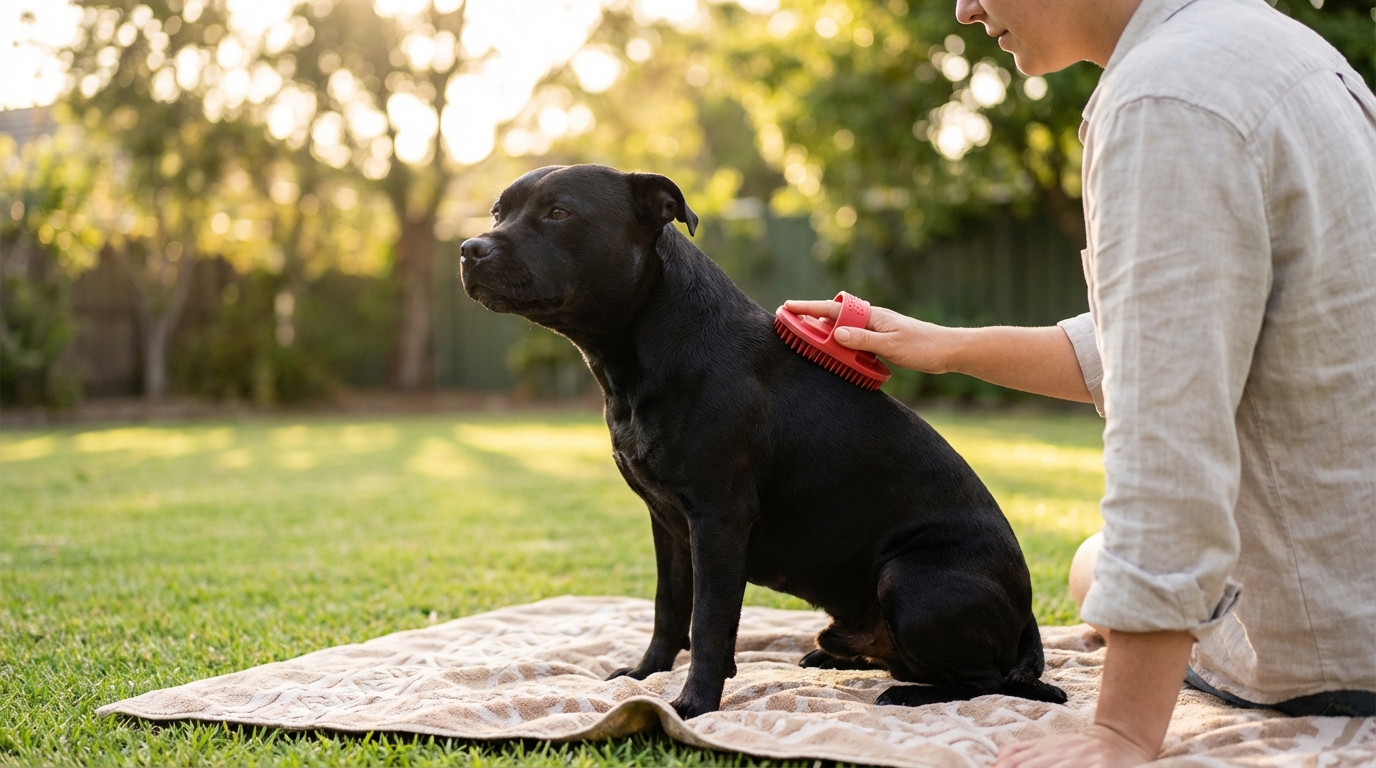
1. Brush first. Remove loose fur, dirt, and tangles before any water touches the coat. This is especially important for breeds like Border Collies and Australian Shepherds with thick double coats — wet knots become cement-like mats.
2. Use lukewarm water. Too hot can scald; too cold and your dog will try to escape. Test on the inside of your wrist, just like you would for a baby's bottle.
3. Wet thoroughly. Work from the neck down, keeping water out of the ears. A damp cotton ball placed gently in each ear can help prevent moisture buildup.
4. Lather and massage. Apply shampoo along the back and work it through the coat with your fingertips. Pay attention to the belly, armpits, and paws — these areas trap dirt and are common spots for irritation.
5. Rinse completely. Leftover shampoo residue causes itching and dullness. If you think you've rinsed enough, rinse once more.
6. Dry properly. Towel-dry first, then use a low-heat dryer if your dog tolerates it. In warmer months, air-drying outdoors works well — just keep your dog out of direct harsh sun while their coat is still damp.
Quick tip: Use bath time to run your hands over your dog's entire body. Feel for lumps, bumps, ticks, or sore spots — early detection makes all the difference, and it's much easier when the coat is wet and flat against the skin.
Grooming Between Baths
Good dog grooming isn't just about bath day. Regular brushing — two to three times a week for most breeds — distributes natural oils, removes debris, and massively reduces shedding around the house.
Don't forget the basics that are easy to overlook:
- Nails: Trim every two to four weeks or when you hear clicking on hard floors.
- Ears: Check weekly for redness, odour, or wax buildup, particularly in floppy-eared breeds like Cavaliers and Cocker Spaniels.
- Teeth: Daily brushing with a dog-safe toothpaste is ideal, though even a few times a week helps prevent tartar.
- Eyes: Wipe away discharge with a damp cloth, especially for flat-faced breeds prone to tear staining.
Keeping up with these small tasks means fewer problems down the track and a more comfortable dog overall. You'll find everything you need to keep your pet looking and feeling great in our dog product range.
Seasonal Considerations for Australian Dogs
Australia's climate throws a few unique curveballs into your grooming routine. During the hot, humid months — particularly from October through March — dogs tend to smell stronger, shed more, and pick up more parasites. You may find yourself bathing a little more frequently in summer, and that's perfectly fine as long as you use a gentle, soap-free shampoo.
Winter brings its own challenges. Dry air and indoor heating can strip moisture from your dog's coat, so a conditioning treatment after washing helps keep things soft and itch-free. If your dog wears a coat or jumper during cold snaps, brush underneath regularly to prevent matting.
Spring is peak shedding season for double-coated breeds. A deshedding tool or undercoat rake becomes your best friend during this time — daily sessions for a few weeks will save your furniture and your sanity.
Frequently Asked Questions
Can I use human shampoo on my dog?
No. Human shampoos are formulated for a different skin pH and can strip your dog's natural oils, leading to dryness, irritation, and increased vulnerability to skin infections. Always use a product designed specifically for dogs.
My dog hates baths — how can I make it easier?
Start by creating positive associations. Offer high-value treats before, during, and after the bath. Keep sessions short at first, use a calm voice, and ensure the water temperature is comfortable. Over time, most dogs learn to tolerate — if not enjoy — the process.
How do I know if I'm grooming my dog enough?
A well-groomed dog has a coat that's free of mats and tangles, skin that isn't flaky or red, nails that don't click excessively on hard floors, and ears that are clean and odour-free. If you're noticing issues in any of these areas, it's worth increasing the frequency of your grooming routine.
Keeping your dog clean and well-groomed is one of the simplest ways to support their overall health. If you're looking to stock up on trusted, vet-grade products for your pup, explore our full dog range at Sierra Pet Products — and if you have specific skin or coat concerns, have a chat to your vet for tailored advice.