

Australia's scorching summers can push temperatures well past 40 °C in many regions, and dogs are far more vulnerable to heat than most owners realise. Recognising the signs of heatstroke in dogs early — often within minutes — can be the difference between a quick recovery and a life-threatening emergency. Here's what every Australian dog owner should understand about heatstroke symptoms and how to act fast.
What Is Heatstroke and Why Are Dogs So Susceptible?
Heatstroke (also called hyperthermia) occurs when a dog's core body temperature rises above the normal range of 38–39.2 °C and their cooling mechanisms can no longer keep up. Unlike humans, dogs can't sweat through their skin. They rely almost entirely on panting and a small amount of heat release through their paw pads.
This makes them especially vulnerable during Australian summers, particularly in humid coastal cities like Brisbane and Darwin where panting is less effective. Brachycephalic breeds — think bulldogs, pugs, and boxers — are at even higher risk because their shortened airways make heat exchange harder.
Overweight dogs, senior dogs, and those with thick double coats also struggle more in the heat. Even a short walk on a 35 °C afternoon can tip a vulnerable dog into dangerous territory.
Early Warning Signs of Heatstroke in Dogs
Catching heatstroke symptoms early gives your dog the best chance. In the initial stages, look for:
- Excessive, heavy panting that doesn't slow down when your dog rests
- Thick, ropy drool — saliva may appear stickier than usual
- Bright red gums and tongue
- Restlessness or agitation — your dog may pace, whine, or seem unable to settle
- Increased heart rate — you can feel this by placing a hand on your dog's chest
These early signs often appear during or immediately after exercise, time in a hot car, or prolonged sun exposure. If your dog displays any combination of these, move them to a cool area immediately and begin cooling measures (more on that below).
Quick tip: Press a finger on your dog's gum — it should turn white then return to pink within two seconds. A slow refill or deep red colour indicates overheating and poor circulation.
Severe Symptoms That Demand Immediate Action
If early signs are missed or heat exposure continues, a dog's condition can deteriorate rapidly. Severe symptoms of heatstroke in dogs include:
- Vomiting or diarrhoea — sometimes with blood
- Staggering, loss of coordination, or wobbly legs
- Glazed or unfocused eyes
- Collapse or inability to stand
- Seizures or tremors
- Loss of consciousness
At this stage, organ damage may already be occurring. The brain, kidneys, and gastrointestinal tract are particularly vulnerable. Time is critical — begin first aid and transport your dog to a veterinary clinic without delay.
Important: If your dog shows any of the severe signs listed above, contact your nearest emergency vet immediately. First aid is essential to start the cooling process, but it is a bridge to professional veterinary care — not a substitute. Only a vet can assess for internal organ damage, administer IV fluids, and monitor your dog's recovery safely.
It's worth noting that heatstroke can develop in as little as 15 minutes inside a parked car, even on a day that feels mild. On a 29 °C day, the interior of a car can exceed 44 °C within minutes.
How to Prevent Heatstroke in Dogs During Australian Summers
Prevention is always easier than treatment. With a few practical habits and the right gear, you can drastically reduce your dog's risk during the warmer months.
Time your walks wisely. Stick to early morning or late evening when temperatures drop. A good rule of thumb: place the back of your hand on the pavement for seven seconds. If it's too hot for you, it's too hot for paws.
Provide constant access to fresh water and shade. Whether you're at home, at the beach, or on a road trip, hydration is non-negotiable. Portable water bowls and hydration additives designed for dogs can encourage drinking on the go, and an elevated pet bed allows airflow underneath your dog rather than trapping heat against a flat surface.
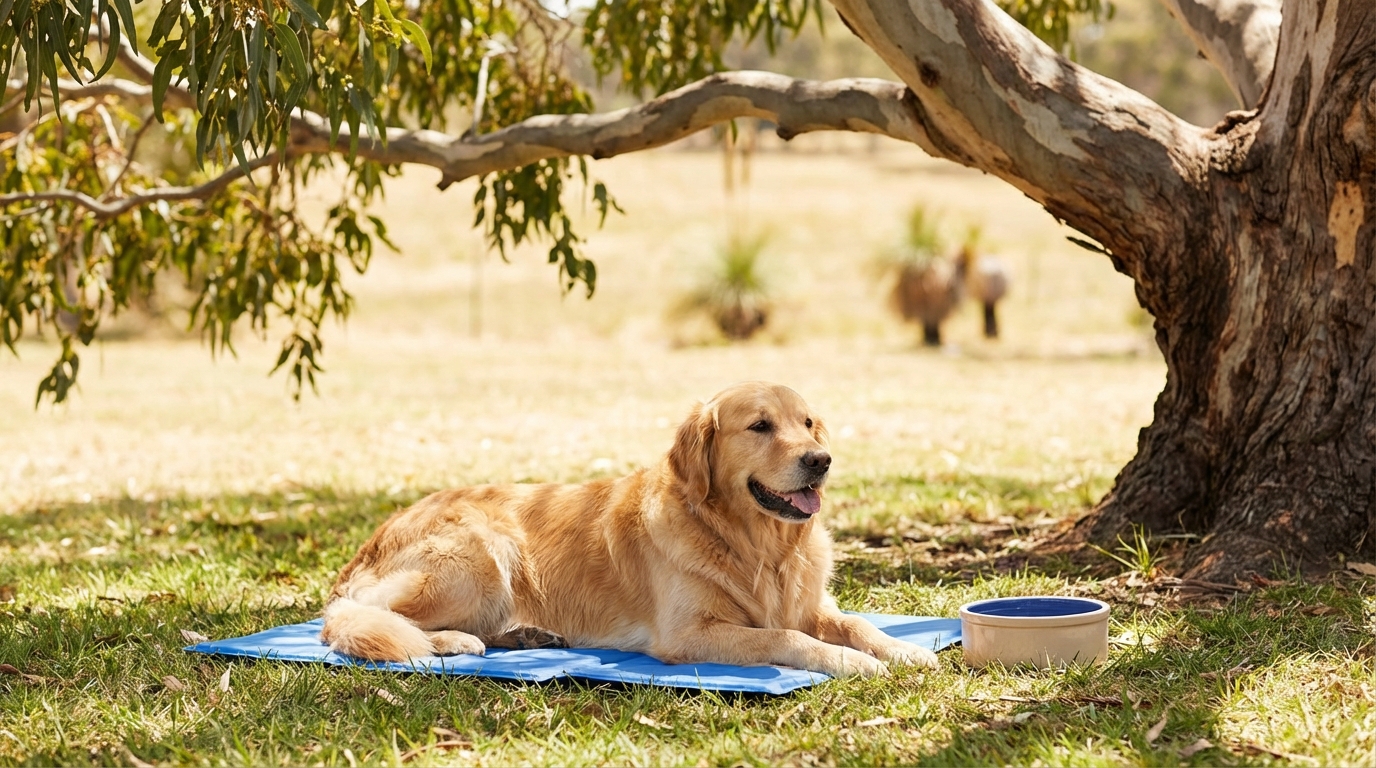
Invest in cooling products. A cooling mat or cooling vest can lower your dog's surface temperature quickly and is especially useful for brachycephalic or double-coated breeds. Keep one in the car, at home, and anywhere your dog spends time outdoors during summer.
Never leave your dog in a parked car. Not even for a quick errand. Not even with the windows cracked. In many Australian states, leaving an animal in a hot vehicle can result in significant fines and animal cruelty charges.
Keep up with overall wellness. A healthy dog copes with heat better. Staying on top of preventative health — including flea, tick, and worm protection — ensures your dog isn't battling multiple stressors at once during summer.
Know your breed's limits. Flat-faced breeds, arctic breeds like huskies and malamutes, and elderly dogs need extra caution. Shorter, gentler activity and air-conditioned indoor time during peak heat are essential for high-risk dogs.
Emergency First Aid: What to Do Right Now
If you suspect heatstroke, act immediately. Every minute counts — and remember, these steps are designed to stabilise your dog while you get to a vet, not to replace professional treatment.
- Move your dog to a cool, shaded area — indoors with air conditioning or fans is ideal.
- Apply cool (not cold) water to their body, focusing on the neck, armpits, and groin where blood vessels sit close to the skin. Avoid ice or ice-cold water, which can cause blood vessels to constrict and actually slow cooling.
- Place wet towels on your dog and replace them frequently — a warm, saturated towel traps heat rather than removing it.
- Offer small amounts of cool water to drink but don't force it.
- Direct a fan across their wet body to encourage evaporative cooling.
- Call your vet or nearest emergency animal hospital while you cool your dog — they can guide you en route and prepare for your arrival.
Even if your dog seems to improve, internal damage may not be immediately visible. Always follow up with a veterinary examination after any suspected heatstroke episode.
Frequently Asked Questions
How quickly can heatstroke develop in a dog?
Heatstroke can develop in as little as 10–15 minutes under extreme conditions, such as inside a parked car or during vigorous exercise on a hot day. Brachycephalic and overweight dogs may overheat even faster. Always monitor your dog closely when temperatures climb.
Can heatstroke happen on mild days?
Yes. Dogs can overheat on days as mild as 28 °C, especially if humidity is high or they're exercising heavily. A car interior can be 20+ degrees hotter than the outside temperature, making even spring days potentially dangerous for an unattended dog.
What breeds are most at risk of heatstroke?
Brachycephalic breeds (bulldogs, pugs, French bulldogs, Boston terriers), giant breeds, heavily coated breeds (huskies, Samoyeds, chow chows), and dogs that are elderly, overweight, or have pre-existing health conditions are all at elevated risk. These dogs need extra care during warm weather.
How do I know if my dog has fully recovered from heatstroke?
Recovery depends on the severity of the episode. Mild cases may resolve within 24–48 hours, but moderate to severe heatstroke can cause lasting damage to the kidneys, liver, and brain. Your vet may recommend blood tests and follow-up examinations to confirm organ function has returned to normal. During recovery, keep your dog cool, limit exercise, ensure they're eating and drinking normally, and watch for any recurring lethargy, vomiting, or changes in behaviour. A cooling mat can help keep your dog comfortable while they rest and recuperate at home.
Australian summers are beautiful, but they demand extra vigilance when you have a four-legged companion relying on you. Stay prepared, learn the warning signs, and chat to your vet if you're ever unsure about your dog's heat tolerance. Browse our full range of dog health and wellness products to keep your mate in top shape all year round.