


Choosing the right grooming and pet care essentials shouldn’t feel like guesswork—especially when you’re trying to manage shedding, tangles, or that “why is there hair everywhere?” moment. This FurKidz buyer’s guide walks you through what the range is best for, how to pick the right item, and what to look for when you’re ready to buy. If you’re comparing FurKidz grooming tools like a deshedding brush or everyday pet grooming brush options in Australia, you’re in the right place.
Why Aussie pet owners choose FurKidz
FurKidz is a practical, pet-first brand that focuses on the everyday jobs most households actually need: brushing out loose coat, keeping skin and fur tidy, and making bath time and grooming less stressful. For many Australian homes, that matters year-round because our climate swings from humid coastal summers to dry inland winters—both of which can change how coats shed, how easily they tangle, and how often pets need a quick tidy-up.
In this FurKidz review-style guide, the main takeaway is simple: the range is geared toward regular maintenance rather than “one-off” fixes. A consistent at-home routine helps reduce fur on lounges, car seats, and bedding, and it can make professional grooms faster (and less knotty) if you use them.
If you’d like to browse what’s available in one place, you can view the full range on our FurKidz brand page.
FurKidz products range overview
FurKidz products generally fall into a few easy-to-shop groups. Knowing what each group is designed for helps you buy once (and buy well), rather than ending up with tools that don’t suit your pet’s coat or comfort level.
- Brushes and de-shedding tools: Best for lifting loose hair before it ends up around the house. Options vary from gentle everyday brushing to tools designed to remove undercoat during shedding periods.
- Combs and detangling tools: Useful for checking for knots, working through feathering, and getting into smaller areas like behind ears, under collars, and around the tail.
- Bath-time and drying accessories: Designed to support a quicker, less messy clean-up, especially helpful after beach trips, muddy winter walks, or a rainy week of park runs.
- Nail and paw care tools: Handy for at-home maintenance between grooms, particularly if your pet isn’t naturally wearing nails down on pavement or you’re hearing that “click” on floors.
When you’re shopping seasonally, it can help to think in routines: heavier brushing during shedding periods (often spring and early summer), and lighter “keep it neat” sessions in between. That routine approach is where FurKidz tends to fit best for most families.
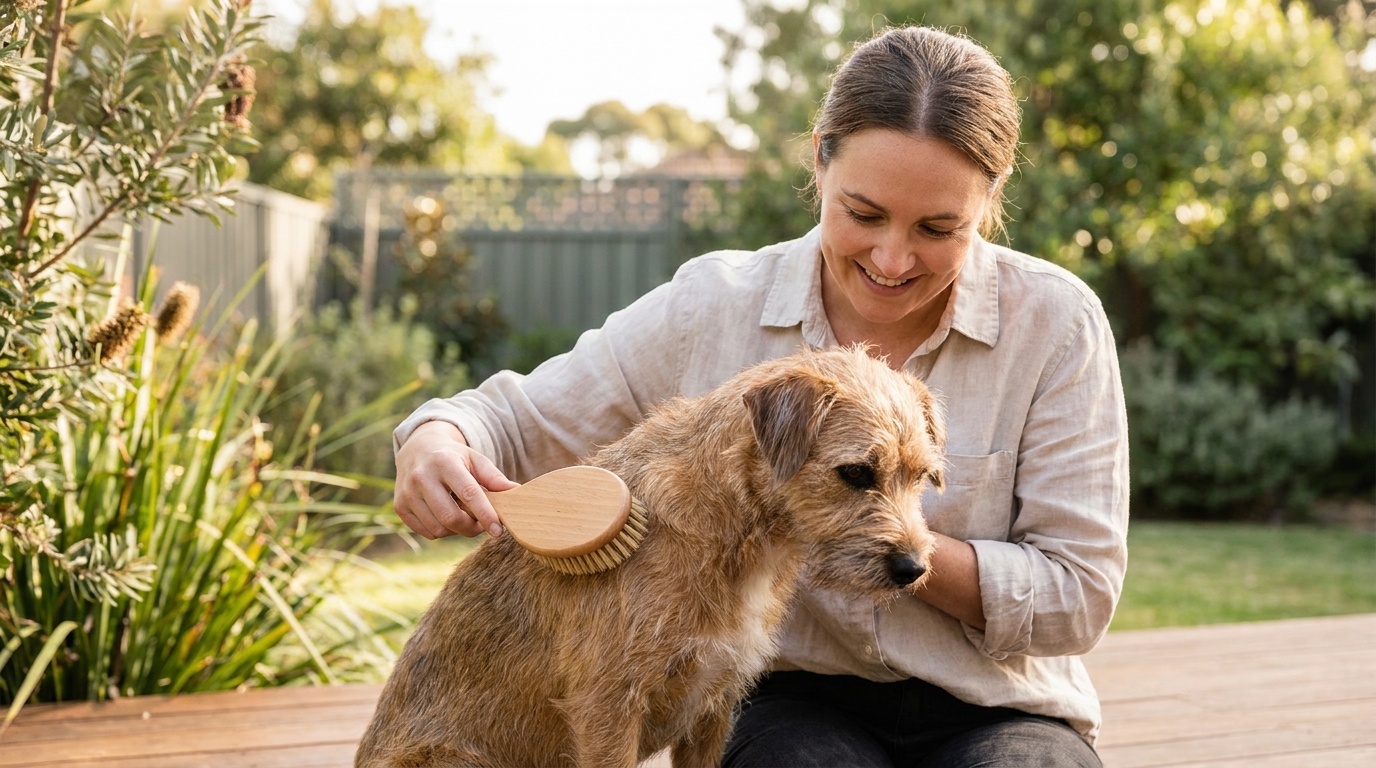
Which tool for which coat? (quick comparison)
Different coats need different tools. The goal isn’t to brush harder—it’s to use the right contact surface and the right technique for your pet’s coat structure.
| Coat type | Best-match tool types | What it’s best for | Use with care |
|---|---|---|---|
| Short, smooth coat | Soft brush or grooming mitt; fine comb for quick checks | Removing loose hair, polishing coat, bonding time | Avoid over-brushing bony areas (hips, spine); stop if redness appears |
| Double coat (top coat + undercoat) | Undercoat/deshedding tools designed to lift undercoat; finishing comb | Reducing undercoat build-up and seasonal shedding | Don’t overdo deshedding sessions; avoid sensitive areas (belly, armpits) |
| Long coat / feathering | Detangling brush plus metal comb for line-checking | Preventing knots and mats, keeping feathering tidy | Never yank through knots—work in small sections from ends to roots |
| Curly / dense coat | Detangling brush + comb to confirm you’ve reached the skin line | Keeping curls separated and preventing hidden mats | Brush gently and methodically; mats can form close to the skin |
| Sensitive skin (any coat) | Softer-contact brush; shorter sessions; gentle combing | Light maintenance without irritation | Reduce pressure and frequency if skin looks pink or your pet flinches |
Mini grooming routines by coat type
If your household is busy, the easiest way to stay consistent is to keep sessions short and predictable. Below are two simple routines you can adapt to your week.
Routine 1: Short coat “little and often” (5 minutes)
- Quick once-over: Run your hands over the coat to feel for dryness, bumps, or tender spots before you start.
- Gentle brush/mitt: Use light strokes with the direction of hair growth. Focus on high-shed zones like the back, sides, and rump.
- Small-area check: Use a comb for a quick look behind ears and around the collar line where friction can trap loose hair.
- Finish positive: End before your pet loses patience. A calm finish makes the next session easier.
This routine is ideal in humid summer weather (think coastal QLD/NSW conditions) when pets can feel warmer and may be less tolerant of long sessions.
Routine 2: Double coat “undercoat management” (10–15 minutes, weekly)
- Start with a regular brush: Do a light pass first to remove surface hair and reduce tugging.
- Use an undercoat/deshedding tool sparingly: Work in sections (shoulders, back, hips). Keep pressure light and let the tool do the work.
- Comb to confirm: A comb helps you check you’re not leaving dense patches behind, especially around the ruff and “pants”.
- Stop early if needed: If you see pink skin, your pet is getting fidgety, or hair is coming out in clumps, pause and resume another day.
During peak shedding (often spring), you may do a shorter version of this routine twice weekly rather than a long session all at once.
Quick tip: Aim for 3–5 minutes of brushing after a walk, a few times per week. It’s easier on your pet (and your schedule) than tackling a big tangle once it’s set in.
How to choose the right FurKidz item
The right pick depends on coat type, sensitivity, and your pet’s tolerance for handling. A tool that’s perfect for a calm adult dog may be too intense for a wriggly puppy—or a cat that prefers short sessions and lots of breaks.
- Short coats: Choose tools that lift loose hair without scraping the skin. Short, gentle sessions are usually more effective than long brushing marathons.
- Double coats: Prioritise tools made to reach through the top coat to remove undercoat. These coats can pack down quickly in damp or humid weather.
- Long or curly coats: Look for detangling support and finish with a comb to catch small knots early (before they turn into tight mats).
- Sensitive skin: Favour smoother, gentler contact surfaces and keep pressure light. Let the tool do the work rather than pressing harder.
If shedding or itchiness has ramped up suddenly, it may have multiple causes—seasonal coat change, diet shifts, environmental allergies, skin infection, or parasites. Grooming helps you spot changes early, but if symptoms persist, worsen, or you notice hair loss, sores, scabs, or strong odour, it’s best to seek veterinary advice.
Basic safety notes: avoid repeatedly brushing the same small spot; use extra care on thin-skin areas (belly, armpits, inside legs); and don’t use undercoat/deshedding blades on single-coated breeds unless the tool is specifically designed for that coat type. If you see redness or your pet shows discomfort, stop and switch to a gentler option.
Buying tips: sizing, coat types, and value
When you’re buying FurKidz gear, “best” usually means “best match” for your pet and your habits. A high-quality tool only delivers value if you’ll actually use it weekly.
- Size to your pet: Smaller heads and shorter handles can give better control on small breeds or cats, while larger tools cover more area on bigger dogs.
- Choose comfort over force: If your pet leans away or becomes fidgety, switch to a gentler tool and increase frequency rather than intensity.
- Think about clean-up: Easy-to-clean designs help you stay consistent—especially during peak shedding when bins fill quickly.
- Buy for your real routine: If you only have time for quick sessions, pick a tool that performs well in short bursts rather than one that requires a full grooming setup.
To compare options and shop by what’s in stock, head to our FurKidz collection and choose based on coat type and the grooming job you’re trying to solve.
Frequently Asked Questions
Are FurKidz items suitable for both cats and dogs?
Many grooming tools can suit both, but the best choice depends on coat type and how tolerant your pet is of handling. For cats, prioritise gentle contact and shorter sessions to keep the experience positive.
How often should I groom my pet at home?
Most pets do well with a few short sessions per week, increasing during shedding seasons or humid weather. Consistency helps reduce loose hair in the house and makes knots less likely to form.
What should I do if my pet’s skin looks irritated after brushing?
Stop grooming that area and switch to a gentler tool with lighter pressure, keeping sessions shorter. If irritation persists, worsens, or you notice hair loss, sores, scabs, or ongoing itchiness, seek veterinary advice to rule out underlying causes such as allergies, infection, diet-related issues, or parasites.
Ready to choose the right tools? Browse our FurKidz range to find grooming essentials that match your pet’s coat and your weekly routine. If you’re unsure what’s best for your pet’s skin or coat condition, chat to your vet.