


Few things are more frustrating than being dragged down the footpath by an over-excited dog. The good news? With patience and the right approach, loose lead walking is a skill every dog can learn. Whether you have a boisterous puppy or an older puller, these dog lead training tips will help you both enjoy stress-free strolls — even on busy Saturday mornings at the local park.
Why Dogs Pull on the Lead
Dogs don't pull to be naughty — they pull because the world is incredibly exciting. Every smell, sound, and passing pigeon is a magnet, and your dog's natural walking pace is usually faster than yours.
Pulling also gets reinforced accidentally. Each time a dog surges forward and you follow, the dog learns that pulling works. Over time this becomes a deeply ingrained habit that feels normal to them.
Understanding this is the first step in any lead training process. You're not correcting bad behaviour so much as teaching an entirely new way to move together.
Gear You Need Before You Start
You don't need a bag full of gadgets, but the right basics make a big difference. Start with a standard flat lead (around 1.5–1.8 metres) and a well-fitted harness or flat collar. Avoid retractable leads during training — they actually reward pulling by giving the dog more slack.
Stock up on small, soft training treats that your dog loves. You'll be rewarding frequently at first, so choose something quick to eat. A treat pouch worn at your hip keeps things accessible.
Browse our full range of dog supplies if you need to update your walking kit before you begin.
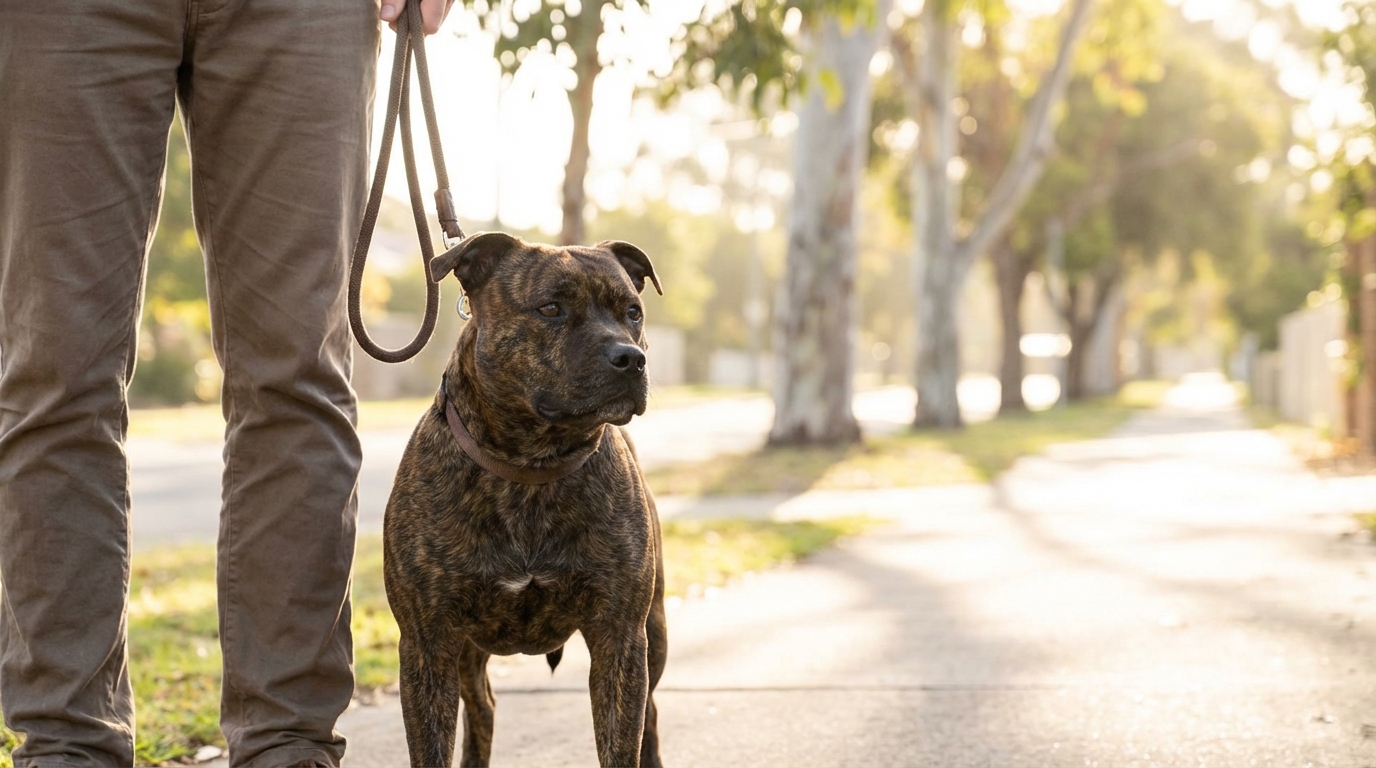
Step-by-Step: Teach Your Dog to Walk Calmly
1. Start indoors. Clip the lead on in your hallway or lounge room where distractions are minimal. Reward your dog for standing or sitting calmly by your side before you even take a step.
2. Mark and reward position. Take one or two steps. The moment your dog is beside you with the lead relaxed, say "yes" (or click a clicker) and deliver a treat at your thigh. This teaches the dog exactly where you want them.
3. Stop when the lead tightens. If your dog surges ahead and the lead goes taut, stop immediately. Stand still and wait. The instant the lead loosens — even slightly — mark and reward, then continue walking.
4. Change direction often. Unpredictability keeps your dog paying attention to you rather than racing ahead. Turn left, turn right, do a U-turn. Reward every time your dog adjusts and returns to your side.
5. Gradually add distractions. Once your dog is walking calmly inside and in the backyard, move to quiet streets, then busier environments. Expect some regression in new settings — that's completely normal.
Quick tip: Keep early training sessions to five or ten minutes. Short, upbeat sessions are far more effective than long, exhausting ones — especially in Australia's warmer months when hot pavement can also be a concern.
Common Mistakes That Undo Your Progress
Inconsistency is the biggest enemy. If you let your dog pull on Monday but enforce the rules on Tuesday, the dog never gets a clear picture of what's expected. Everyone in the household needs to use the same technique.
Yanking or jerking the lead doesn't teach your dog anything useful. It can cause neck injuries and erode trust. The "stop and wait" method is gentler and far more effective long-term.
Skipping mental enrichment is another common pitfall. A dog that's bored and pent-up will have a much harder time focusing on lead manners. Make sure your dog has access to engaging interactive toys and regular play sessions so they aren't bringing all that unspent energy to the walk.
Moving too fast through the stages. If your dog can't walk calmly in the backyard, they're not ready for the café strip. Build difficulty gradually and celebrate the small wins.
Practising in the Real World
Once your dog is responding well in controlled settings, it's time to proof the behaviour. Choose a quiet time of day — early mornings work well in summer across most of Australia — and walk a familiar route.
When you encounter a trigger like another dog, a cyclist, or a particularly fascinating bin, increase the distance if possible and scatter a few treats on the ground to redirect focus. Over time your dog will learn that staying close to you near distractions pays off handsomely.
Don't forget to let your dog sniff. Walks serve as mental enrichment, and a "go sniff" cue can actually improve loose lead walking by giving your dog a clear contrast between structured walking and free exploration time.
Aim for at least three short practice walks per week. Consistency over weeks and months is what transforms a puller into a pleasant walking companion.
Frequently Asked Questions
How long does it take to teach a dog to walk on a loose lead?
Most dogs show noticeable improvement within two to four weeks of consistent daily practice. However, full reliability in high-distraction environments can take several months. Puppies often pick it up faster than adult dogs with years of pulling habit.
Should I use a harness or a collar for lead training?
A front-clip harness is generally the best choice for dogs that pull, as it gently redirects momentum without putting pressure on the throat. Flat collars work well for dogs that are already fairly calm on the lead. Avoid anything that causes pain or discomfort.
My dog walks perfectly at home but pulls everywhere else — what's going on?
This is completely normal and simply means your dog hasn't generalised the behaviour to new environments yet. Go back to basics in each new setting and reward heavily. With repetition, your dog will understand that the rules apply everywhere.
Ready to set your dog up for calmer, happier walks? Browse our full range of dog walking essentials and, if your dog's pulling is extreme or accompanied by anxiety, have a chat to your vet for personalised guidance.